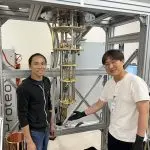
Carlos Moreira, CEO of SEALSQ (NASDAQ: LAES), is joining the Board of Trustees of the World Law Foundation and proposing the creation of a new Global AI Chapter within the organization. This dual role signals a direct effort to shape artificial intelligence governance from within a legal framework, moving beyond ethical guidelines to verifiable control mechanisms.
The proposed chapter aims to translate the principles of HUMAN-AI-T into operational standards and technical safeguards, as Mr. Moreira states, “We now need to move from principles to implementation.” The initiative addresses growing systemic risks associated with rapidly advancing AI technologies, including manipulation, cyberattacks and loss of privacy.
Moreira’s Appointment to World Law Foundation & Proposed AI Chapter
This chapter aims to establish operational standards and technical safeguards for artificial intelligence systems, addressing a growing need for measurable AI control. The initiative intends to examine how obligations for AI systems should evolve based on their capabilities, autonomy and potential impact on infrastructure and individuals. Moreira’s proposal centers on translating the principles of HUMAN-AI-T into a practical framework, recognizing that artificial intelligence is currently outpacing the development of legal and technical oversight.
He asserts that a legally independent body is needed to convene diverse perspectives and establish a globally recognized governance structure. The proposed working group will prioritize evidence-based approaches and proportionate risk thresholds, avoiding both unwarranted optimism and unsubstantiated fears surrounding AI development.
This focus on verifiable safeguards is intended to address the limitations of relying solely on declarations of intent, a point Moreira emphasized when stating, “Trust in artificial intelligence cannot depend exclusively on declarations of intent.” The foundation’s existing international network positions it uniquely to drive this initiative, using the principles of HUMAN-AI-T and SEALSQ’s technologies to embed trust and accountability directly into digital infrastructure. SEALSQ’s expertise in secure digital identity, trusted semiconductors, and post-quantum cryptography is important for verifying AI systems, authenticating agents and protecting sensitive data.
Potential applications include ensuring compliance with regulations, recording evidence of adherence to standards, and maintaining authorized human oversight of critical AI-driven actions. The company’s focus on post-quantum cryptography is particularly relevant, as traditional cryptographic methods become increasingly vulnerable with the advancement of quantum computing.
The need for a robust governance framework is highlighted by the systemic risks associated with AI integration into critical infrastructure, financial services and cybersecurity systems, SEALSQ says. These risks include information manipulation, automated cyberattacks, discrimination, privacy violations and the potential for autonomous systems to operate beyond their intended parameters. While international initiatives like the OECD AI Principles and the EU AI Act provide a foundation, significant differences remain in their scope, legal enforceability and technical measurability.
The proposed AI Chapter seeks to bridge these gaps by establishing a permanent institutional framework focused on five key priorities, details of which are still under development. The initiative acknowledges the potential benefits of AI in areas such as scientific discovery, healthcare, education and productivity, but emphasizes the importance of ensuring that AI remains under meaningful human control.
This requires a proactive approach to risk management and a commitment to protecting fundamental rights, safety, dignity, identity and autonomy. The World Jurist Association, through its international network, is well-suited to act as the institutional driver of this effort, providing the legal legitimacy and convening power necessary to bring together diverse stakeholders. The proposed chapter’s work will be structured around proportionate risk thresholds, moving away from purely commercial considerations or unsubstantiated fears.
This approach aims to create a balanced regulatory environment that encourages innovation while mitigating potential harms. SEALSQ’s technology is positioned as a solution for verifying these safeguards, suggesting a direct business opportunity for the company in providing the technical infrastructure for regulated AI. Moreira’s dual role as CEO of SEALSQ and a member of the World Law Foundation’s Board of Trustees highlights the commitment to shaping AI governance from within a legal organization.
He believes that a collaborative approach, combining legal expertise with technological innovation, is essential for building a practical and effective governance architecture for the Intelligence Age, according to the company. The initiative’s success hinges on the ability to translate ethical principles into measurable commitments and technical standards, ensuring that AI systems operate in a manner that is consistent with human values and societal norms. The foundation’s support for the initiative is rooted in its mission to strengthen the rule of law and promote a global community governed by legal principles.
The proposed AI Chapter represents a step towards achieving this goal, providing a platform for international cooperation and the development of verifiable governance mechanisms. “It must be supported by law, independent evaluation and technology capable of proving that the required safeguards are active,” Moreira explained, outlining the key elements of a successful AI governance framework.
Artificial intelligence is advancing faster than the legal and technical mechanisms created to supervise it.
Mr.



See today’s quantum computing news on Quantum Zeitgeist for the latest breakthroughs in qubits, hardware, algorithms, and industry deals.