Singapore is reinforcing its position as a global deep-tech hub with the launch of new scholarships focused on quantum technologies and semiconductor research. A*STAR announced the A*STAR Graduate Scholarship (AGS) tracks to cultivate talent for these critical sectors, where the nation currently handles 10% of global chip production and 20% of semiconductor equipment manufacturing.
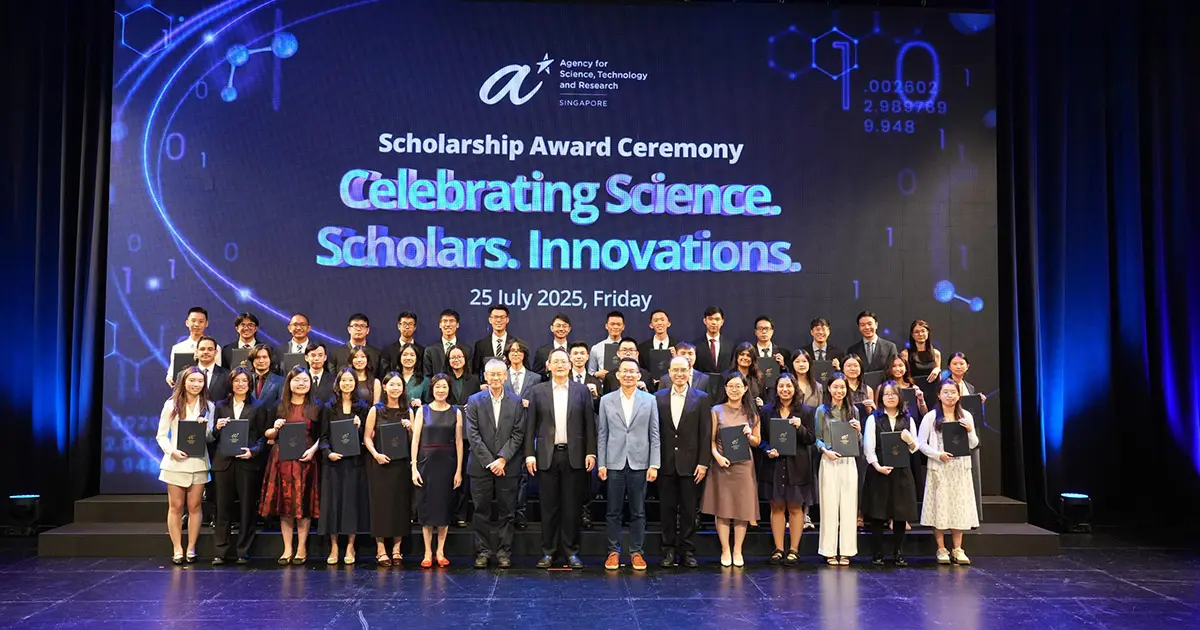
At the 2025 A*STAR Scholarship Award Ceremony, Minister for Manpower and Minister-in-charge of Energy and Science & Technology, Dr Tan See Leng, announced the initiative alongside the awarding of scholarships to 79 individuals this year. These new tracks will support scholars undertaking research in areas like “ultra-secure communications, precision sensing, and next-generation computing.”
AGS Scholarships Target Semiconductor and Quantum Talent
Singapore’s semiconductor industry currently accounts for 20% of global semiconductor equipment manufacturing, a figure that highlights the nation’s commitment to maintaining its position in a highly competitive global market. This established strength is now being bolstered by new A*STAR Graduate Scholarship (AGS) tracks specifically designed to cultivate talent in both semiconductor and quantum technologies. These specialized scholarships aim to ensure a continued supply of skilled researchers in these critical fields, addressing a growing need for innovation and expertise.
The launch of the AGS (Semiconductor) and AGS (Quantum) scholarships builds upon A*STAR’s existing scholarship program, which has supported over 1,300 researchers since 2001. Scholars selected for these tracks will engage in field-specific research projects, receive specialized training and gain industry experience that will help advance Singapore’s deep tech capabilities. Quantum technologies are a particular focus, with potential applications spanning multiple sectors.
Singapore Economic Development Board, “What makes Singapore a prime location for semiconductor companies driving innovation?”, 20 August 2024. This targeted approach is intended to accelerate innovation and ensure Singapore remains competitive in these rapidly evolving fields.



See today’s quantum computing news on Quantum Zeitgeist for the latest breakthroughs in qubits, hardware, algorithms, and industry deals.