Nearly 30 supercomputing centers worldwide are now deploying over 50 quantum processors, a nearly sevenfold increase in five years, and NVIDIA is streamlining access to this growing infrastructure. The company has expanded the Slurm workloads manager to integrate quantum processing units, allowing QPU builders to interface with supercomputing centers using a single file.
This simplifies integration for both hardware developers and high-performance computing centers, enabling scientists to incorporate quantum computing into fields like chemistry and materials science without friction. NVIDIA reports that by building on existing quantum-HPC interfaces such as QRMI and QDMI, the Slurm expansion allows QPU builders to reuse their integrations across all their deployments.
Slurm Expansion Integrates Quantum Processors into Supercomputing Workflows
The latest release of the Slurm workload manager streamlines quantum processing unit integration with a single file interface for hardware builders. This simplification allows quantum processing unit developers to deploy their technology across multiple supercomputing centers without creating unique software solutions for each location, NVIDIA says. Previously, integrating a QPU into a supercomputing center presented a new software challenge with each new processor or center, a bottleneck now addressed by the expanded platform.

This expanded functionality is already seeing adoption from several key players in the quantum computing space, including Alice & Bob, IBM, IQM, Pasqal, Quantinuum and MQSC. NVIDIA’s open platform for quantum-GPU supercomputing is further bolstered by updates to CUDA-Q, its hybrid quantum-classical computing platform. A new decoder server within CUDA-Q QEC is 13,000 times faster than the industry standard, accelerating the development of quantum error correction techniques.
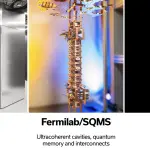
Researchers developing these techniques can now rapidly prototype and test new ideas, speeding up the process of building more reliable quantum computers, according to NVIDIA. Fermilab has already demonstrated the benefits of this acceleration, completing studies in three weeks that previously required five months. Expanding beyond error correction, CUDA-Q now features an expanded layer of fault-tolerant primitives. These tools allow application builders to realistically compile and test their quantum algorithms, moving closer to practical quantum applications, the company says.
Quantum Motion has integrated its QUICHE chemistry framework with CUDA-Q, while Altera and Oxford Quantum Circuits have designed an FPGA-based controller connecting qubit control and readout to GPUs through NVQLink. This collaborative effort demonstrates a growing ecosystem built around the platform.
At a larger scale, QunaSys used cuQuantum and 1,024 NVIDIA Hopper GPUs on ABCI-Q to simulate over 300 million quantum operations. This simulation achieved chemical accuracy for a four-hydrogen-atom model, a significant step toward simulating complex molecular interactions. NVIDIA researchers also employed JUPITER to simulate 104 qubits under realistic noise conditions, allowing for the testing of fault-tolerant designs before physical construction, the company states. Slurm 26.11 will be available later this month, solidifying the platform’s role in advancing quantum-classical computing.



See today’s quantum computing news on Quantum Zeitgeist for the latest breakthroughs in qubits, hardware, algorithms, and industry deals.