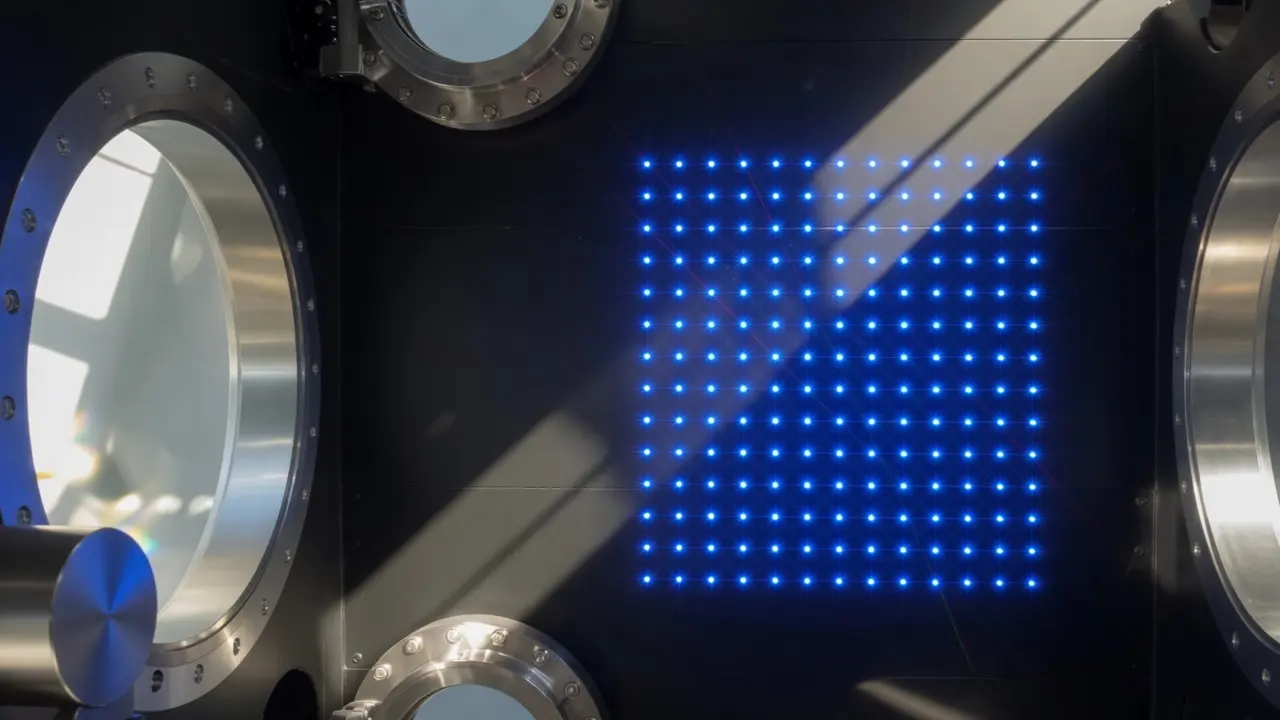
TU Delft researcher Zeynab Kaseb is the first to complete a power flow calculation using a three-step workflow linking DelftBlue, TU Delft’s high-performance computer, to Quantum Inspire and then to QuTech’s 17-qubit Tuna-17 processor. Kaseb’s test demonstrates a complete route for quantum algorithms, moving calculations from classical preparation to execution on real quantum hardware and back for analysis.
The work involved running two versions of the calculation on Tuna-17, using circuits with four and six qubits, to explore the Quantum Approximate Optimization Algorithm. “We expect much of the integration of classical HPC computers and quantum computers,” says Martin van Gijzen, scientific director of the Delft High-Performance Computing center.
DelftBlue and Quantum Inspire Enable Power Grid Algorithm Testing
Zeynab Kaseb’s recent work marks the first successful test of a complete workflow integrating Quantum Inspire with DelftBlue, TU Delft’s high-performance computer. The researcher used this connection to tackle a power system problem, specifically tracing the path of a calculation from classical preparation to execution on QuTech’s Tuna-17 quantum processor and subsequent analysis. This demonstration moves beyond simulations by using real quantum hardware for a practical application in power grid management, offering a new avenue for testing quantum algorithms.
DelftBlue prepared and optimized the calculation, an important step in using quantum computing for complex problems. Quantum Inspire then provided access to the 17-qubit Tuna-17 processor, facilitating the execution of the designed quantum circuits and returning the resulting measurements. This two-way communication allows researchers to assess the performance of quantum algorithms on actual hardware, while still relying on classical computing resources for initial setup and result validation.
Kaseb’s study focused on power flow calculations in a small network, determining voltages at connection points known as buses using the Quantum Approximate Optimization Algorithm, or QAOA. An exhaustive classical calculation established a benchmark for comparison, providing a reference point for interpreting the quantum hardware’s output. In the four-qubit run, the optimal candidate solution appeared 215 times, representing approximately 21 percent of the total measurements.
The six-qubit encoding, offering a more refined representation of voltage, yielded a lower residual of 0.003262 compared to the four-qubit run’s 0.01053; a residual measures the accuracy of a candidate solution in satisfying the power flow equations, with lower values indicating a better fit. While the more detailed six-qubit encoding required a deeper circuit with 165 layers, compared to the four-qubit circuit’s 30 layers, its best candidate appeared less frequently, at 16 times or 1.56 percent of measurements.
This frequency aligns with expectations for uniform sampling across all 64 possible bitstrings, providing insights into the behavior of the quantum processor. The results highlight the potential of Quantum Inspire to run circuits on real quantum hardware, revealing both the possibility of improved solutions and the impact of circuit complexity on the outcome. “In the past year, we integrated Quantum Inspire with DelftBlue, and now Kaseb is the first to obtain results on our integrated infrastructure.”



See today’s quantum computing news on Quantum Zeitgeist for the latest breakthroughs in qubits, hardware, algorithms, and industry deals.