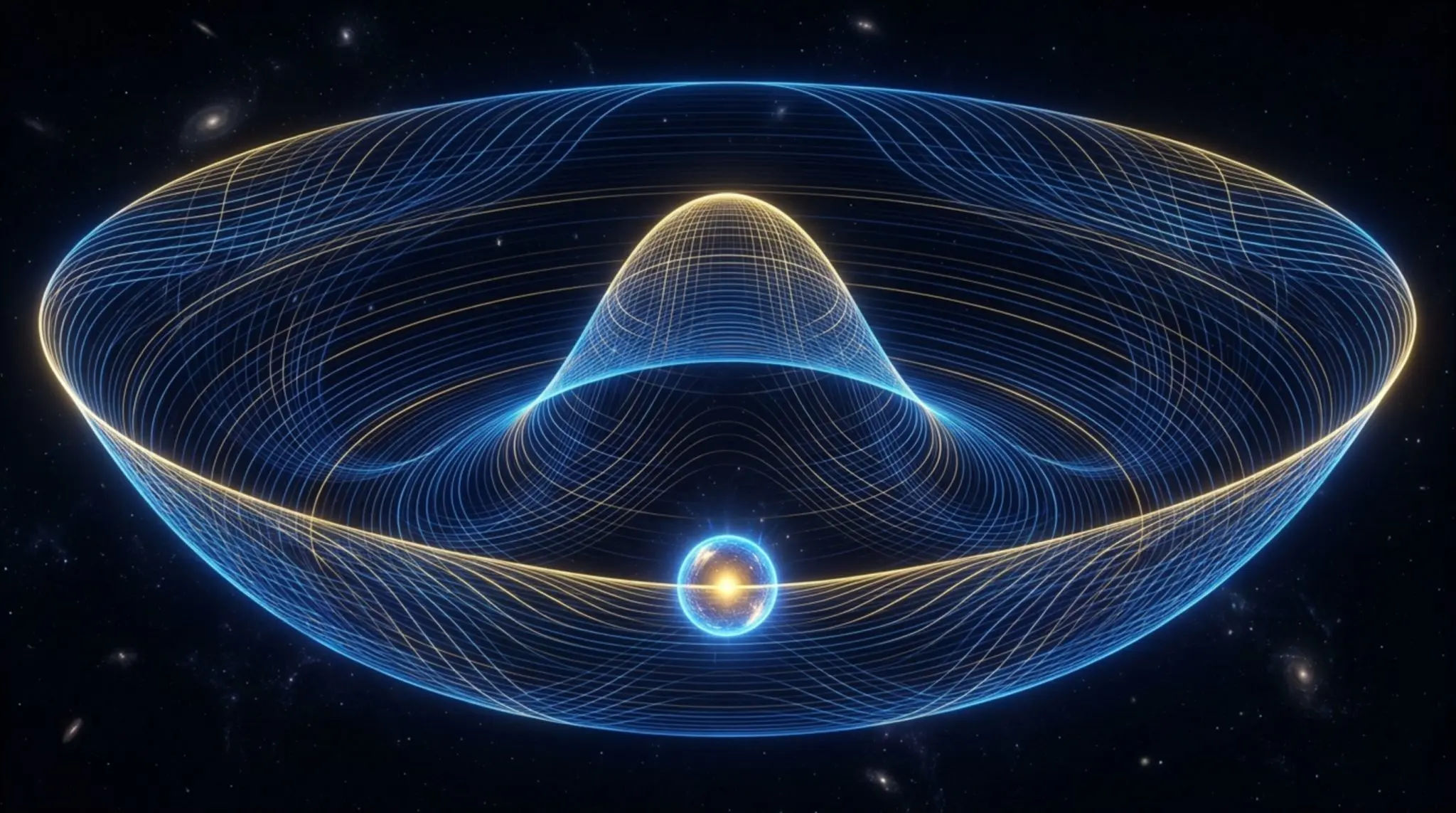
Large-amplitude squeezed cat states generated with near-unity efficiency are key to advancements in quantum technologies. The research addresses challenges within photonic architectures relating to preparing high-quality resource states necessary for deterministic synthesis involving multiple large amplitudes. It investigates techniques aligned with the Gottesman, Kitaev, Preskil encoding, currently a prominent approach for achieving fault-tolerant quantum computation utilising continuous variables. Contributions from collaborators at the Australian National University and the University of Queensland explore methods to improve state fidelity and operational efficiency. These improvements enable more strong and flexible implementations of continuous variable quantum computing platforms.
Strong cat state generation via repeated non-demolition measurements tolerates photonic loss
Non-demolition interactions and photon-number measurements are used to prepare large-amplitude cat states with near-unity probability. No particular photon-number outcome is postselected; instead, all outcomes contribute to the accumulated photon number, with the protocol repeating until a required threshold is reached. This scheme exhibits strong tolerance to realistic levels of photon-loss, representing the dominant source of error in optical systems.
The findings highlight the power of active Gaussian operations for state preparation and pave the way for efficient quantum error correction using bosonic codes. Quantum computers possess the potential to outpace classical counterparts at certain tasks, offering wide-reaching applications but necessitating some form of quantum error correction due to noise effects.
Bosonic coding offers one solution by encoding each logical qubit within a bosonic mode, with the Gottesman, Kitaev, Preskill (GKP) code being a leading approach owing to its performance against loss and Gaussian noise alongside relative ease of universal fault-tolerant computation particularly within room temperature optical systems.
A scalable approach involves the GKP breeding protocol which interferes several squeezed cat states, reducing the problem to preparing these with sufficiently large amplitude, squeezing, and generation rate. Several methods currently exist; however, realising full potential requires large input photon numbers impacting practicality. We present a new scheme based on repeated measurement-induced amplification probabilistically enlarging the cat state.
Combining this repeated scheme with feedforward Gaussian operations prepares states suitable for fault-tolerant GKP preparation with near unity probability relying on standard operations and photon-number resolving detectors. This lowers hardware requirements providing a more realistic pathway to high-quality optical GKP states. Beyond error correction, applications extend into Heisenberg-limited metrology utilising interference fringes in phase space alongside fundamental tests of quantum theory probing decoherence and the classical transition.
The protocol’s basic block appears in (a), serving as measurement-induced amplifier for these states.
Detecting n photons approximates output |C(√n, n)⟩. Amplification rounds feed heralded output back to input: a cat state |C(√n, n)⟩input yields an output approximating C( √ n + n′, n + n′). Achieving target spacing requires exceeding photon threshold deterministically preparing resource states for breeding ((e)); removing the anti-squeezer simplifies to a “squeezed-cat scheme” with slower output squeezing limiting practicality.
Stabilising Squeezed States with Quantum Nondemolition Measurement for Cat State Engineering
Modestly sized optical cat states have thus far only been prepared experimentally, and implemented methods are highly probabilistic; we propose an all-optical scheme utilising quantum nondemolition measurement to stabilise a squeezed state against decay and dephasing, subsequently enabling displacement operations with high precision iteratively growing the cat state amplitude via repeated application. Specifically, a homodyne detection setup operating at approximately 532nm monitors one quadrature of the squeezed vacuum generated by a continuous wave optical parametric oscillator (OPO) exceeding -10 dB over 1MHz bandwidth. A feedback loop adjusts phase/amplitude of microwave signals applied to an electro-optic modulator (EOM) in local oscillator beam minimising measured fluctuations effectively stabilising the squeezed state.
Generating optimal quantum error correction using continuous variable photonic circuits
The development of practical quantum computers hinges on overcoming delicate information maintenance; errors accumulate rapidly without strong correction mechanisms. The Gottesman-Kitaev-Preskill encoding offers one path representing data within continuous variables demanding high-quality resource states for implementation; a new all-optical method generates these important “cat states”, superpositions of squeezed light acting as building blocks, though achieving sufficient quality remains a key hurdle. Technological advancements are demanded to achieve necessary precision because optical systems suffer photon loss degrading performance sharply.
This approach bypasses limitations inherent in hybrid methods relying on microwave control offering durability against realistic error sources encouraging device construction sustaining complex calculations using continuous variables. Cat states essential resources for quantum computing underpin more complex computations were generated. This technique provides deterministic preparation of large-amplitude cat states vital for continuous variable quantum computing underpinning advanced encoding schemes like Gottesman, Kitaev, Preskill error correction; repeatedly amplifying signals via measurement without data discard, termed non-demolition interaction, achieves high probability state generation exceeding previous probabilistic postselection reliant methods. Demonstrating durability to photon loss simplifies implementation compared with hybrids solely utilising standard operations and detectors.
The researchers demonstrated an all-optical method for generating large-amplitude cat states, superpositions of squeezed light, with near certainty. This is important because these states are essential resources for implementing the Gottesman-Kitaev-Preskill encoding scheme used in continuous variable quantum computing. The technique utilises repeated measurements that accumulate signal strength rather than discarding data, offering robustness against common errors like photon loss encountered in optical systems. Authors suggest this approach supports efficient quantum error correction using bosonic codes, paving the way for more reliable calculations employing continuous variables.
👉 More information
🗞 Generation of large-amplitude squeezed cat states with near-unity efficiency
✍️ Simon K. Yung and Jie Zhao (The Australian National University); Timothy C. Ralph (University of Queensland); Matthew S. Winnel
🧠 ArXiv: https://arxiv.org/abs/2609.39482


See today’s quantum computing news on Quantum Zeitgeist for the latest breakthroughs in qubits, hardware, algorithms, and industry deals.