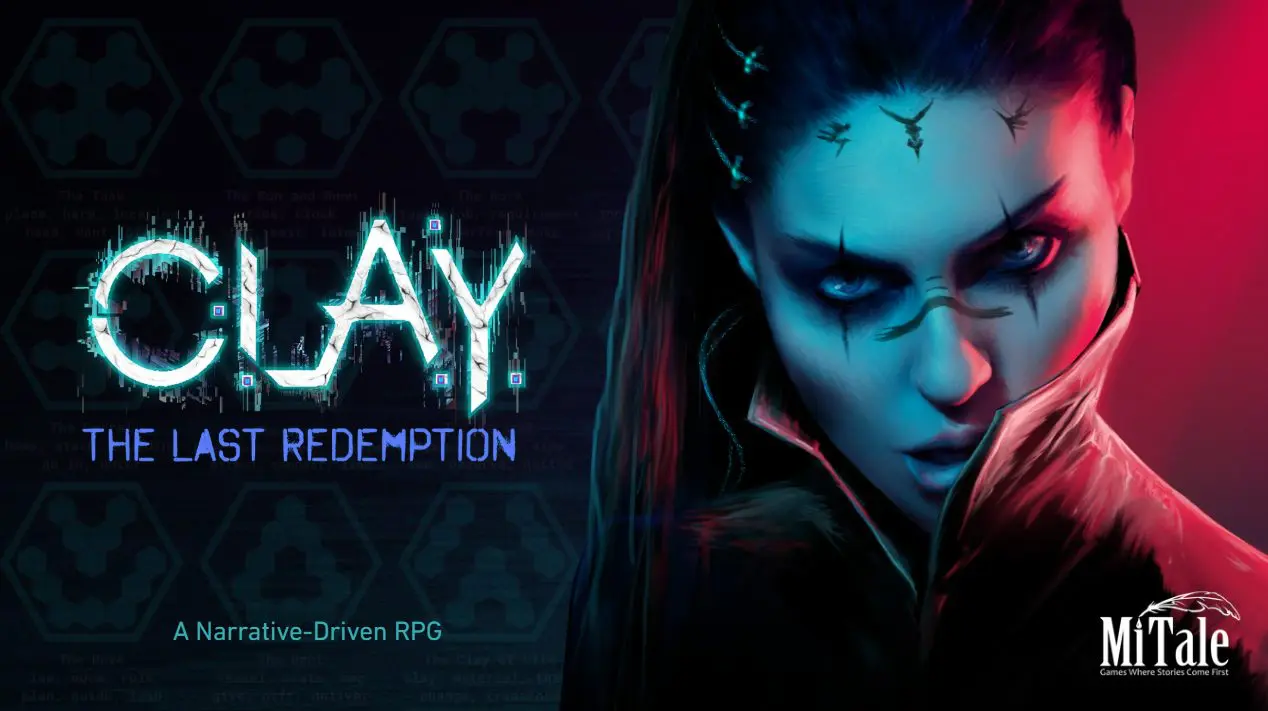
At Gamescom 2026 in Cologne this week, Finnish game studio MiTale will debut C.L.A.Y., The Last Redemption, a post-apocalyptic RPG integrating quantum computing techniques into its story and environment generation. MiTale has built upon research and development with Qiskit by IBM, initially focusing on numerical simulations before applying the framework to game development.
The studio aims to move beyond technical demonstrations, exploring how quantum computing can shape player experiences. As Natasha Skult, Founder and CEO of MiTale, explains, “With C.L.A.Y., we want to explore whether quantum computing can help us create more immersive experiences for our players, where each player decision and style of gameplay can affect the game worlds, narrative structures and experiences in real time, which would be difficult to approach in the same way with conventional tools.”
Quantum Circuits Shape C.L.A.Y.’s Story and Environments
MiTale is integrating quantum circuit simulations directly into the core systems of C.L.A.Y., The Last Redemption, influencing not just visual effects but also the unfolding of the narrative and the generation of game environments. This approach moves beyond simple technical demonstrations, aiming to establish quantum computing as a practical tool for game developers, similar to how graphics processors and artificial intelligence have become standard. This long-term commitment allowed MiTale to begin experimenting with the technology well before a clear commercial roadmap existed.
Skult notes that they started experimenting with quantum computing in games years before a clear commercial roadmap for it existed, the company says. The goal, she says, is not merely technological advancement, but a fundamental shift in how games are created. “The technology is now developing rapidly, and so are the tools around it.
Our aim is not to create technology demonstrations, but to understand how quantum computing can eventually become another useful tool for game developers.” MiTale intends for player agency to be directly linked to quantum processes within C.L.A.Y., with decisions and playstyles dynamically altering the game world and narrative in real-time. This ambition, difficult to achieve with conventional tools, is central to their design philosophy.
Quantum computing is often discussed in terms of science, finance or optimization, but we are interested in what happens when you give this completely different kind of computing technology to game designers and storytellers.
Natasha Skult, Founder and CEO of MiTale
MiTale Integrates Qiskit and Naviqate for Game Development Tools
MiTale is extending the capabilities of game development through integration of quantum computing techniques, demonstrated by its upcoming role-playing game C.L.A.Y., The Last Redemption. The studio’s approach utilizes quantum circuit simulations to influence narrative dynamics and generate environmental elements, moving beyond simple technical demonstrations of the technology. MiTale’s long-term objective is to incorporate real quantum hardware into game development as accessibility increases. Rather than merely showcasing quantum computing, MiTale aims to explore how it can enhance player-centered design, creating unique gameplay experiences, according to the company.
The studio’s work began in 2019, with a collaboration between Skult and James Wootton, then at IBM Research, to investigate quantum applications for game worlds and systems. This led to early experiments with C.L.A.Y. and integration of Qiskit with the Unity game engine, later shifting to the Godot engine to explore broader quantum solutions.
To further bridge the gap between quantum technology and game development, MiTale is developing Naviqate, a tool designed to allow developers to experiment with quantum functionality without requiring specialized quantum programming expertise. Naviqate connects quantum systems with established development environments like Unity, Unreal Engine, Godot, and the Ink narrative system.
Skult recently defended her doctoral dissertation, “Interactive Storytelling with Quantum Computing – Exploring the New Design Practices in Interactive Storytelling Using the Emerging Quantum Technologies” at the University of Turku, Finland, examining how quantum computing could reshape game design and player experiences, with C.L.A.Y., QWiz, and Quantum Playground serving as case studies.
We started experimenting with quantum computing in games years before there was a clear commercial roadmap for it.
Natasha Skult, Founder and CEO of MiTale
Source: https://www.mitalegames.com/
See today’s quantum computing news on Quantum Zeitgeist for the latest breakthroughs in qubits, hardware, algorithms, and industry deals.