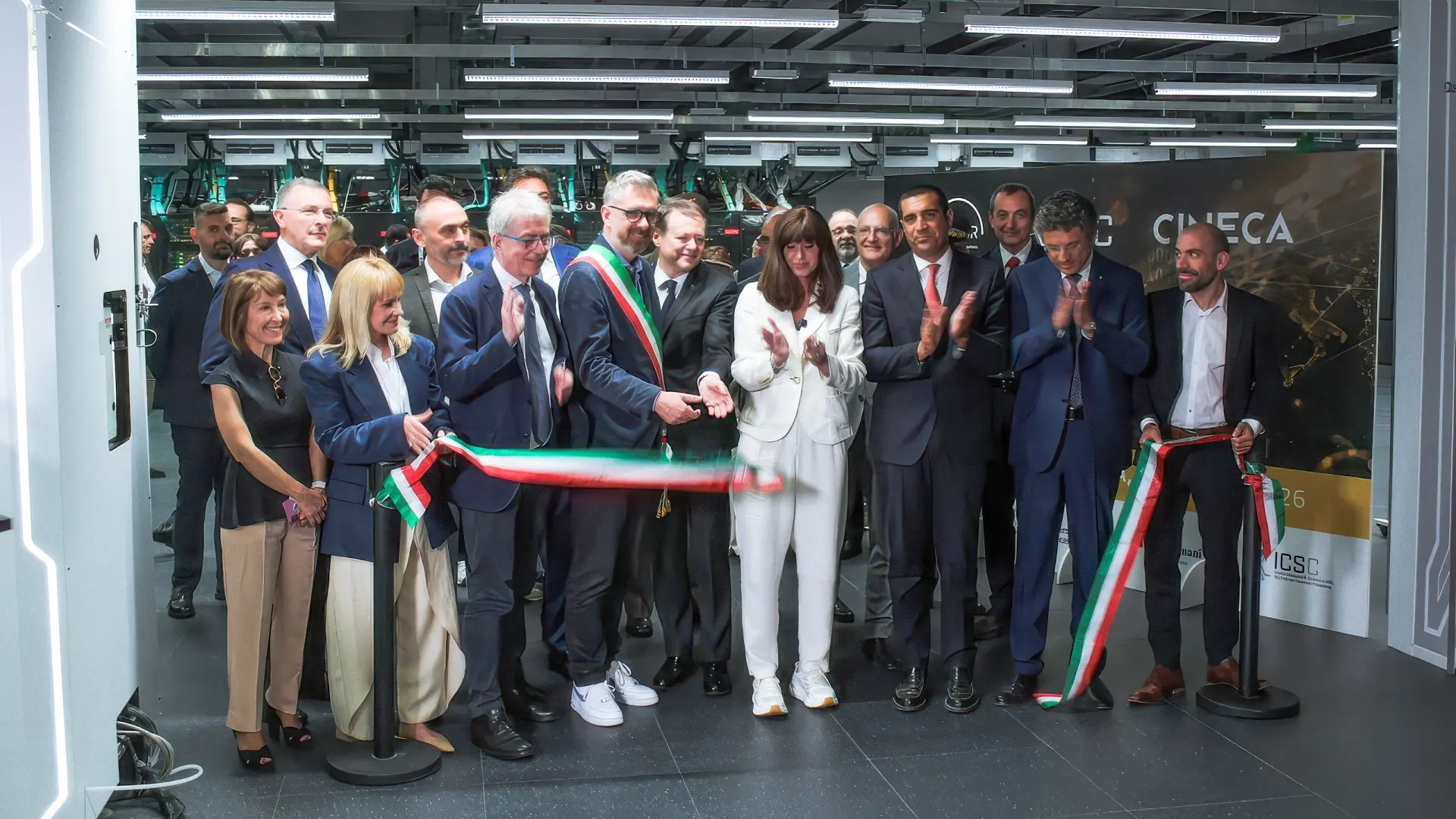
A 54-qubit IQM Radiance quantum computer, named NOX, is now directly integrated with Leonardo, one of the world’s fastest supercomputers, at the Italian Research Centre on High Performance Computing, Big Data, and Quantum Computing (ICSC) in Bologna. This installation marks the second IQM quantum computer to become operational within Italy, bolstering the nation’s growing quantum infrastructure and enabling advanced research in areas like optimization, simulation, and machine learning. IQM’s Chief Commercial Officer, Sylwia de Weydenthal, stated that this deployment represents a pivotal moment for the company, explaining that “This installation is what Production Quantum means to us. Quantum computers you own, operate, and build value on.” The system is a strategic asset for both the scientific community and businesses, designed to accelerate innovation and transform knowledge into practical applications within a real-world environment.
IQM Radiance 54 Installation at CINECA Boosts Italian Compute Infrastructure
Italy has significantly bolstered its quantum computing capabilities with the installation of a 54-qubit IQM Radiance processor, designated NOX, at the CINECA supercomputing center in Bologna. The deployment is the second operational IQM quantum computer within Italy, demonstrating a focused national investment in building a robust quantum infrastructure and solidifying the country’s position within the European quantum computing field. IQM emphasizes an approach focused on fully owned, operated systems capable of generating tangible value, extending beyond simple hardware provision. This on-premises superconducting quantum computer at CINECA joins a network of IQM systems operating at four of the world’s top ten supercomputing centers; the company reports a global total of 23 quantum computers sold, more than any other manufacturer. The installation is also viewed as a critical step towards strengthening European technological independence and reducing reliance on external technological offerings.
Antonio Zoccoli, President of the ICSC and the National Institute for Nuclear Physics, stated that the system “significantly strengthens digital sovereignty and supports national competitiveness,” particularly given current geopolitical and energy instability. Francesco Ubertini, Vice-President of the ICSC and President of CINECA, highlighted the integrated ecosystem being built around Leonardo, designed to support a broad spectrum of workloads, and emphasized the strong national commitment driving these advancements.
“The delivery of IQM Radiance to CINECA is a milestone for Italy and for European quantum computing. It reinforces our role as a strategic partner in delivering Europe’s HPC-quantum infrastructure on the ground.”
Sylwia de Weydenthal, Chief Commercial Officer of IQM Quantum Computers
Hybrid Classical-Quantum Workflows Integrated with Leonardo Supercomputer
The convergence of high-performance computing and quantum processing is rapidly shifting from theoretical exploration to practical implementation, as demonstrated by the recent integration of a 54-qubit IQM Radiance system, designated NOX, directly into the Leonardo supercomputer at CINECA in Bologna, Italy. This installation establishes a hybrid classical-quantum computing environment designed to accelerate research across optimization, simulation, and machine learning; it represents a deliberate move toward production-level quantum systems, rather than isolated prototypes. This specific installation is intended to provide researchers with a fully functional environment for experimenting with integrated classical-quantum computing paradigms, moving beyond isolated quantum tasks. The initiative aligns with broader European strategies for technological independence, with Italy’s Minister of University and Research, Anna Maria Bernini, highlighting the investment in a competitive national infrastructure. The addition of NOX to the existing SOL and LISA systems creates an integrated ecosystem around Leonardo, supporting a diverse range of workloads from artificial intelligence to quantum computing, and solidifying Italy’s commitment to a new generation of research assets.
“In line with the European strategy, we have invested in building a modern and competitive national infrastructure, capable of providing universities and research institutions with advanced computing tools essential for tackling major scientific, technological, and economic challenges.
Anna Maria Bernini, Italian Minister of University and Research
Source: https://www.iqm.tech

See today’s quantum computing news on Quantum Zeitgeist for the latest breakthroughs in qubits, hardware, algorithms, and industry deals.