University of Illinois researchers have achieved real-time simulations of quarks and gluons using a novel quantum computing technique, a feat previously limited by conventional computational power. This quantum computer utilizes atoms as its fundamental computational components, offering a distinct hardware approach to tackling complex physics problems. The researchers leveraged the properties of a particular kind of atom to increase the computer’s working memory, addressing a key limitation in quantum computation; simulating 50 quantum particles would require the memory of approximately one million laptops on a classical computer. “Simulating the real-time dynamics of quarks and gluons, and nuclear matter in extreme environments, are among the most promising applications of quantum computing to fundamental physics,” explains Illinois Physics Associate Professor Patrick Draper, suggesting this work could accelerate discoveries beyond the reach of current and planned particle colliders.
Atom-Based Qubits Expand Quantum Computer Memory
A single atom now holds the potential for eight possible ways to store information, marking a significant advance in quantum computing memory capacity. Researchers at the University of Illinois have demonstrated a technique to dramatically increase the working memory of quantum computers by leveraging the quantum properties within individual atoms, a departure from approaches relying on superconducting circuits or trapped ions. This innovation addresses a critical bottleneck in the field; quantum simulations, particularly those aiming to model complex physical systems, demand ever-increasing qubit counts. The team, comprised of Assistant Professor Jacob Covey, Draper, graduate students Cianan Conefrey-Shinozaki and Will Huie, and postdoctoral fellow Zhubing Jia, detailed their findings in PRX Quantum. Their method doesn’t simply add more atoms, but rather extracts more information from each one. Scientists typically restrict an atom’s states to two possibilities, 0 and 1.
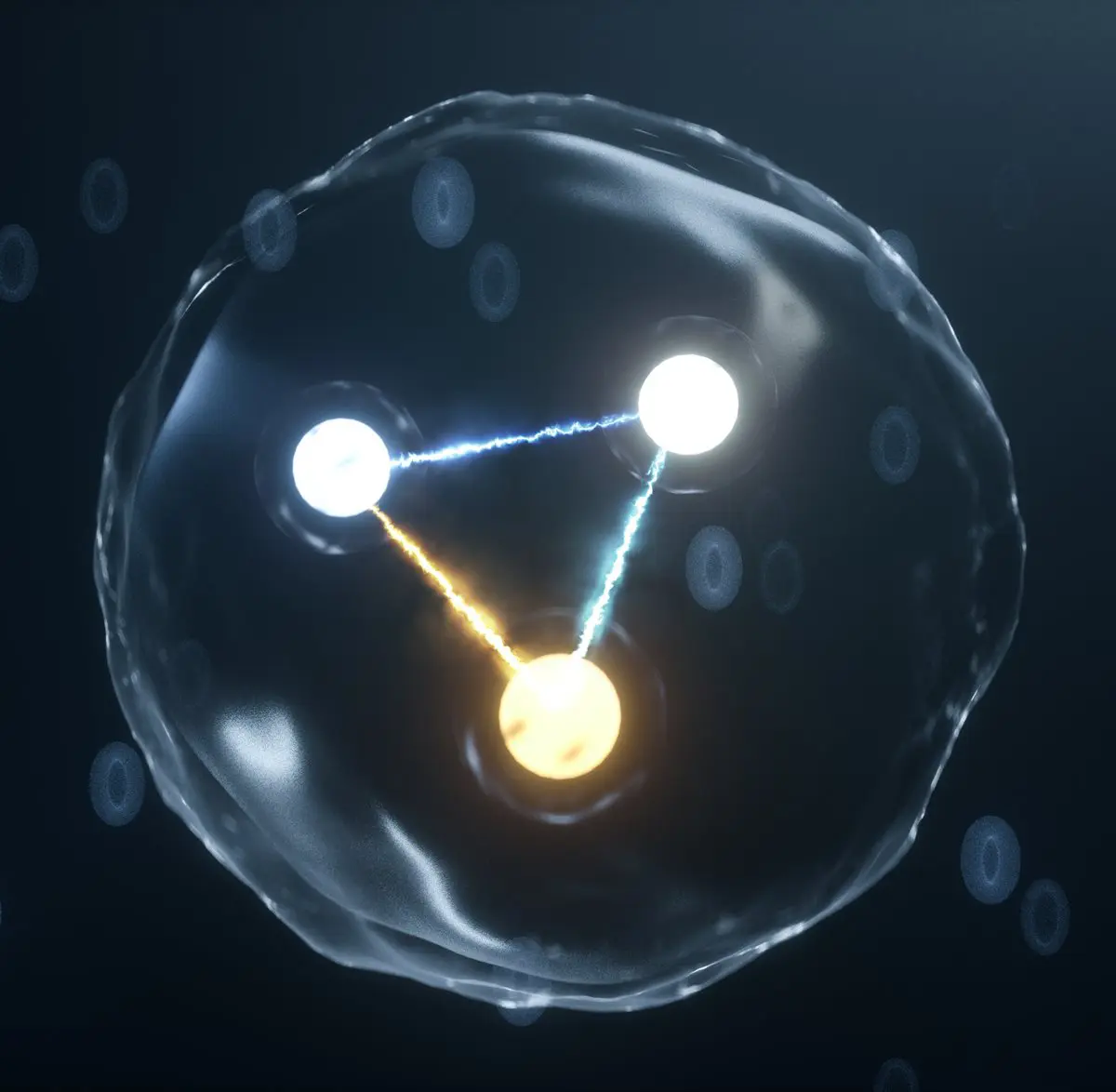
However, the Illinois group ingeniously combined three distinct quantum properties within a single atom to create a multi-state qubit. The first qubit arises from the electron’s orbital state, either in a low or high-energy orbit. The second utilizes the nucleus’s spin, which can be either up or down. Crucially, the third leverages the atom’s vibrational modes, analogous to the different ways a guitar string can vibrate. “We might be seeing new interesting emergent multibody behavior on the quantum computer before we see it on the collider,” says Conefrey-Shinozaki, highlighting the potential for observing previously inaccessible phenomena. This configuration yields eight total possible ways to store information on one atom, as opposed to two possible states in a typical qubit. While the initial demonstration involved simulating this three-qubit particle on a classical computer, the ultimate goal is to physically realize this atom within the Covey lab. The researchers emphasize the collaborative nature of this work, with Huie noting, “It was a back and forth between what the particle physics needs and what the atoms can do.” Initial simulations successfully replicated expected particle dynamics, even demonstrating string-breaking.
Simulating Quark and Gluon Dynamics with Quantum Computing
The pursuit of understanding the universe at its most fundamental level has entered a new phase, with researchers now capable of simulating the dynamic interactions of quarks and gluons in real-time using quantum computers. This achievement bypasses limitations previously imposed by the immense computational demands of modeling these subatomic particles, opening avenues for exploration beyond the reach of even the most powerful conventional supercomputers. Unlike classical simulations requiring the memory equivalent of a million laptops to model just 50 quantum particles, this new approach harnesses the unique capabilities of quantum mechanics to represent particle behavior more efficiently. Central to this advancement is a departure from standard qubit construction.
The Illinois-based team, rather than simply increasing the number of atoms used as qubits, has innovated a method to extract more information from each atom. This results in three qubits or eight total possible ways to store information on one atom, as opposed to two possible states in a typical qubit, leading to a larger working memory. This technique isn’t merely theoretical; the team initially validated the approach through simulation on a classical computer, with the ultimate goal of realizing this multi-qubit atom physically. The development of the driving algorithm was a collaboration between experts in both particle physics and quantum computing. Initial simulations successfully replicated expected particle dynamics, even demonstrating string-breaking, a behavior typically observed only at extremely high energies.
Simulating the real-time dynamics of quarks and gluons, and nuclear matter in extreme environments, are among the most promising applications of quantum computing to fundamental physics.
Algorithm Development Merges Particle Physics and Quantum Computation
Researchers at the University of Illinois are developing a novel approach to quantum computation, directly linking algorithmic development to the demands of particle physics simulations. This work, recently detailed in PRX Quantum, diverges from conventional qubit construction by maximizing information storage within individual atoms, a strategy designed to overcome limitations in quantum computer memory. Scientists typically restrict the available states to two, but this group ingeniously combines the electron’s orbital state, nuclear spin, and atomic vibrational modes. “The main difference between a quantum computer and a classical computer is that a classical computer uses bits, 0s and 1s, and a quantum computer uses qubits, a state of being both 0 and 1 simultaneously,” explains the team. This configuration yields three qubits or eight total possible ways to store information on one atom, as opposed to two possible states in a typical qubit, significantly expanding the computer’s working memory. This advance addresses a critical need in particle physics, where simulating the behavior of quarks and gluons demands immense computational resources.
I think quantum computing is the future of stimulating these subtle many-body phenomena.
Observed Particle Dynamics Validate Theoretical Expectations
The ability to accurately model the behavior of quarks and gluons has moved from theoretical prediction to real-time simulation, offering a new avenue for exploring fundamental physics and potentially accelerating discoveries currently limited by the decades-long timeline of collider construction. Central to this advancement is a novel method for maximizing the information stored within each atom. This increased memory capacity is crucial for accurately modeling particle interactions. The development of the driving algorithm was a collaboration between experts in both particle physics and quantum computing. Initial simulations successfully replicated expected particle dynamics, even demonstrating string-breaking. The next phase involves physically constructing this high-memory quantum computer, transitioning from simulation to tangible experimentation and paving the way for deeper insights into the building blocks of the universe.
The prospect of putting multiple qubits into one particle is nice if you are trying to do something that’s really memory intensive, as in it needs a lot of qubits.



See today’s quantum computing news on Quantum Zeitgeist for the latest breakthroughs in qubits, hardware, algorithms, and industry deals.