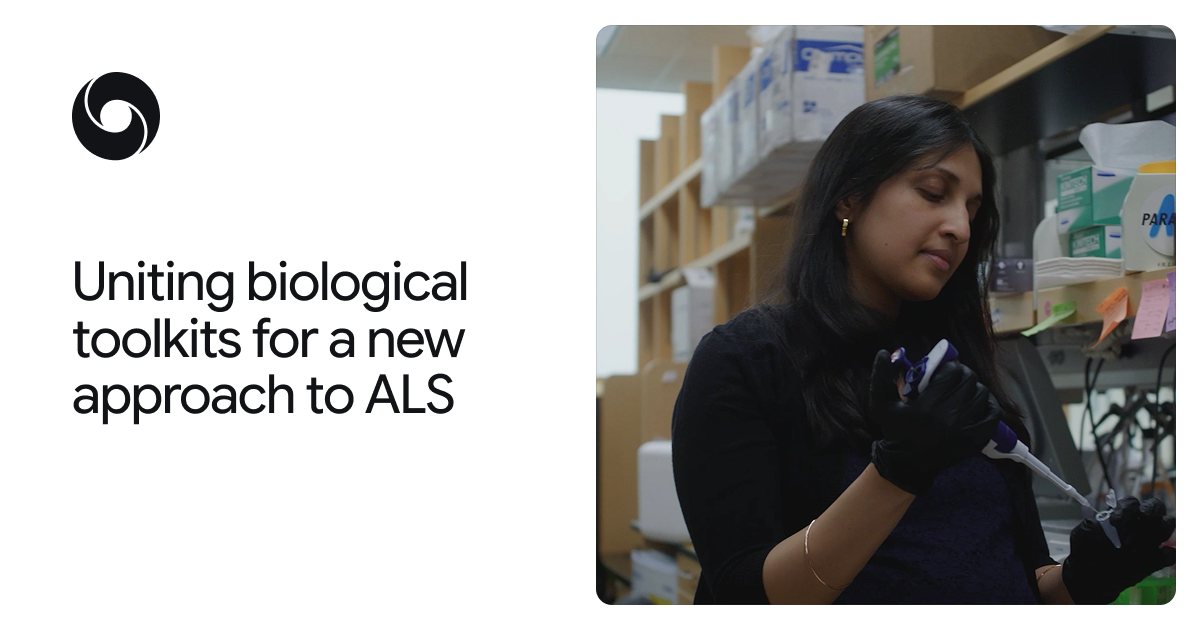
A mechanical engineer building living tissues is now focused on amyotrophic lateral sclerosis (ALS) research, guided by insights from an AI platform called Co-Scientist. Ritu Raman of MIT, who typically models diseases affecting voluntary movement, leveraged Co-Scientist to rapidly analyze the vast and often contradictory ALS literature, identifying and ranking research directions based on feasibility and potential impact. The platform’s most promising leads center on interactions occurring at the surface of cells, specifically RNA-based mechanisms, prompting a collaboration with her husband, Ryan Flynn, a chemical biologist at Boston Children’s Hospital who maps RNA. “Science is a team sport,” says Raman. “Co-Scientist can’t do science by itself, and I can’t do it all by myself either. It helps me structure my thoughts, so I know what to ask of other experts and collaborators.”
Tissue Modeling and Hypothesis Generation for ALS Research
Ritu Raman, a mechanical engineer at MIT, has unexpectedly turned her expertise in tissue modeling toward amyotrophic lateral sclerosis (ALS) research, a field traditionally dominated by biologists and neurologists. After successfully modeling diseases impacting voluntary movement with living tissues, Raman encountered a significant hurdle when investigating ALS; a vast and often conflicting body of literature threatened to stall progress before experiments even began. Co-Scientist, an AI-powered research platform, proved instrumental in compressing months of literature review into a manageable format, allowing Raman to rapidly identify and prioritize research avenues based on practical considerations like feasibility and potential reward.
This interdisciplinary approach leverages Raman’s ability to construct living tissue models with Flynn’s expertise in decoding the molecular signals occurring at the cell surface, creating a synergy neither could achieve independently. Currently, the combined effort focuses on identifying novel RNA-based mechanisms and potential drug targets for ALS, with Co-Scientist facilitating the iterative process of combining top-ranked concepts into innovative research pathways. Flynn elaborates on the platform’s creative potential, stating, “You take pieces of Co-Scientist’s top-ranked concepts, and synthesize them into something new. It helps you take good, logical ideas, shift them a few degrees, and turn them into something even more creative.”
The platform’s analysis revealed that critical insights lay in understanding cellular communication occurring at the cell surface, specifically involving RNA-based mechanisms. The pair iteratively used Co-Scientist to synthesize the platform’s top-ranked concepts, forging new research pathways that combined Raman’s tissue models with Flynn’s RNA mapping capabilities.
Science is a team sport. Co-Scientist can’t do science by itself, and I can’t do it all by myself either. It helps me structure my thoughts, so I know what to ask of other experts and collaborators.



See today’s quantum computing news on Quantum Zeitgeist for the latest breakthroughs in qubits, hardware, algorithms, and industry deals.