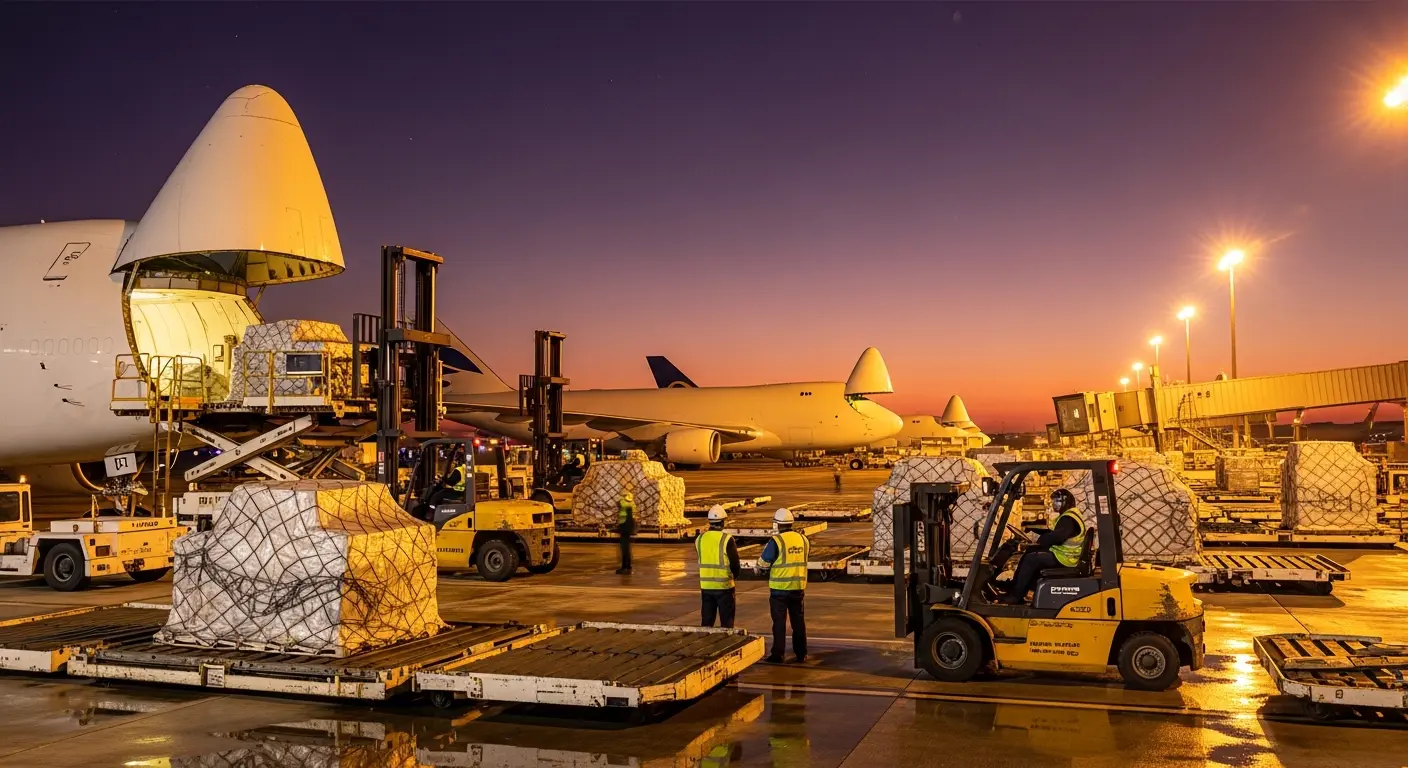
A consortium led by 4colors Research has secured funding from the National Quantum Computing Centre (NQCC) to tackle a critical challenge in aerospace logistics. Today, February 23, 2026, 4colors Research announced the award of an NQCC SparQ Grant under the 2025 STFC Cross Cluster Proof of Concept call, supporting a project focused on optimising aircraft cargo loading using a hybrid classical-quantum computing approach. The collaborative effort, which includes Airbus, DNV, NQCC, and ORCA Computing, aims to improve fuel efficiency, turnaround times, and fleet capacity. “Through the SparQ programme, NQCC is supporting important, industry-led projects that explore how quantum computing can deliver real-world impact,” commented Dr Rob Whiteman, Quantum Readiness Delivery Lead, NQCC. This project seeks to harness quantum power for practical and sustainable benefits within the industry.
HLNQCC SparQ Grant Fuels Aerospace Optimisation Project
The project, titled “Quantum-Accelerated Mixed-Integer Optimisation for Aircraft Loading,” directly addresses the computationally intensive challenge of optimising cargo placement for maximum efficiency. Even incremental improvements to this process promise significant reductions in fuel burn and CO2 emissions, alongside faster aircraft turnaround times.
This isn’t merely theoretical exploration; the project aims to demonstrate how hybrid classical–quantum computing can solve a real-world, high-impact problem for airlines and cargo operators. 4colors Research, winner of the 2024 Airbus × BMW Quantum Computing Challenge, brings expertise in complex optimisation algorithms to the collaboration. “The NQCC SparQ grant brings together partners with complementary expertise,” said Dr Marcin Kaminski, Founder and CEO of 4colors Research, “We are excited to collaborate on this use case and, more broadly, to push forward quantum solutions for combinatorial optimisation.” ORCA Computing will contribute its photonic quantum systems, believing that “Hybrid quantum–classical optimisation has real potential to unlock efficiencies in complex industrial workflows,” according to James Fletcher, Head of Solutions Architecture at ORCA Computing.
4colors Research & Consortium Tackle Aircraft Loading Challenges
Currently, optimising aircraft cargo loading remains a significant computational challenge for airlines and manufacturers alike, demanding efficient algorithms to maximise payload and minimise fuel consumption. This complex process, involving numerous trim, centre-of-gravity, and structural constraints, is ripe for improvement, with even incremental gains promising substantial benefits. The industry recognises that enhancing efficiency directly translates to better fleet utilisation and reduced environmental impact, driving the search for innovative solutions. A newly funded collaborative project, spearheaded by 4colors Research, aims to address this through hybrid classical–quantum computing.
ORCA Computing’s Photonic Systems Advance Hybrid Quantum Solutions
ORCA Computing is actively contributing to the advancement of hybrid quantum solutions, specifically through a new collaborative project focused on aerospace logistics. The London-based firm, with US offices, is deploying its photonic quantum systems within a consortium led by 4colors Research, recently awarded an NQCC SparQ Grant. The project seeks to improve payload utilisation and reduce fuel burn through optimised loading strategies, addressing both trim and centre-of-gravity constraints. This isn’t simply about theoretical gains; ORCA’s involvement signals a move toward commercially viable quantum applications in a critical sector.
Through the SparQ programme, NQCC is supporting important, industry-led projects that explore how quantum computing can deliver real-world impact. This consortium exemplifies the collaborative innovation needed to advance practical quantum optimisation
Source: http://www.4colors-research.com/
See today’s quantum computing news on Quantum Zeitgeist for the latest breakthroughs in qubits, hardware, algorithms, and industry deals.