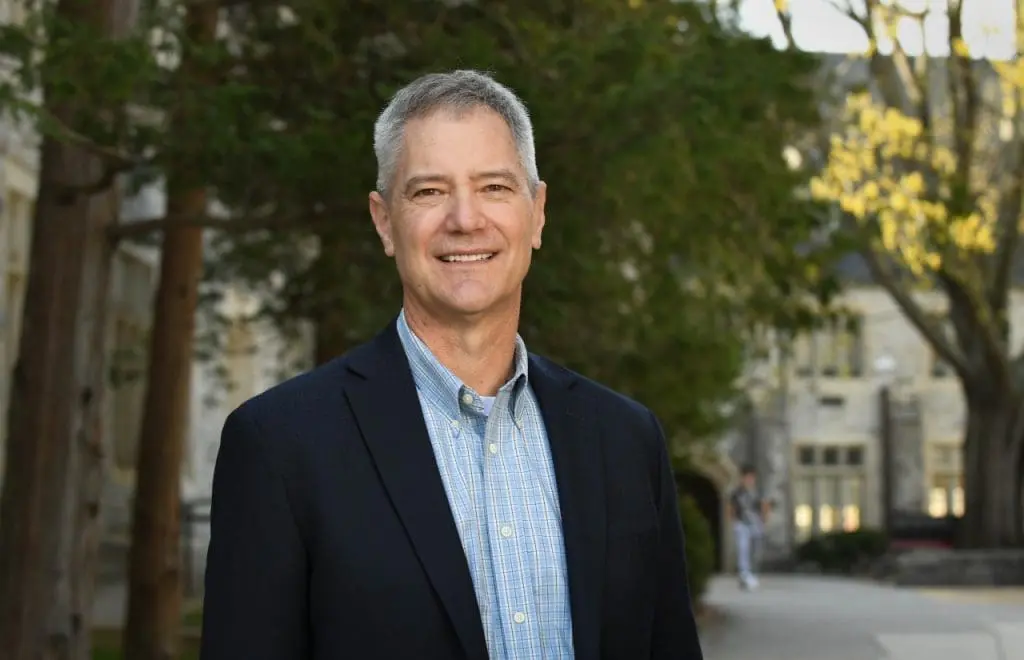
Virginia Tech physicist Kevin Pitts is among an international team honored with the Breakthrough Prize in Fundamental Physics for their work on the Muon g-2 experiment at Fermilab. The award recognizes contributions to experiments deepening our understanding of the universe’s fundamental building blocks, focusing on the muon, a subatomic particle more than 200 times heavier than an electron, requiring exceptionally precise measurement. Also celebrated are Virginia Tech graduate students Esra Barlas Yucel and Murong Cheng, acknowledging a commitment to fostering the next generation of physicists. “This work reflects decades of collaboration, persistence, and innovation from scientists across the globe,” Pitts said, emphasizing the long-term effort behind the findings that strengthen evidence for physics beyond our current understanding.
Muon g-2 Experiment Confirms Precise Measurement of Muon Anomalous Moment
Studying the muon, a subatomic particle exceeding the mass of an electron by over 200 times, presented significant challenges in achieving the necessary precision for these measurements. The particle’s weight demanded innovative techniques to observe its behavior accurately. Researchers are intently focused on discerning whether the muon deviates from predictions established by the Standard Model, the prevailing theory describing fundamental particles and forces, potentially signaling the existence of previously unknown physics. The experiment conducted at the U. S. Department of Energy’s Fermi National Accelerator Laboratory builds upon years of dedicated effort, demonstrating the long-term commitment required for fundamental physics research and the power of international partnerships. The Muon g-2 collaboration announced their most recent result in, producing the most precise measurement of the muon’s anomalous magnetic moment and bolstering the evidence suggesting the potential for undiscovered particles or forces influencing its behavior.
This finding is particularly compelling because it doesn’t simply confirm existing theories, but hints at a deeper, more complex reality beyond our current understanding. “Breakthroughs of this scale happen when universities, national laboratories, and international teams work together,” Pitts explained, emphasizing the importance of collaborative efforts in pushing the boundaries of scientific knowledge and potentially redefining our understanding of the natural world.
Kevin Pitts’ Contributions to Global Particle Physics Research & Discovery
Central to this effort is the Muon g-2 experiment at Fermilab, an international collaboration dedicated to studying the behavior of muons, subatomic particles exceeding the mass of electrons by a factor of over 200, making their precise measurement a significant technical challenge. This complexity stems from the muon’s inherent properties and the need to account for its interactions with quantum fluctuations, requiring sophisticated experimental techniques and data analysis. Kevin Pitts, dean of the College of Science and professor of physics, has been a key contributor to the Muon g-2 experiment for more than a decade, building on a distinguished career that includes involvement in the discovery of the top quark and the Deep Underground Neutrino Experiment. The Muon g-2 collaboration announced their most recent result in, representing the most precise measurement yet of the muon’s anomalous magnetic moment, strengthening evidence for physics beyond the Standard Model.
This finding isn’t merely a confirmation of existing theory, but a potential glimpse into previously unknown particles or forces influencing the muon’s behavior. “Experiments like Muon g-2 push the limits of precision and help us explore whether there is physics beyond our current understanding of the universe,” Pitts explained, highlighting the potential for redefining our knowledge of nature. For Virginia Tech, this recognition underscores its role in driving global scientific discovery through collaborative efforts with national laboratories and international teams.
Experiments like Muon g-2 push the limits of precision and help us explore whether there is physics beyond our current understanding of the universe.



See today’s quantum computing news on Quantum Zeitgeist for the latest breakthroughs in qubits, hardware, algorithms, and industry deals.