Researchers at the University of Utah have developed a new artificial intelligence framework leveraging the principles of quantum mechanics to personalize cancer treatment, addressing a critical limitation in current approaches. Recognizing that patient outcomes depend on a vast molecular background, potentially billions of features, the team tackled the challenge of limited patient data in clinical trials, which typically enroll between 20 and 100 individuals. “It’s much more than just one gene—everything that’s happening in the cells of the patient matters,” said Orly Alter, an associate professor of biomedical engineering at the University of Utah’s Scientific Computing & Imaging Institute and a member of the Huntsman Cancer Institute. By applying algorithms based on quantum entanglement and superposition to approximately 6 million tumor and blood DNA and tumor RNA features from 101 neuroblastoma patient samples, the researchers derived predictors of life expectancy that outperformed standard biomarkers.
Quantum Mechanics Improves AI for Neuroblastoma Treatment
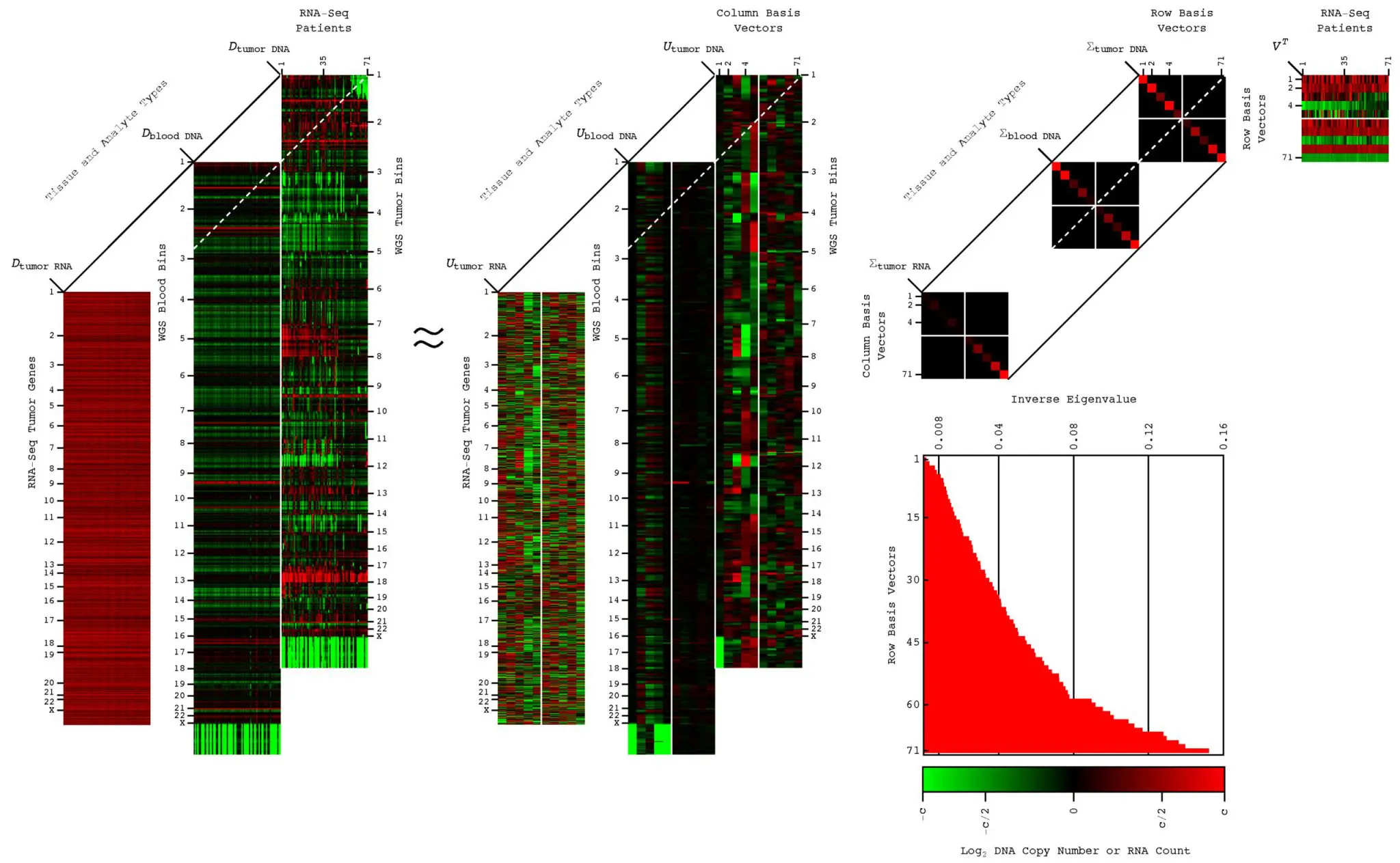
The conventional limitations of artificial intelligence in cancer research are being challenged by a novel approach leveraging the principles of quantum mechanics. Researchers are now able to derive meaningful insights from significantly smaller patient cohorts than previously thought possible. Current AI and machine learning methods demand vast datasets, a constraint particularly problematic in pediatric oncology where clinical trials often enroll only 20 to 100 patients. A recent large language model trained on the 30,000-nucleotide genome of the COVID-19 virus required approximately 110 million samples, highlighting the data intensity of traditional AI. The team’s technique, utilizing algorithms called multitensor comparative spectral decompositions, effectively breaks down complex molecular data into interpretable patterns.
These predictors consistently outperformed standard biomarkers and are applicable to a broader patient population. “Our quantum approach allows us to find the relevant information in every layer of the data, for example, from the patients’ blood in addition to their tumors,” Alter said. The resulting AI/ML predictions have been experimentally validated, a milestone widely considered a biotechnology goal, and are being commercialized through Alter’s spinoff company, Prism AI Therapeutics, Inc., to accelerate drug development and patient selection for clinical trials.
We also validate our AI/ML predictions of targets and outcomes experimentally, which is widely considered a biotechnology holy grail.
Orly Alter, University of Utah
Multitensor Decompositions Analyze High-Dimensional Genomic Data
Researchers are increasingly turning to quantum-inspired artificial intelligence to overcome limitations in analyzing the vast complexity of genomic data, particularly in cancers like neuroblastoma where treatment decisions can be surprisingly nuanced; some instances of the disease even resolve spontaneously without intervention. A recent effort to model the 30,000-nucleotide genome of the COVID-19 virus, for example, necessitated approximately 110 million samples, a scale wholly impractical for cancer research. Their work, published in Applied Physics Letters (APL) Quantum, demonstrates the ability to derive meaningful predictors of patient outcomes from a relatively small cohort of 101 neuroblastoma patient samples, utilizing approximately 6 million tumor and blood DNA and tumor RNA features. The resulting predictors consistently outperformed standard biomarkers, and importantly, demonstrated generalizability across different patient groups and hospitals, paving the way for more personalized cancer care and targeted drug development.
Even for very few patients, we can still take everything in-their millions to billions of molecular features-and make sense of them. We can, therefore, understand the disease mechanisms and predict drug targets to improve patients’ outcomes.
Orly Alter, University of Utah
This approach addresses a critical challenge in clinical trials, where typical enrollment of 20 to 100 patients restricts the effectiveness of conventional AI/ML methods demanding vast datasets. This allowed them to derive, test, and interpret new predictors of life expectancy in response to treatment, consistently outperforming standard biomarkers.
Neural network models are black boxes, but our predictors are interpretable; they point to disease mechanisms and suggest genes to target to sensitize tumors to treatment,” Alter said.
Orly Alter, University of Utah
Prism AI Therapeutics Validates Targets with CRISPR-Cas9
Prism AI Therapeutics is moving beyond prediction, directly validating potential therapeutic targets identified by its quantum-inspired artificial intelligence with the precision of CRISPR-Cas9 gene editing. This validation step addresses a longstanding hurdle in computational biology; identifying promising targets is insufficient without experimental confirmation of their impact on disease. The company, a University of Utah spinoff founded by Orly Alter, is leveraging CRISPR-Cas9 in both clinical trials and preclinical studies to test predictions generated by its AI framework. Alter and her team demonstrated this capability using data from neuroblastoma cases, successfully identifying two novel predictors of patient life expectancy that outperformed standard biomarkers across multiple data types.
These findings weren’t limited to the initial dataset; they remained consistent when applied to children treated at different times and hospitals, suggesting broad applicability. “Neural network models are black boxes, but our predictors are interpretable; they point to disease mechanisms and suggest genes to target to sensitize tumors to treatment,” Alter explained. The AI’s ability to derive meaningful insights from limited data is particularly significant given the challenges of gathering large patient cohorts for cancer research. Traditional machine learning approaches struggle with small sample sizes, requiring vastly more patients than genetic features. This rigorous validation process, combining computational prediction with experimental validation, positions Prism AI Therapeutics to accelerate drug development and personalize cancer treatment strategies.
It’s much more than just one gene-everything that’s happening in the cells of the patient matters,” said Orly Alter , an associate professor of biomedical engineering at the University of Utah’s Scientific Computing & Imaging Institute and a member of the Huntsman Cancer Institute ‘s Cancer Control & Population Sciences.




See today’s quantum computing news on Quantum Zeitgeist for the latest breakthroughs in qubits, hardware, algorithms, and industry deals.