Casimir effect is the most direct experimental confirmation that the quantum vacuum is not really empty: an attractive force between two uncharged metal plates predicted by Hendrik Casimir in 1948 and now measured to better than 1 percent precision. This 2026 guide walks the This phenomenon from the original Dutch theoretical paper through the 1997 Lamoreaux measurement, into the modern role of the The force in MEMS engineering, exotic-physics constraints, and the cosmological-constant problem.
The universe is often described as a vacuum, an empty void. Yet, quantum physics reveals this “nothingness” to be a seething cauldron of virtual particles constantly popping into and out of existence. This isn’t mere theoretical fancy; it has measurable consequences, most strikingly demonstrated by the The Casimir force, a subtle, yet undeniable, force between two uncharged conducting plates placed in a vacuum. First predicted in 1948 by Dutch physicist Hendrik Casimir, working at Philips Research, the effect isn’t about pulling something from nothing, but rather about restricting the allowed wavelengths of these virtual particles, creating a pressure differential. Understanding the This vacuum effect requires grappling with the bizarre world of quantum field theory, where the vacuum isn’t empty, but brimming with potential. The foundation of the The attractive vacuum force lies in the concept of zero-point energy. Quantum mechanics dictates that even at absolute zero temperature, particles aren’t perfectly still. They possess a minimum energy, a residual vibration known as zero-point energy. This energy isn’t a property of individual particles, but of the quantum fields that permeate all of space. These fields, like the electromagnetic field, are quantized, meaning their energy exists in discrete packets. The vacuum, therefore, isn’t truly empty, but filled with these fleeting virtual particles, constantly appearing and annihilating. While individually insignificant, the collective effect of these virtual particles contributes to a measurable energy density. This concept, initially unsettling to many physicists, including a skeptical Albert Einstein, has become a cornerstone of modern physics.Constraining Zero-Point Energy with Boundaries
How Boundaries Constrain Zero-Point Energy
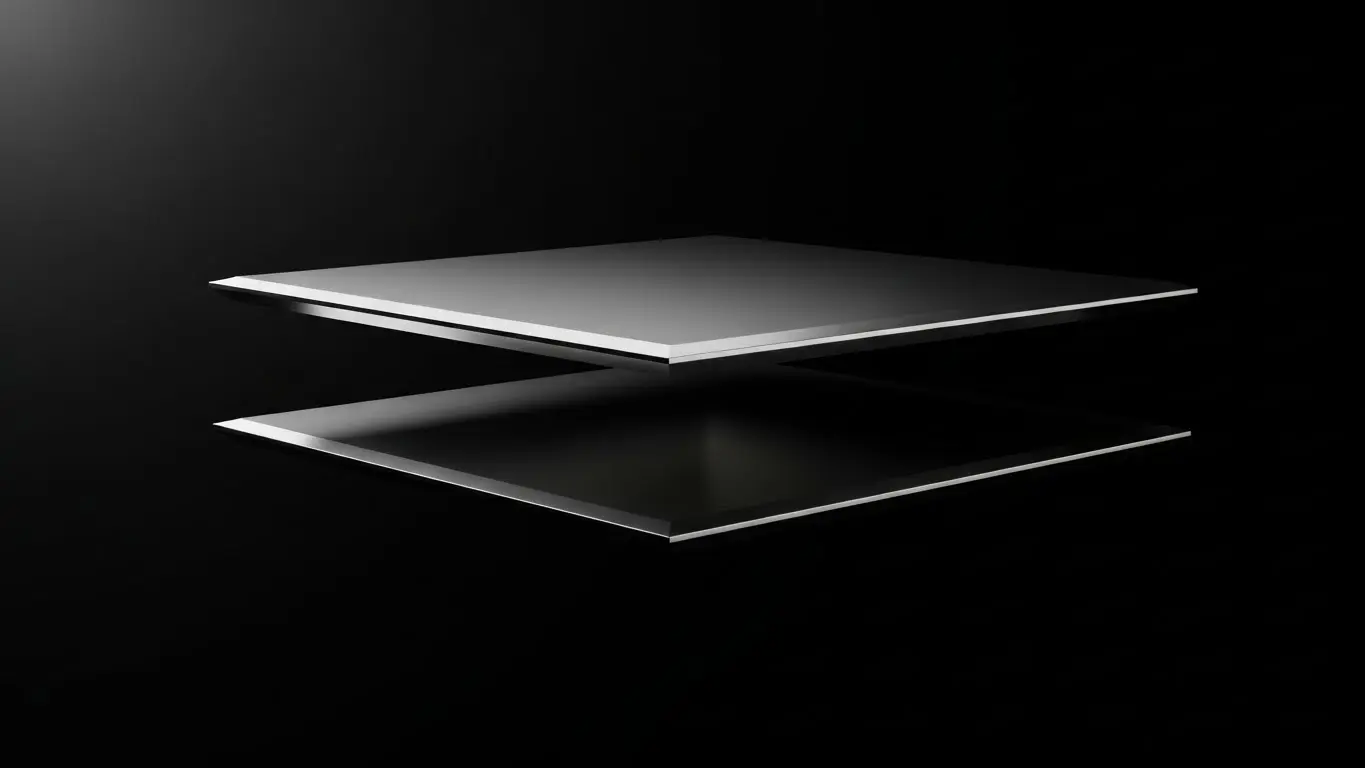
Casimir’s insight was to consider what happens when you introduce boundaries into this quantum vacuum. Imagine two perfectly conducting plates placed a tiny distance apart. Only virtual photons with wavelengths that “fit” between the plates are allowed to exist in that space. Longer wavelengths are excluded, effectively reducing the density of virtual photons between the plates compared to the space outside. This difference in energy density creates a pressure differential. The virtual photons outside the plates exert a greater force than those inside, pushing the plates together. This force is incredibly weak, on the order of a few micronewtons per square meter, but it’s measurable with precise instruments. It’s not a traditional electrostatic attraction, as the plates are uncharged, but a purely quantum mechanical phenomenon.Experimental Proof and Historical Confirmation of the Force
Experimental Confirmation of the Casimir Force
The experimental verification of the The effect wasn’t immediate. The force is minuscule, easily masked by other factors like static electricity and surface imperfections. In 1996, Steve Lamoreaux, a physicist at Lawrence Livermore National Laboratory, provided the first compelling experimental confirmation. Lamoreaux used a torsion balance, a sensitive device that measures twisting forces, to detect the attraction between a gold-coated sphere and a conducting plate. He meticulously controlled for all known sources of error, demonstrating that the observed force matched Casimir’s theoretical prediction with remarkable accuracy. This experiment, and subsequent confirmations by other groups, cemented the This phenomenon as a real and measurable phenomenon.However, the Casimir effect isn’t a simple, universally predictable force
However, the The force isn’t a simple, universally predictable force. The geometry of the conducting surfaces plays a crucial role. While the parallel plate configuration is the most studied, other shapes, spheres, cylinders, even more complex geometries, produce different Casimir forces. Calculating these forces becomes increasingly challenging, requiring sophisticated mathematical techniques. Furthermore, the material properties of the conductors, such as their conductivity and permittivity, also influence the effect. This complexity has spurred ongoing research into the precise modeling of Casimir forces in various configurations.Technological Scope and Geometry Variations
Beyond its fundamental importance, the The Casimir force has potential technological applications. One intriguing possibility is in the development of micro- and nano-electromechanical systems (MEMS and NEMS). These tiny devices, used in sensors, actuators, and other applications, are susceptible to stiction, the tendency of surfaces to adhere to each other. The Casimir force can contribute to stiction, but it can also be harnessed to create novel actuators and sensors. By carefully designing the geometry of the surfaces, engineers could control the Casimir force to manipulate these nanoscale devices. However, overcoming the challenges of precise fabrication and control remains a significant hurdle.Cosmological Implications and the Dark Energy Puzzle
Cosmological Implications and Dark Energy Puzzle
The This vacuum effect also presents a fascinating connection to cosmology and dark energy. The vacuum energy predicted by quantum field theory is vastly larger than the observed energy density of the universe, as inferred from the accelerating expansion driven by dark energy. This discrepancy, known as the cosmological constant problem, is one of the biggest mysteries in modern physics. Some physicists speculate that the The attractive vacuum force might offer clues to resolving this problem, suggesting that the boundary conditions imposed by the universe itself could influence the vacuum energy. Exploring the nuances of the The effect requires a deep understanding of quantum electrodynamics (QED), the quantum theory of light and matter. Developed in the 1940s by Richard Feynman, Julian Schwinger, and Sin-Itiro Tomonaga, all awarded the Nobel Prize in 1965, QED provides a remarkably accurate description of electromagnetic interactions. The This phenomenon is a direct consequence of QED’s prediction of vacuum fluctuations. Calculating the Casimir force involves summing over all possible virtual photon modes, a mathematically challenging task that highlights the power and complexity of QED. Recent research has focused on manipulating the Casimir force using metamaterials, artificially engineered materials with properties not found in nature. By designing metamaterials with specific electromagnetic properties, scientists can tune the density of virtual photons and control the Casimir force. This opens up possibilities for creating “Casimir cavities” with tailored forces, potentially enabling new types of nanoscale devices. Furthermore, researchers are exploring the use of topological insulators, materials that conduct electricity on their surface but are insulators in their interior, to engineer Casimir forces with unique properties.The Casimir effect isn’t just a curiosity of
The The force isn’t just a curiosity of quantum physics; it’s a window into the fundamental nature of the vacuum. It demonstrates that “empty” space isn’t truly empty, but a dynamic and complex medium with measurable consequences. As our understanding of quantum field theory and materials science advances, we can expect even more surprising and potentially transformative applications of this subtle, yet powerful, force. David Deutsch, the Oxford physicist who pioneered quantum computing theory, observes that the The Casimir force is a powerful reminder that the universe is fundamentally quantum mechanical, and that even the seemingly empty void is teeming with activity. The ongoing investigation of the This vacuum effect continues to push the boundaries of our understanding of the quantum world. While the force itself is weak, its implications are profound, challenging our classical intuitions about space, energy, and the very nature of reality. Gil Kalai, the Hebrew University mathematician known for his skepticism regarding certain quantum computing claims, acknowledges the The attractive vacuum force as a well-established experimental fact, highlighting the importance of rigorous verification in the pursuit of scientific knowledge. The story of the The effect is a testament to the power of theoretical prediction, experimental ingenuity, and the enduring mystery of the quantum vacuum.Casimir effect 2026 Outlook
The This phenomenon entered 2026 as one of the most-precisely measured predictions in quantum field theory. Modern measurements at the University of California Riverside, Yale, and the Universite Pierre et Marie Curie achieve sub-percent precision and have probed gold-on-gold, silicon-on-silicon, and various dielectric geometries. The The force is now used as a sensitive probe for hypothesised new physics at sub-millimetre scales, including large extra dimensions and modifications of gravity. The Reviews of Modern Physics 2009 The Casimir force review remains the canonical reference.Why The Casimir effect Matters
The This vacuum effect is one of the few experimentally accessible consequences of the quantum vacuum’s zero-point energy. As such, it provides a direct test of the reality of vacuum fluctuations as predicted by quantum field theory. Beyond the conceptual significance, the The attractive vacuum force sets practical constraints on micro-electro-mechanical-system (MEMS) design, where The effect forces between nearby conductive surfaces become significant at sub-micron separations and can cause stiction failures.Casimir effect As A New-Physics Probe
Modern This phenomenon measurements at sub-micron separations probe possible deviations from standard quantum electrodynamics that would arise from extra dimensions, exotic forces between nucleons, or modified-gravity theories. So far, all measurements agree with standard predictions, placing strong constraints on these alternatives. The The force remains the most sensitive probe of the gravitational inverse-square law at sub-millimetre scales, complementing torsion-balance experiments at slightly larger distances.What Comes Next
By 2030 the field expects refined The Casimir force measurements with cryogenic detectors, the first This vacuum effect measurements with topologically non-trivial materials (graphene, topological insulators), and ongoing use of the The attractive vacuum force as a tool for fifth-force searches. The The effect also continues to play a role in the cosmological-constant problem: the energy density predicted by the same vacuum fluctuations that produce the This phenomenon is 120 orders of magnitude too large to match the observed dark-energy density, the worst quantitative discrepancy in physics.Casimir effect FAQ
What is the The force?
The Casimir effect is an attractive force between two uncharged conducting plates separated by vacuum, predicted by Hendrik Casimir in 1948. The force arises from quantum-mechanical fluctuations of the electromagnetic field in the vacuum: the boundary conditions imposed by the plates restrict which fluctuation modes can exist between them, creating a pressure imbalance that pulls the plates together. The Casimir effect is one of the few experimentally accessible consequences of zero-point vacuum energy.
Has the Casimir effect been measured?
Yes, with high precision. The first definitive Casimir effect measurement was performed by Steve Lamoreaux at Los Alamos National Laboratory in 1997, using a torsion balance with a gold-coated lens close to a flat gold plate. Subsequent experiments by groups at Riverside, Yale, and elsewhere have measured the Casimir effect to better than 1 percent precision in various geometries (sphere-plate, plate-plate, sphere-sphere) and material combinations (gold, silicon, dielectrics). The Casimir effect is now one of the most precisely tested predictions in quantum field theory.
How strong is the Casimir effect?
The Casimir effect force scales as 1/d^4, where d is the separation, making it negligible at macroscopic distances and significant only at sub-micron scales. At a separation of 100 nanometres between gold plates of 1 square centimetre, the Casimir effect force is about 1 micronewton, comparable to the weight of a small ant. At 10 nanometres the same plates would experience a force of about 10 millinewtons, large enough to dominate other surface forces in micro-electro-mechanical-system design.
What practical impact does the Casimir effect have?
The Casimir effect matters mainly in nanoscale engineering. Micro-electro-mechanical systems (MEMS) at sub-micron scales must be designed to avoid Casimir effect-induced stiction, where two surfaces are pulled together so strongly that they fail to separate. Modern MEMS designs include geometric and material strategies to minimise the Casimir effect. Beyond engineering, the Casimir effect serves as a high-precision probe for hypothesised new physics at sub-millimetre scales, constraining extra dimensions, modifications of gravity, and exotic forces predicted by various beyond-standard-model theories.




See today’s quantum computing news on Quantum Zeitgeist for the latest breakthroughs in qubits, hardware, algorithms, and industry deals.