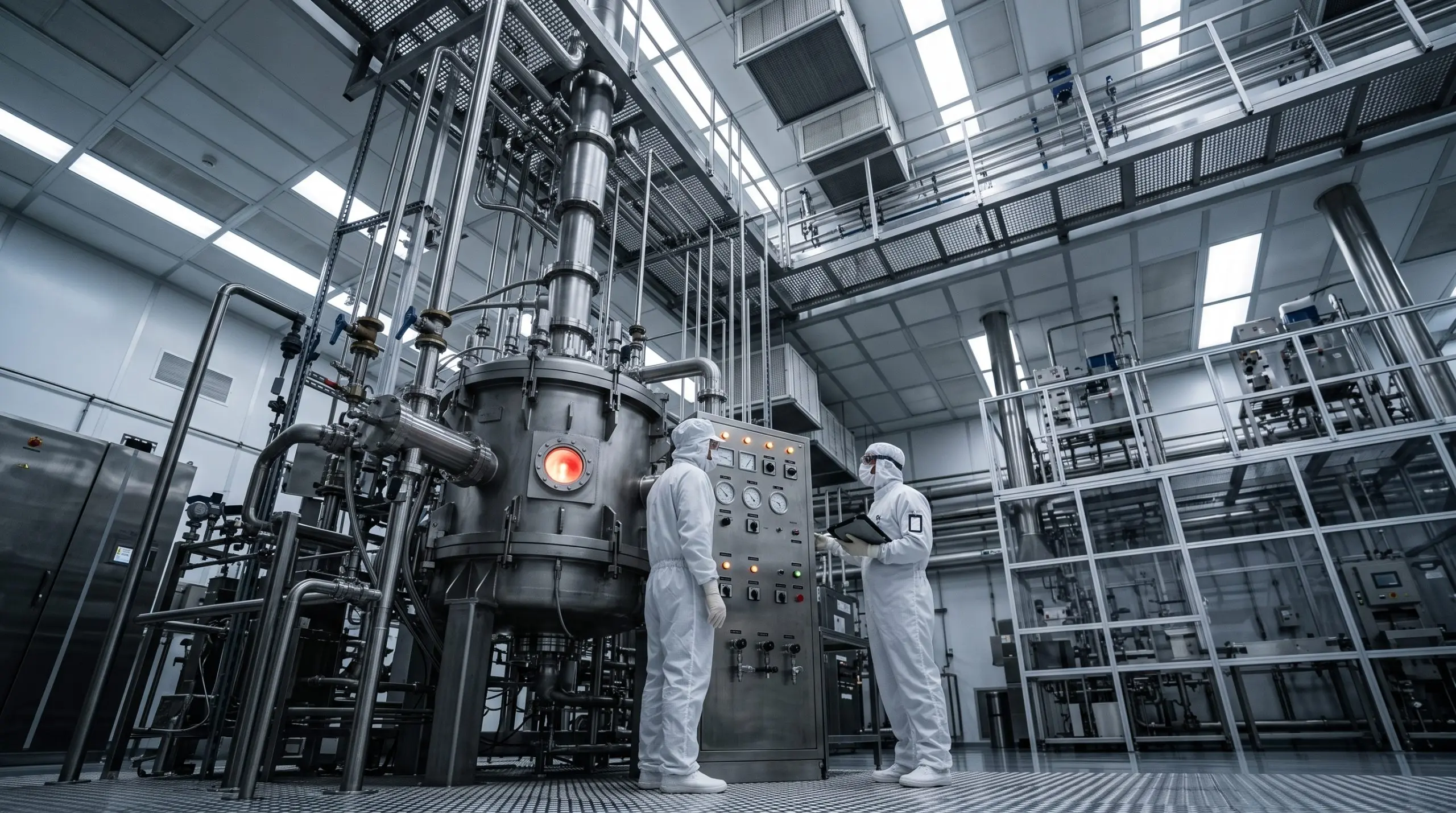
Researchers led by Song Lin of Stanford University have developed chips smaller than a grain of rice capable of monitoring chemical reactions as they happen within test tubes, a level of in-situ data collection previously impossible without disrupting the process itself. The team adapted Optical Wireless Integrated Circuits to create what they call “reaction telemetry,” the automated collection and transmission of data during a chemical reaction, providing a stream of information previously unavailable to chemists.
“We’ve essentially given these chemical reactions, and the molecules in them, their own cell phones,” Lin said, explaining how the chips wirelessly communicate reaction progress to researchers. This new system promises to accelerate chemistry-related research, including drug discovery and materials development, by delivering nearly 700,000 data points from a single hour-long experiment with 96 test tubes.
Optical Wireless Integrated Circuits Enable Reaction Telemetry
The newly developed system transmits data using optically powered microelectronics, enabling real-time monitoring of chemical processes without physical intrusion. These chips, measuring less than a grain of rice, are designed to detect temperature and heat exchange within reaction vessels, wirelessly relaying information to a computer throughout the duration of the experiment.
This capability addresses a longstanding challenge in chemistry, where researchers previously relied on either disruptive sampling, costly specialized instruments, or single-point analysis after completion. Song Lin explained the core principle behind this innovation: “In a sense, we are trying to wirelessly communicate with these chemical reactions so they can tell us how they’re doing, which helps us understand their progress and fix any problems.”
Initial experiments demonstrated the system’s ability to identify heat generation, enabling researchers to adjust conditions for optimized outcomes. Beyond temperature, the researchers anticipate expanding the chips’ sensing capabilities to include electrical conductivity, light transmission and acidity levels. This versatility stems from the design of these “wireless, optically powered optoelectronic sensors,” as described in supporting materials.
The development of this system required collaboration between chemists, physicists and electrical engineers, initially at Cornell University before Lin transitioned to Stanford in July. Lin believes this interdisciplinary approach is key, stating, “Now that we can design these circuits to understand chemistry, there are endless possibilities.” The team’s work, documented through video footage of the chips communicating via laser, represents a shift toward in-situ data acquisition, promising to accelerate discovery in fields like drug development and materials science.
We’ve essentially given these chemical reactions, and the molecules in them, their own cell phones.
Song Lin, professor of chemistry in Stanford’s School of Humanities and Sciences
Real-Time Data Detects Catalyst Poisoning & Reaction Issues
The new telemetry system expands data collection beyond the limitations of batch processing; 96 reactions previously yielded 96 data points, whereas the microelectronic chips now relay a data point every half-second, generating approximately 7,200 data points per test tube after a single hour-long reaction. Co-first authors Sukwoo Lee and Evan Weingarten, doctoral students at Stanford University, tested the system’s efficacy in identifying issues within chemical reactions, specifically focusing on catalyst poisoning.
Catalysts, substances that accelerate reactions, can become deactivated by impurities, halting the process, and the chips demonstrated the ability to detect this shutdown in real time. The detailed data stream from the chips not only revealed that a reaction had stopped, but also often explained why, allowing researchers to adjust reaction conditions to exclude or inhibit the poisoning agent. In separate experiments, the team used the system to monitor heat generation, a critical safety concern in many chemical processes.
By running reactions on a small scale with real-time data from the chips, scientists could identify conditions leading to excessive heat and then “tune” the reaction to reduce it. This proactive approach to safety monitoring was previously difficult to achieve without interrupting the reaction itself. “Systems and methods for driving a light emitter” are central to the data transmission, enabling wireless communication from within the reaction vessel.
Now that we can design these circuits to understand chemistry, there are endless possibilities.
Song Lin, professor of chemistry in Stanford’s School of Humanities and Sciences
High-Throughput System Yields Vastly Increased Data Points
This leap in granularity stems from the chips’ ability to relay a data point every half-second, enabling researchers to track reaction progress in near real-time. The system’s design allows for simultaneous monitoring within each test tube, a capability previously unattainable without interrupting the chemical processes themselves. Beyond sheer volume, the data stream reveals detailed insights into reaction behavior. Researchers can now observe how a reaction generates heat and adjust conditions to optimize performance.
By running experiments on a smaller scale with this real-time feedback, scientists can proactively identify and address potential issues before they escalate. The chips, termed Optical Wireless Integrated Circuits, measure temperature and communicate optically using an onboard laser, transmitting data wirelessly to a computer for analysis.
The potential applications of this technology extend beyond heat detection, as the researchers envision adapting the chips to measure electrical conductivity, light transmission and acidity. “The abilities of this system are not limited to detecting heat,” the team notes, suggesting a versatile platform for comprehensive chemical analysis. Song Lin, the Stanford chemist who spearheaded the interdisciplinary collaboration, believes this level of detailed monitoring will accelerate advancements in fields like materials development and drug discovery, offering a more precise understanding of complex chemical dynamics.


See today’s quantum computing news on Quantum Zeitgeist for the latest breakthroughs in qubits, hardware, algorithms, and industry deals.