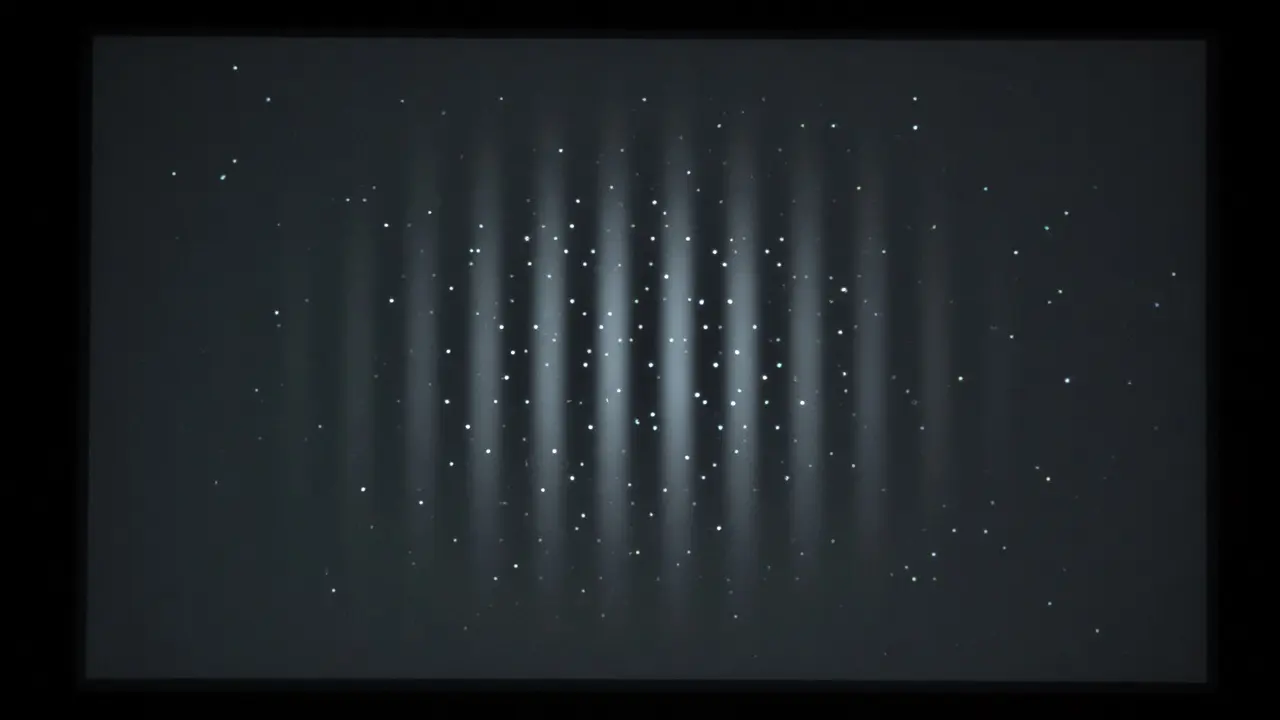
Variations in out-of-time-order correlators persist as quantum systems grow larger, establishing a key step towards verifiable quantum advantage. These calculations reveal inverse-polynomial fluctuations within broad categories of locally connected random circuits at practical computational scales. This finding enables estimations of these correlations as a means of confirming the benefits offered by quantum computation. The team demonstrated that variations persist when measuring out-of-time-order correlators, a property used to assess quantum systems, even as those systems become larger and more intricate.
These calculations reveal subtle shifts within certain types of randomly connected quantum circuits operating at practical scales; these are not averaged out with increased complexity. This finding addresses concerns about reliably proving an advantage offered by quantum computers over traditional methods. Variations within out-of-time-order correlators, a way of measuring how much two parts of a quantum computer ‘know about each other at different moments in time potentially revealing its power, persist even as quantum systems grow larger.
These calculations reveal subtle shifts within specific types of randomly connected quantum circuits operating at practical scales; these are not simply averaged away with increased complexity. The team’s work builds on recent experiments estimating OTOCs as a potential pathway to verifiable quantum advantage but needed to confirm whether fluctuations would remain detectable with increasing system size. Like building with Lego bricks arranged randomly yet following rules for connection, these complex circuits exhibit behaviour that challenges classical simulation.
Inverse Polynomial Fluctuations Reveal Threshold For Verifiable Quantum Advantage
Fixed-order out-of-time-order correlators (OTOCs) are key to assessing quantum systems and exhibit inverse-polynomial fluctuations at system scale depths. This represents an improvement over previous methods limited to estimating or simulating these correlations. The finding establishes a threshold where variations in OTOC measurements persist even as complexity increases, which is vital for verifying potential advantages offered by quantum computers, something previously unattainable due to concentration effects suppressing differences between circuits.
Johannes Feldmann from Freie Universität Berlin and collaborators at Google Quantum AI also developed a classical algorithm improving upon brute-force simulation of one-dimensional OTOCs; this offers the first strong advancement in this area and reinforces prospects for verifiable quantum advantage through observable estimation techniques. Measurable circuit differences are observed despite increasing system complexity via inverse-polynomial fluctuations in fixed-order out-of-time-order correlators (OTOCs). In one dimension, analysis revealed many gates contribute to these fluctuations but remain confined within a limited region of each layer of the circuit.
A new classical algorithm was developed by scientists representing an improvement over existing methods for simulating one-dimensional OTOCs. This achieves rigorous advancement in this field and offering potential benefits for verifying quantum advantage using observable estimation techniques; demonstrating practical utility requires overcoming challenges related to proving definitive computational hardness beyond currently known algorithms.
Detecting Quantum Circuit Instabilities via Averaged Out-of-Time-Order Correlator Fluctuations
The team carefully tracked how out-of-time-order correlators, a measure of connectivity within a quantum computer at varying times, change as circuits become deeper and more complex. Subtle variations are easily lost when averaging results across many similar calculations, akin to losing detail in increasingly high-resolution photographs, making this tracking crucial.
Instead of directly calculating these correlations, which becomes computationally demanding with larger systems, they examined the changes in averaged values over differing circuit depths and linked those changes to demonstrable fluctuations between individual instances. Their work considered broad classes of local random circuits and established inverse-polynomial fluctuations at system scale depths without explicitly evaluating higher order moments or relying on known classical methods for their evaluation.
Sustaining signals of quantum behaviour amidst computational complexity
Demonstrating computational tasks where a quantum computer provably outperforms its classical counterparts is central to achieving verifiable quantum advantage, yet establishing this benefit has proven remarkably difficult. Researchers tackled a key obstacle: concentration effects which diminish observable differences between multiple runs of a quantum circuit, potentially masking any genuine speedup. Recent studies explored using out-of-time-order correlators (OTOCs) to signal quantum superiority; however, it remained unclear whether these subtle indicators would survive as systems scale up and variations are averaged away by increasingly complex calculations.
Johannes Feldmann, alongside collaborators from Google Quantum AI, proved that fluctuations in out-of-time-order correlators, a measure used to assess quantum systems, do not diminish with increasing complexity within certain types of circuits. By establishing inverse-polynomial fluctuations for fixed-order OTOCs with key number O(k), researchers have moved beyond simply hoping for observable variations and demonstrated them mathematically.
The research confirmed that fluctuations in out-of-time-order correlators persist even as the size and depth of random quantum circuits increase. This matters because these subtle differences are considered potential indicators of quantum advantage, a demonstration that a quantum computer can outperform classical methods on specific tasks.
The team proved this effect using calculations on local random circuits, showing measurable variation exists without relying on existing classical simulation techniques. They also developed an algorithm which improves upon current classical simulations of these OTOCs in one dimension, ruling out strong concentration as a barrier to verifying quantum advantages.
👉 More information
🗞 Towards verifiable quantum advantage with random circuits: Observables that survive concentration
✍️ Antonio A. Mele (Freie Universität Berlin); Francesco A. Mele (Affiliation: Institute for Quantum Information and Matter); Jarrod R. McClean (Affiliation: Google Quantum AI); Thomas E. O'Brien
🧠 ArXiv: https://arxiv.org/abs/2609.37890


See today’s quantum computing news on Quantum Zeitgeist for the latest breakthroughs in qubits, hardware, algorithms, and industry deals.