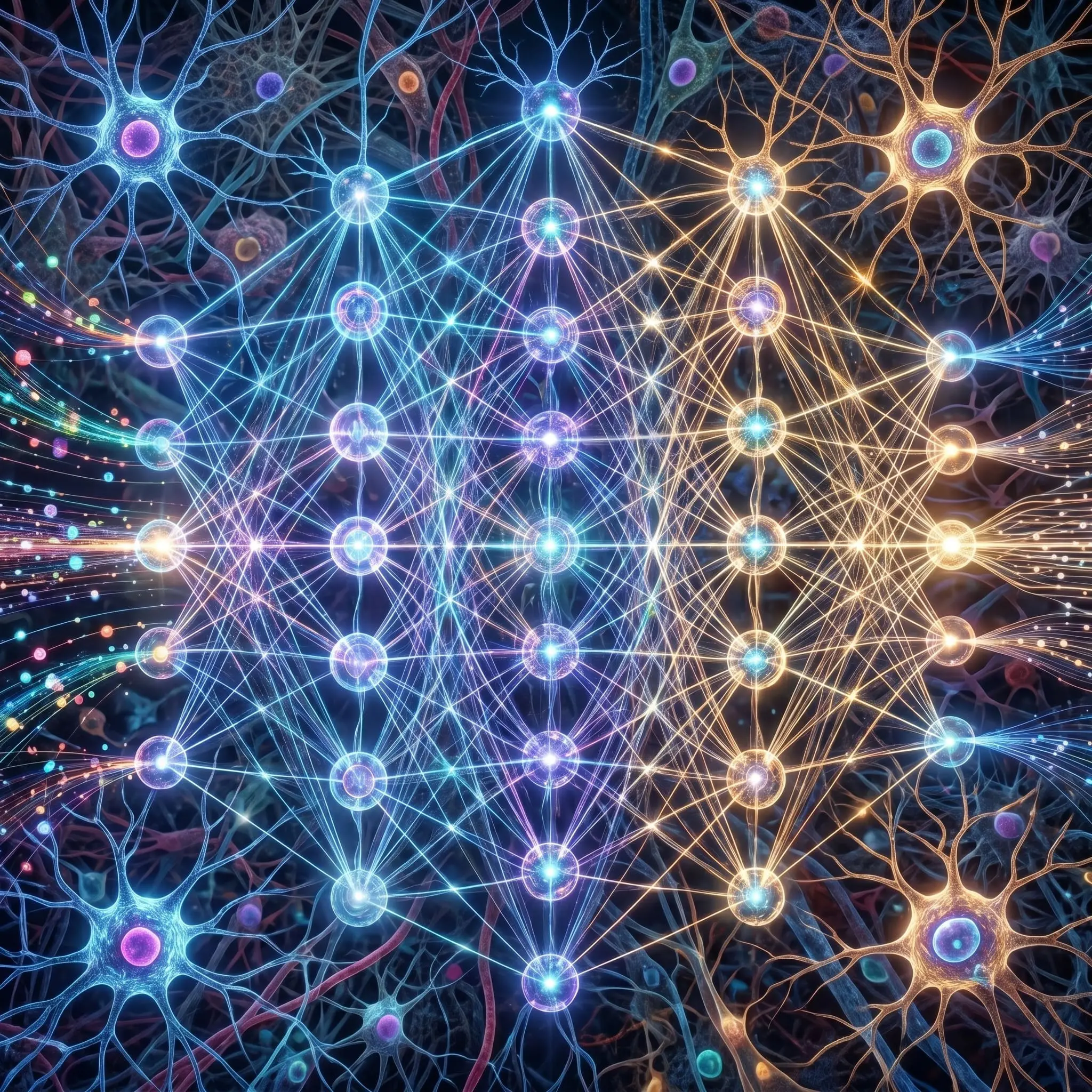
A new quantum neural network architecture with a global structure minimises the complexity of quantum circuits, as demonstrated by Shun Ryuzaki and Hideo Mukai at Meiji University. The method achieves a sharp 97% reduction in training time and boosts training completion rates by up to 25%, resulting in 100% successful training and improved error correction performance compared with existing techniques. Furthermore, the research highlights key enhancements in strong resistance against internal noise, with quantum error correction fidelity increasing by as much as 15% through reduced computational demands.
Rapid Quantum Error Correction Training via Neural Network Optimisation
A 97 percent reduction in training time for the quantum neural network was achieved, a figure previously unattainable due to the computational burden of complex quantum circuits. The breakthrough enables successful training of quantum error correction systems where prior methods consistently failed to converge, achieving 100 percent training success and representing a major leap forward. Enhanced fidelity of quantum error correction, increasing by up to 15 percent even under internal network noise, demonstrates improved durability and reliability in maintaining quantum information.
The advance minimises the number of unitary matrices needed for error correction, streamlining the process and unlocking new possibilities for scalable quantum computing. A 25 percent improvement in training completion rate exceeds performance levels seen in previous quantum error correction work. Strength against internal network noise was enhanced, with quantum error correction fidelity increasing by up to 15 percent under these conditions; further investigation will explore performance under more complex noise models and on actual quantum hardware.
Global quantum neural networks enhance error correction with limited noise modelling
Quantum error correction fidelity demonstrated a substantial improvement under internal network noise, with error rates dropping to 2.9 percent. This advance stems from a newly developed quantum neural network possessing a global structure, designed to minimise the number of unitary matrices required for operation. The authors acknowledge that their results currently focus solely on ‘internal network noise’, a specific type of disturbance within the quantum system itself.
This restricted scope is a key caveat when interpreting the full potential of the approach. Training completed at 100%, a striking feat given the challenges of convergence in quantum machine learning. Often, previous methods struggle with ‘saddle points’ or ‘local minima’ within the computational field, hindering the training process; this new model mitigates these issues through a reduction in network parameters. By designing a model with fewer parameters, the model addresses the ‘barren plateau’ problem, thereby improving training stability.
Self-contained quantum neural networks accelerate error correction and training efficiency
Researchers of Berlin have developed a quantum neural network with a global structure, substantially reducing the number of unitary matrices needed for quantum computation. This new architecture achieved a 97 per cent reduction in training time, a vital factor in developing practical quantum computers, and improved training completion rates by up to 25 per cent. The approach addresses a longstanding problem in quantum computing: the sensitivity of qubits to disturbances and interference, necessitating strong error correction.
Previous methods often used ancilla qubits and measurements, processes that can introduce further errors; instead, this approach employs a fully self-contained method, eliminating those measurements. Autonomous quantum error correction using quantum machine learning, without measurements, has recently garnered attention. Due to reduced computational load, improvements in the fidelity of quantum error correction against internal network noise increased by up to 15%, surpassing previously reported performance.
This model also resulted in a 97% reduction in training time and a 25% improvement in training completion rate, ultimately achieving 100% training success. To mitigate issues related to convergence during training, particularly the potential for saddle points and local minima in the cost function, the model was designed to reduce the number of parameters, addressing the ‘barren plateau’ problem. This parameter reduction also enables the scaling of networks previously considered intractable, improving the overall performance of quantum error correction.
The new architecture delivers a functional quantum neural network capable of consistently completing training, a feat previously unattainable due to the computational demands of error correction. Reducing the number of unitary matrices, the building blocks of quantum calculations, streamlines the process and improves durability against internal noise within the system. Achieving a 15 per cent increase in fidelity demonstrates a greater ability to preserve quantum information during processing; however, assessing performance in more complex, real-world scenarios remains the next important step.
The research successfully demonstrated a new quantum neural network architecture for quantum error correction. This approach reduced training time by 97% and improved training completion rates by up to 25%, ultimately achieving 100% training success. Importantly, the fidelity of quantum error correction increased by up to 15% due to a reduced computational load and greater robustness against internal network noise. The authors suggest further assessment of performance in more complex scenarios is a necessary next step.
👉 More information
🗞 Quantum Global Variational Learning for Quantum Error Correction
🧠 ArXiv: https://arxiv.org/abs/2606.08592



See today’s quantum computing news on Quantum Zeitgeist for the latest breakthroughs in qubits, hardware, algorithms, and industry deals.