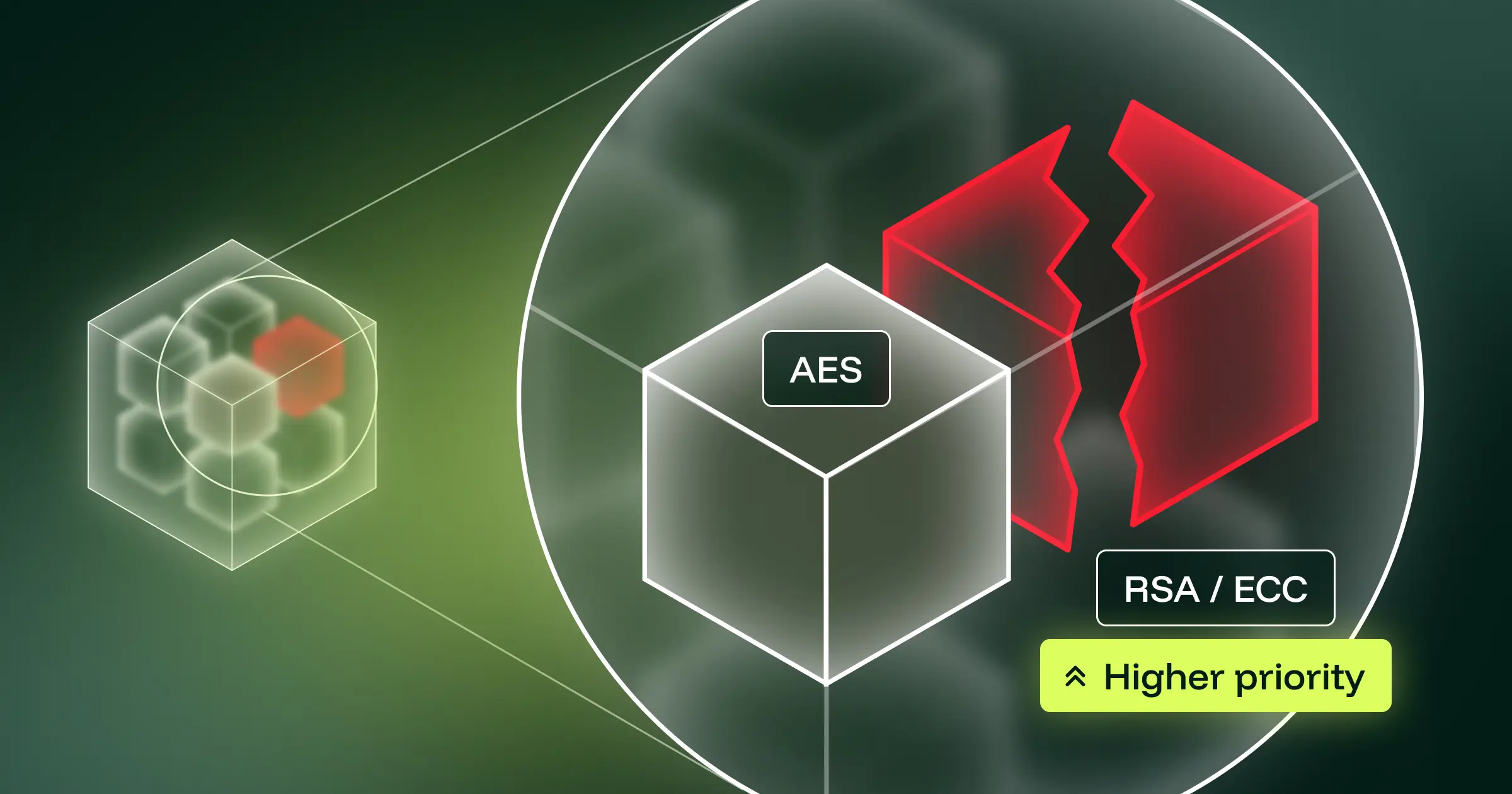
Q.security reports that widely used public-key cryptographic methods are the first major target as quantum computing advances, specifically through the application of Shor’s algorithm. This algorithm directly threatens RSA, Diffie-Hellman, DSA and elliptic curve schemes like ECDH, ECDSA, and EdDSA, potentially compromising secure communications and digital signatures.
Unlike many assumed benefits of quantum computing, the speedup isn’t universal; Shor’s algorithm provides an exponential advantage for breaking these systems, while Grover’s algorithm offers a smaller gain for other problem types. The National Institute of Standards and Technology has already standardized new systems based on lattice problems, with ML-KEM and ML-DSA leading the way.
Shor’s Algorithm Threatens Existing Public-Key Cryptosystems
This algorithmic threat differs significantly from the impact of Grover’s algorithm, which offers a more limited speedup for general search problems and affects symmetric cryptography to a lesser degree. The distinction between these two algorithms should dictate the order of security upgrades, with public-key systems taking immediate priority.
While many assume quantum computers will universally accelerate computation, the reality is more subtle; Shor’s algorithm provides an exponential speedup for a specific set of problems, while Grover’s algorithm only achieves a quadratic speedup. For instance, a classical brute-force search of AES-128’s 2128 possible keys would take an impractical amount of time, requiring a single core operating at 4.5 billion operations per second over 1.13 million hours, or 130 years.
A quantum computer using Grover’s algorithm could reduce this time, but the algorithm’s sequential nature and inability to effectively use multiple quantum computers limit its practical application in the near term, Q.security says. These systems are designed to resist attacks from both classical and quantum computers, offering a potential path forward for secure communications in a post-quantum world.
“Symmetric cryptography and hash functions are affected less severely,” the report states, reinforcing the prioritization of public-key infrastructure replacement. The implications of Shor’s algorithm extend beyond basic encryption, impacting applications like TLS, SSH, IPsec and the Public Key Infrastructure (PKI) used for authentication and digital signatures.
A sufficiently large, fault-tolerant quantum computer running Shor’s algorithm would fundamentally break the mathematical foundations of RSA, finite-field Diffie-Hellman, DSA and conventional elliptic-curve cryptography. “In summary, quantum computers will not make every difficult computational problem easy,” the report clarifies, but the specific vulnerabilities exposed by Shor’s algorithm demand immediate attention. Grover’s algorithm’s limitations, its sequential depth and poor parallel scaling, make it less pressing for immediate mitigation, and AES-256 remains a prudent choice for new systems requiring long-term security.
However, the report emphasizes that replacing vulnerable public-key cryptography is the higher priority, as these systems are the first line of defense against quantum attacks. The focus on classical asymmetric cryptography, including RSA and elliptic curve cryptography, is therefore paramount in the current landscape.
Prioritizing Post-Quantum Migration for Public-Key Infrastructure
The disparity in quantum computing’s impact on different cryptographic approaches dictates a clear prioritization for security upgrades, according to recent analysis. While some algorithms offer only marginal speedups against quantum attacks, others face an exponential threat, fundamentally altering the risk landscape for widely used systems. This distinction is important for organizations planning their transition to cryptography, as not all cryptographic methods require immediate replacement.
The vulnerability stems from Shor’s algorithm, developed in the mid-1990s, which efficiently solves the complex mathematical problems underpinning RSA, finite-field Diffie-Hellman, DSA and conventional elliptic curve schemes such as ECDH, ECDSA and EdDSA. A quantum computer capable of running this algorithm poses a direct and significant risk to secure communications and digital signatures, necessitating a shift away from these established methods.
Fortunately, the report notes, new public-key cryptosystems based on lattice problems offer a potential solution, with the ML-KEM and ML-DSA algorithms leading the way in standardization efforts. In contrast to the exponential threat posed to public-key cryptography, Grover’s algorithm presents a more limited challenge. This algorithm accelerates general searches by only a square root factor, impacting symmetric encryption algorithms like AES. Although 264 remains a large number, the report points out that a large computing cluster could carry out this computation in a reasonable timeframe.
However, the report emphasizes that the architecture of quantum computers introduces practical limitations. Unlike classical computations that can be easily parallelized across multiple machines, Grover’s algorithm must be run entirely on a single quantum computer. Even a hypothetical quantum computer operating at 4.5 billion operations per second would take 130 years to find a single AES-128 key, rendering a practical attack highly improbable.
The report also notes that current quantum computer clock speeds are at least 500 times slower than this, further diminishing the immediate threat. This analysis reinforces the need to prioritize the replacement of vulnerable public-key cryptography. Applications reliant on these systems, such as TLS, SSH and IPsec, are particularly at risk, as is the infrastructure used for authentication, document signing and code signing.
While AES-256 offers increased security, the report suggests it should be a lower priority than addressing the vulnerabilities in public-key cryptography. This clear distinction between the threats posed to different cryptographic approaches is essential for guiding effective migration strategies and ensuring long-term security.




See today’s quantum computing news on Quantum Zeitgeist for the latest breakthroughs in qubits, hardware, algorithms, and industry deals.