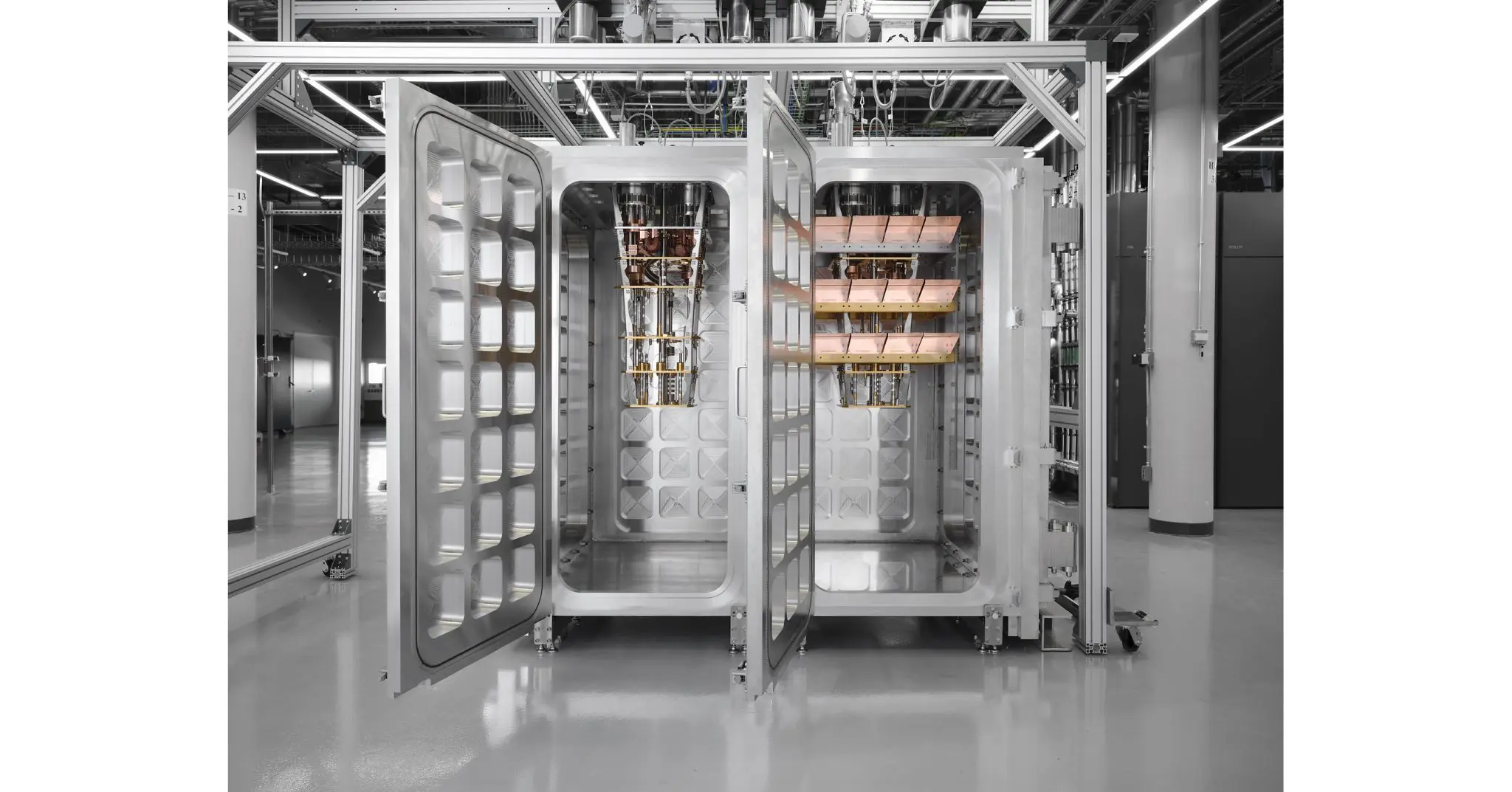
IBM has advanced to Stage C of the Defense Advanced Research Projects Agency’s Quantum Benchmarking Initiative, moving beyond planning to hands-on verification of its approach to fault-tolerant quantum computing. This third phase will involve independent experts extensively testing IBM’s hardware, technology, systems engineering, and architectures.
The company expects to deliver the first fault-tolerant system in 2029, significantly ahead of DARPA’s 2033 program goal, according to Jay Gambetta, Director of IBM Research and IBM Fellow, who states, “Advancing to the third stage of DARPA’s Quantum Benchmarking Initiative validates the strength of IBM’s path to building a fault-tolerant quantum computer.”
DARPA’s Stage B Completion Validates IBM’s Fault-Tolerance Approach
This swift advancement, encompassing detailed research and development plans and risk mitigation strategies, positions the company to enter the critical testing phase overseen by independent experts. Stage C will involve rigorous evaluation of IBM’s quantum hardware, technology, systems engineering, and architectures, moving beyond plan review to hands-on verification of its fault-tolerance approach.
The selection for Stage C signifies DARPA’s confidence in IBM’s trajectory toward constructing a practical, fault-tolerant quantum computer, a goal the agency defines as one where computational value surpasses the system’s cost, the company says. This validation is particularly noteworthy given the program’s ambitious target of achieving industrially useful fault-tolerance by 2033, a timeline IBM aims to preempt with its own projected delivery of a fault-tolerant system in 2029.
IBM’s progression through the QBI’s stages began with Stage A, requiring submission of a technical concept for a cost-effective, fault-tolerant quantum computer with a viable near-term realization path. Several performers were announced in April 2025. Stage B then demanded a comprehensive R&D plan detailing the realization of such a computer, alongside identification of associated risks and proposed mitigation strategies. The current Stage C evaluation will be conducted by DARPA’s independent verification and validation (IV&V) team, who will directly assess IBM’s hardware capabilities.
Beyond the QBI, IBM continues to encourage collaborations with partners in industry, government and academia to accelerate the development of fault-tolerant quantum computing. The company currently maintains the largest fleet of quantum computers globally and supports the Qiskit software platform, which is widely used by over 340 organizations spanning financial services, healthcare, materials science, academia and government.
These entities are actively using IBM’s quantum computers as scientific tools, building industrial applications and exploring algorithms to realize the potential of fault-tolerant quantum computation, according to the company. IBM’s plans for delivering the first fault-tolerant quantum computer, IBM Quantum Starling, include combining advances in error correction, processor design and systems engineering, with demonstrated core hardware components and breakthroughs in efficient error correction decoding already achieved, the firm reports.
“We look forward to working with DARPA’s team of experts as they advance their review of approaches to fault-tolerant quantum computing into the testing phase.” For more information about the Quantum Benchmarking Initiative, visit the DARPA website.
IBM expects to deliver the first fault-tolerant system in 2029, and we plan to scale the value of quantum computing well beyond that timeline.

See today’s quantum computing news on Quantum Zeitgeist for the latest breakthroughs in qubits, hardware, algorithms, and industry deals.