An €18 million project, co-funded by the European Union and national governments, is underway to establish a quantum-secure network spanning Germany, Greece, Ireland, and Luxembourg. The TransEuroOGS initiative will deploy eight interoperable optical ground stations (OGS) across these four nations, creating a physical infrastructure designed for satellite-based quantum communication as part of the broader EuroQCI initiative. This network aims to address challenges to secure transnational communication by leveraging the principles of quantum key distribution. “It is a privilege and pleasure to collaborate with all of my colleagues in Ireland, Luxembourg, Germany and Greece for taking on the challenges involved in linking the space and terrestrial segment in EuroQCI with a network of optical ground stations ranging over the northwest to southeast of Europe,” said Torsten Siebert, central coordinator of the TransEuroOGS project from the Fraunhofer Institute for Applied Optics and Precision Engineering IOF.
TransEuroOGS Project Launches: A EuroQCI Initiative
The ambition to create a pan-European quantum-secure communication network has moved forward with the launch of the TransEuroOGS project, establishing a physical layer for this emerging technology across four member states. This deployment focuses on harmonizing diverse systems to achieve interoperability, a key challenge in realizing a unified European quantum network. The selected locations for these OGS sites, spanning from Ireland to Greece, encompassing both islands and mainland, rural and urban environments, were deliberately chosen to create a challenging and representative testbed. This geographic diversity will allow researchers to assess performance under varying meteorological conditions and across different local ecosystems, crucial for ensuring robust, real-world operation. The project will focus on aligning key architectural elements and operational parameters to meet the requirements of missions like EAGLE-1 and prepare for future satellite deployments.
The TransEuroOGS consortium, comprised of 15 partner universities, industry members, research organizations, and national space agencies and ministries, convened in Berlin and Jena for its kickoff meeting, bringing together approximately 30 attendees. The technical discussions centered on sharing expertise and resources to facilitate the project’s ambitious goals. Matthias Hauer, Parliamentary State Secretary at the German Federal Ministry of Research, Technology and Space, emphasized the national commitment. The project will culminate in demonstrations of interoperability, linking OGS sites across Europe and paving the way for secure communication applications for governmental, public, and private sectors.
Eight-Station Network for Quantum Key Distribution
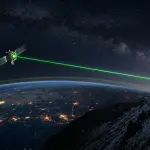
The pursuit of unhackable communication networks is rapidly shifting from theoretical possibility to tangible infrastructure, with several quantum key distribution (QKD) projects gaining momentum across Europe. While initial demonstrations focused on point-to-point links, the current emphasis lies on establishing scalable networks capable of transnational security, a critical step toward a fully quantum-secured continent. The recently launched TransEuroOGS project exemplifies this progression, initiating the construction of a network anchored by eight interoperable optical ground stations (OGS) distributed across Germany, Greece, Ireland, and Luxembourg. This physical infrastructure will form a vital component of the broader EuroQCI initiative, an EU-wide program dedicated to building a quantum communications infrastructure. The project’s geographic scope, stretching from northwestern to southeastern Europe, presents unique challenges in terms of atmospheric conditions and the coordination of cross-border satellite constellations for QKD. Locations include both islands and mainland sites, encompassing diverse meteorological conditions and ecosystems.
The project’s ambition extends beyond simply building the stations; a core focus is harmonizing the architectural elements and operational parameters of these OGS sites. Varying in their development stage, from initial construction to pre-operational status, the stations must align to meet the protocol requirements of upcoming satellite missions like EAGLE-1.
It is a privilege and pleasure to collaborate with all of my colleagues in Ireland, Luxembourg, Germany and Greece for taking on the challenges involved in linking the space and terrestrial segment in EuroQCI with a network of optical ground stations ranging over the northwest to southeast of Europe.
Torsten Siebert, central coordinator of the TransEuroOGS project from the Fraunhofer Institute for Applied Optics and Precision Engineering IOF, Germany
Geographic Diversity & Interoperability of OGS Sites
This project prioritizes geographic diversity, spanning from northwestern to southeastern Europe, and incorporating both island and mainland locations, as well as rural and urban environments. This deliberate distribution is intended to test the resilience of quantum key distribution (QKD) under a wide range of meteorological conditions and local ecosystems. The project’s scope extends beyond simply building new infrastructure; TransEuroOGS aims to harmonize existing OGS developments, ranging from stations still under construction to those already in pre-operation status. The project’s ambition is to demonstrate interoperability through QKD, linking OGS sites and integrating them with local fibre networks for governmental, public, and private applications. The two-day meeting centered on a dedicated exchange of expertise and extensive resource sharing among the partners.
Together with our European partners, we are shaping the future of quantum communication. Germany is therefore actively involved in the European Quantum Communication Infrastructure EuroQCI. The TransEuroOGS project contributes to building this infrastructure.
Matthias Hauer, Parliamentary State Secretary at the German Federal Ministry of Research, Technology and Space
€18 Million Co-Funding & Three-Year Timeline
The establishment of a pan-European quantum-secure communication network is gaining momentum, underpinned by a significant financial commitment and a clearly defined operational timeline. This undertaking is fueled by an approximately €18 million budget, jointly provided by the European Union and the participating national governments, signaling a unified approach to bolstering Europe’s technological sovereignty in the emerging field of quantum communication. Beyond the financial investment, the project’s three and a half year duration provides a concrete framework for development and deployment. This isn’t simply about building physical infrastructure; it’s about establishing a standardized approach to quantum key distribution (QKD) and preparing for the integration of quantum communication into existing fiber networks. This deliberate distribution is designed to test the robustness of the network under varying environmental conditions and facilitate cross-border quantum key distribution among the four participating Member States.

See today’s quantum computing news on Quantum Zeitgeist for the latest breakthroughs in qubits, hardware, algorithms, and industry deals.