Table of Contents
- The Long Private Era (1999-2020)
- The IonQ Listing: October 2021
- The 2022 SPAC Wave
- The Drawdown (2022-2023)
- The Trump Rally and the Willow Effect (Late 2024)
- Jensen's Tuesday: 7 January 2025
- The Strategic Money Arrives (2025)
- The Second Listing Wave (2026)
- The Acquisition Wave
- What the Prices Are Saying (April 2026)
- Looking Ahead
- At a Glance: The Quantum Capital Markets Timeline
- Frequently Asked Questions
The Long Private Era (1999-2020)
For its first two decades as a commercial enterprise, quantum computing was an essentially private affair at scale, and the smart money got there long before anyone else did. D-Wave Quantum Inc., founded in Burnaby, British Columbia in 1999, raised more than $200 million across multiple venture rounds before delivering the D-Wave One to Lockheed Martin in 2011. The investor list over those years included Goldman Sachs, BDC Capital, In-Q-Tel (the CIA’s venture arm), Bezos Expeditions and a number of Canadian pension funds. None of this capital came through public markets. The micro-cap shell that became Quantum Computing Inc took its QUBT ticker on the OTC market in July 2018, but for most of the 2010s no operating quantum-computing company traded publicly at meaningful scale.

The companies that would later define the sector were quietly raising. IonQ, spun out of the University of Maryland and Duke University in 2015, raised approximately $84 million by mid-2020 across its seed round, Series A and Series B from New Enterprise Associates, GV (Google Ventures), Amazon, Samsung Catalyst Fund, Mubadala Capital, Lockheed Martin, Bosch Ventures and Cambium. Rigetti, which had been founded in 2013 by a former IBM researcher named Chad Rigetti, took $190 million through 2020. PsiQuantum, founded in 2016 in Palo Alto, had quietly raised approximately $215 million by the end of 2020 across three rounds (Series A in 2016, Series B in 2017 and a $150 million Series C in 2020), with Microsoft‘s M12 fund, Founders Fund, Atomico and Playground Global on the cap table. The company would close its $450 million Series D led by BlackRock in July 2021, taking the cumulative total to $665 million at a $3.15 billion valuation. Xanadu had raised approximately $145 million USD by mid-2021 from Bessemer Venture Partners (which led the $100 million Series B), Capricorn, Tiger Global, BDC Capital, In-Q-Tel, Georgian, OMERS and Tim Draper.
The pattern across these deals is informative. Sovereign wealth, intelligence-community money, deep-tech specialists and corporate strategics dominated the early cap tables. Generalist venture capital was largely absent. Public-market investors had no meaningful access to the sector at all. The mood music of the period, on the rare occasion that quantum computing was discussed in financial press, was that quantum was a science project rather than an asset class. That was about to change very quickly.
The IonQ Listing: October 2021
IonQ is conventionally cited as the first publicly traded pure-play quantum computing company, and the company itself made that claim at the time of its listing. The reality is more nuanced. The OTC shell that became Quantum Computing Inc had taken its QUBT ticker through a name change and reverse stock split in July 2018, three years earlier, although it was a micro-cap with no meaningful operating business at that point. Arqit Quantum, a UK-based quantum-encryption company, completed its own SPAC merger with Centricus Acquisition Corp and began trading on Nasdaq under the ticker ARQQ on 7 September 2021, three weeks before IonQ. What IonQ did do, on 1 October 2021, was open the public market to quantum-computing-hardware at scale. It began trading on the New York Stock Exchange under the ticker IONQ following its merger with the special purpose acquisition company dMY Technology Group III. The deal had been announced in March of that year and gave IonQ a pro forma implied market capitalisation of approximately $2 billion at closing. Gross proceeds came in at around $636 million, made up of roughly $300 million from the SPAC trust and a $350 million private investment in public equity. The PIPE participants were a who’s-who of strategic capital: Fidelity, Silver Lake, Hyundai, Kia and Bill Gates’s Breakthrough Energy.
The redemption rate was the tell. SPAC mergers give existing shareholders the option to redeem their shares for cash at the closing vote rather than convert into equity in the new public company, and the percentage of shareholders who choose to redeem is a clean signal of how the smart money is pricing the deal. The IonQ redemption rate at closing was 2.5 per cent. By the standards of the 2021 SPAC market, where redemption rates of seventy and eighty per cent were not unusual, this was extraordinary. It signalled that the sponsors and PIPE buyers were treating the deal not as a vehicle for quick exits but as a durable position. IonQ opened its first day at $10.60 and closed at $9.60. The trading volume on day one was modest. The narrative had not yet caught fire.
The choice to list via SPAC rather than a conventional initial public offering was, in retrospect, the only realistic option. IonQ had revenue of less than $5 million in the year it went public. A traditional IPO with that financial profile would have struggled through underwriter due diligence, and certainly through Securities and Exchange Commission review. The SPAC route allowed IonQ to communicate directly with investors through five-year revenue projections rather than historical financial statements, and gave it access to public markets with a balance sheet that no underwriter would have signed off on. This was the model that the next two listings would follow, and the model that would, in due course, prove almost universally embarrassing.
The 2022 SPAC Wave
Between March and August 2022, two further pure-play quantum companies completed SPAC mergers. The macroeconomic backdrop was already deteriorating. The Federal Reserve had begun raising interest rates in March 2022, the Nasdaq had peaked in November 2021 and was heading toward a multi-year drawdown, and the SPAC market more broadly was collapsing under its own weight. The quantum issuers got out, but the windows were closing as they did.
Rigetti was first, completing its merger with Supernova Partners Acquisition Company II on 2 March 2022, with shareholder approval the previous Monday. The combined entity began trading on Nasdaq under the ticker RGTI at an implied equity value of approximately $1.5 billion. Gross proceeds came in at approximately $261.75 million, of which $147.51 million was a fully committed PIPE and the rest came from Supernova’s trust account net of redemptions. The Supernova II sponsor team was led by Michael Clifton, formerly of The Carlyle Group, alongside Robert Reid of Blackstone, Spencer Rascoff (the co-founder of Hotwire and Zillow), and Alexander Klabin of Ancient. The opening was unenthusiastic. Within a year RGTI would trade at less than fifty cents.
D-Wave, after more than two decades as a private company, came to the New York Stock Exchange on 8 August 2022 via a merger with DPCM Capital. The implied pro-forma market capitalisation at closing was approximately $1.6 billion, ticker QBTS. Gross proceeds came in at around $49 million, made up of approximately $9 million from the SPAC trust after redemptions and a $40 million PIPE. The redemption rate was a different kind of tell from IonQ’s. Approximately 29.1 million shares, or some 97 per cent of the public float, redeemed at the closing vote, removing roughly $291 million from the trust. The smart money was leaving as fast as it could. Within three months QBTS was trading below a dollar.
A fourth quantum-adjacent issuer also reached the market in this window. Quantum Computing Inc., a Virginia company building photonic processors for optimisation, took its ticker QUBT in 2018 through a name change and reverse stock split of an existing OTC shell, the former beverage company Innovative Beverage Group Holdings, with FINRA approval in July of that year. The company remained an obscure micro-cap through 2022. Its inclusion in the sector basket would later matter considerably for retail flow, but in 2022 it was still trading below five dollars. Across the four pure-play public names, the combined market capitalisation by the end of 2022 was approximately $1.2 billion. The sector that had been valued at over $5 billion in market cap a year earlier had lost approximately three quarters of its public-market value in fourteen months.
The Drawdown (2022-2023)
The brutal repricing of 2022 and 2023 was less about quantum computing specifically than about what happens to pre-revenue technology companies in a rising-rate environment. The Nasdaq Composite drew down approximately thirty-three per cent from peak to trough. The publicly traded quantum names drew down considerably more.
By the end of 2023, IONQ had traded as low as $3.04, a drawdown of more than seventy per cent from its closing peak. RGTI bottomed near $0.40, a drawdown of more than ninety per cent. QBTS reached $0.35, also more than ninety per cent down. The companies that had projected hundreds of millions of dollars in revenue by 2025 in their SPAC presentations were, in their first full years as public entities, generating actual revenues in the low single-digit millions. The disconnect between the projections and the realities became material to litigation risk. A 2022 securities class action against IonQ alleging that its SPAC presentations had been misleading was dismissed with prejudice by the US District Court for the District of Maryland in September 2023, with the court holding that the plaintiffs had failed to plead the necessary elements of fraud, but the wider lesson about the gap between SPAC projections and operating reality was not lost on the market.
The capital that had bought the projections rotated out hard. Insiders sold where they could, subject to lock-up agreements that had largely expired by mid-2023. Boards and management teams turned to at-the-market offerings to keep the companies funded. Rigetti opened its first ATM programme in March 2024 and completed sales of $100 million in gross proceeds under that programme by November 2024, with each tranche diluting existing shareholders further. D-Wave conducted its own ATM raises through a Lincoln Park equity line of credit, complemented by a $50 million four-year term loan from PSP Investments closed in April 2023. The financing was a slow-motion rescue, and the share counts climbed steadily toward dilution levels that would, in any normal industrial company, have been considered destructive of shareholder value.
The companies survived, which was not a given at the time. By the end of 2023, all three of the public pure-plays were still trading, all three had cash runways into 2025 or beyond, and all three had begun publishing technical milestones that suggested their underlying engineering was advancing in spite of the market conditions. The stock prices, however, told a story of an industry that had been mispriced at issuance and had spent two years correcting toward fundamentals.
The Trump Rally and the Willow Effect (Late 2024)
Then, late in 2024, something genuinely strange happened. The quantum stocks went vertical.
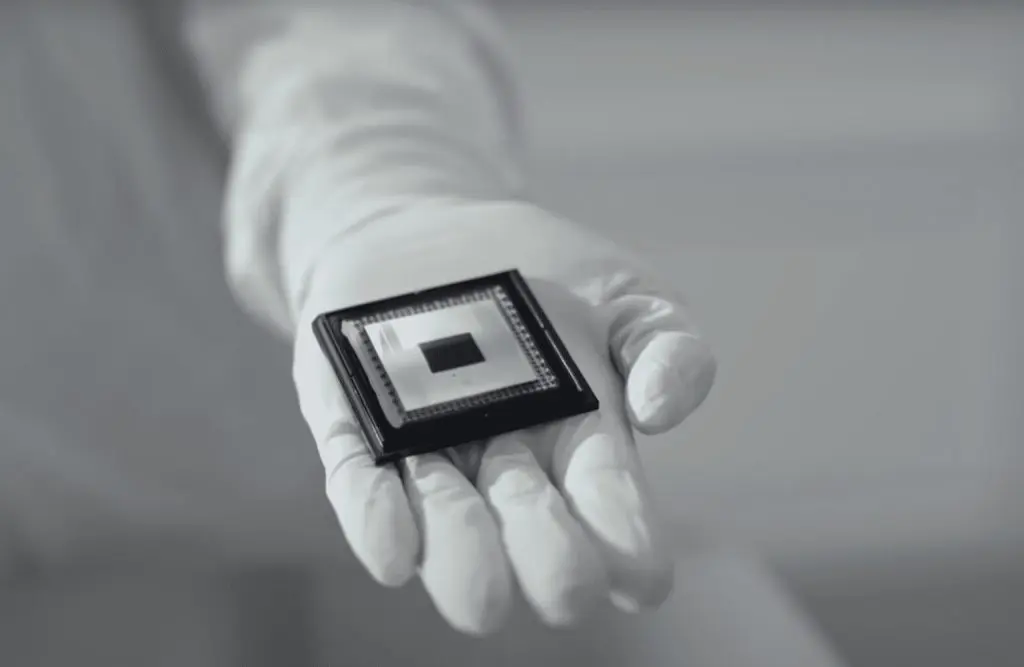
The trigger is debated. Donald Trump’s election victory on 5 November 2024 was followed by a generalised speculative rally in pre-revenue technology and small-cap names that had been beaten down through the previous two years. Quantum was a beneficiary disproportionate to its size. Then on 9 December 2024, Google announced the Willow chip, demonstrating that surface-code error correction had crossed the threshold where larger encodings reduce logical errors. The announcement was scientifically genuine and commercially relevant. It was also, for the retail investors who had been following the sector’s stocks, a vindication of the thesis that had drawn them in.
The numbers are difficult to overstate. Between early November 2024 and the early-January 2025 peak, RGTI rose approximately 1,449 per cent. QBTS rose approximately 854 per cent. IONQ rose more than three-fold. QUBT, the smallest and most volatile of the basket, rose more than ten-fold. The Defiance Quantum ETF (ticker QTUM), an index product that had tracked the sector with limited drama since its 2018 launch, posted gains of more than thirty per cent in a single quarter despite holding only modest weights in the pure-play names.
The flow was not institutional. Reddit message boards and social-media platforms drove the buying. Daily trading volume in RGTI reached more than four hundred million shares on individual sessions in late December 2024, against a free float of less than two hundred million. Implied volatility on the listed options chains pushed above two hundred per cent annualised, levels normally seen only in distressed names or biotech binary events. Short interest, which had been substantial through the drawdown period, remained elevated, and at least part of the rally was the mechanical consequence of squeezing the shorts. By early January 2025, the four pure-play public names had a combined market capitalisation north of $25 billion. None of the four had reported quarterly revenue above $20 million. The trailing-twelve-month revenue across all four combined was less than $200 million. The price-to-sales multiples on the public quantum stocks reached levels not seen outside of the dotcom bubble.
Jensen’s Tuesday: 7 January 2025
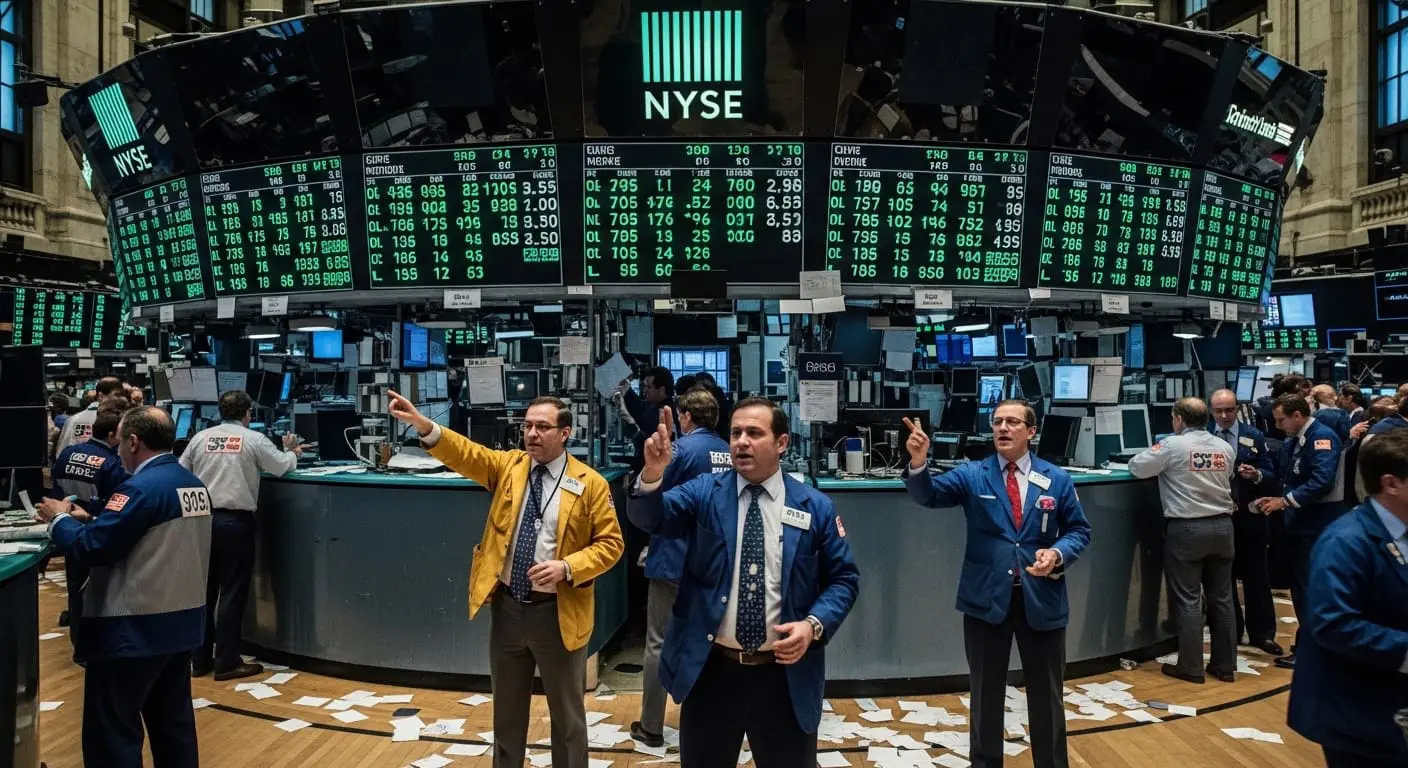
The first quantum bull market ended at approximately ten-thirty in the morning Pacific Time on Tuesday 7 January 2025. Nvidia CEO Jensen Huang, speaking at the company’s financial analyst Q&A during the Consumer Electronics Show in Las Vegas, the day after his keynote, was asked about Nvidia’s positioning in quantum computing. His response, in the unfiltered cadence that has become his signature, contained the following: “If you said fifteen years for very useful quantum computers, that would probably be on the early side. If you said thirty, it’s probably on the late side. If you picked twenty, I think a whole bunch of us would believe it.” Huang added, in the same stretch of remarks, that Nvidia was “not worried” about quantum computing.
The stocks broke immediately. By the closing bell that Wednesday, RGTI was down forty-five per cent, IONQ was down thirty-nine per cent, QBTS was down thirty-six per cent, QUBT was down forty-three per cent. The Defiance Quantum ETF fell approximately four per cent, indicating just how much of the day’s pain was concentrated in the four pure-plays. Aggregate market capitalisation losses across the four names exceeded $8 billion in a single trading session, on a basket whose total revenue would not exceed $200 million for the year.
The reactions were illuminating. D-Wave CEO Alan Baratz issued a public statement the same day calling Huang “dead wrong” and offering Nvidia’s CEO a private briefing on the company’s current customer engagements. IonQ’s then-chief executive Peter Chapman pushed back through the financial press, arguing that Huang’s timeline reflected gate-based superconducting systems specifically rather than ion-trap or neutral-atom architectures. (Niccolo de Masi, the dMY III SPAC CEO who had taken IonQ public in 2021 and served on its board ever since, would replace Chapman as CEO on 26 February 2025, just weeks after the Huang episode.) Quantum Computing Inc., which had announced a $100 million stock offering just days before Huang spoke, saw its placement price collapse alongside the stock and ultimately re-priced the deal at considerably worse terms.
The most-quoted single line from the post-mortems came from the academic computer scientist Scott Aaronson, who wrote on his widely-read blog that the episode was “a school of fish following whales in the ocean”, and added that it had felt “really weird for all those billions of dollars to change hands, or evaporate, based on what a microchip CEO offhandedly opined about my tiny little field.” Within a week the stocks had partially recovered, but the basket would not return to its early-January peak for the rest of the first quarter.
Two months later, Huang appeared to make amends. At Nvidia’s GPU Technology Conference in March 2025, the company hosted what it called “Quantum Day”, with the CEOs of IonQ, D-Wave, Rigetti, Quantinuum and Quantum Circuits invited onto the stage. The optics were repaired. The substance, however, was less reassuring. Rigetti CEO Subodh Kulkarni, asked directly about the readiness of his company’s machines for production workloads, told the audience that they were “not good enough yet for practical use”. Huang interjected with “well, don’t give up yet” and moved to the next CEO. The quantum stocks fell again on the comments, with QBTS down eighteen per cent and IONQ and RGTI both down nine per cent on the day. The entire episode confirmed something that had been latent in the sector for years. The price action in these names was being set by retail flow and headline risk, not by underlying fundamentals.
The Strategic Money Arrives (2025)
Beneath the volatility in the public names, a quieter and arguably more consequential development was unfolding in the private market. Through 2025, the strategic capital that had been notionally absent from the SPAC wave began to arrive in size. The pattern was different. The investors were different. The valuations were different. The timeline horizons were different.
Quantinuum was the centrepiece. The company had been formed in November 2021 through the merger of Honeywell Quantum Solutions and Cambridge Quantum Computing, with Honeywell retaining a majority stake of approximately 53 per cent and Cambridge Quantum Holdings, controlled by founder Ilyas Khan, holding approximately 36 per cent. In January 2024, Quantinuum had raised $300 million in a round led by JPMorgan Chase at a pre-money valuation of $5 billion. On 4 September 2025, Honeywell announced that Quantinuum had raised approximately $600 million in equity at a pre-money valuation of $10 billion, doubling the company’s value in twenty months. The new investors included Quanta Computer, Nvidia’s NVentures arm and QED Investors, joining existing shareholders Honeywell, JPMorgan Chase, Mitsui, Amgen, Cambridge Quantum Holdings and Serendipity Capital. Korea Investment Partners and MESH also joined the round. JPMorgan acted as exclusive placement agent.
The presence of NVentures was the critical signal. Eight months earlier, Jensen Huang had moved $8 billion in market capitalisation off the public quantum stocks with a single comment about the field being two decades away. Now Nvidia’s venture arm was buying primary equity in the highest-valued private quantum company at $10 billion. The contradiction was apparent enough that Huang himself addressed it on Nvidia’s earnings call shortly afterward, characterising the investment as a strategic position consistent with Nvidia’s broader role as the substrate for hybrid classical-quantum computing rather than as a competitor to the quantum hardware vendors directly. The Quantinuum round closed alongside the announcement that the company would be a founding collaborator at Nvidia’s Accelerated Quantum Research Center, opened in Boston earlier that year.
Other strategics followed. AMD took an anchor position in the $275 million PIPE that would, in March 2026, accompany Xanadu‘s listing. PsiQuantum closed a $1 billion Series E on 10 September 2025, led by BlackRock with Temasek and Baillie Gifford and bringing in NVIDIA’s NVentures, Macquarie Capital, Ribbit Capital, the Qatar Investment Authority and Counterpoint Global (Morgan Stanley) as new investors at a $7 billion valuation. Atom Computing announced a partnership with Microsoft in November 2024 to build a commercial Level 2 neutral-atom quantum computer, with Atom Computing supplying the hardware and Microsoft providing logical qubit virtualisation and Azure cloud delivery; Atom Computing has raised more than $100 million in venture funding from investors including Third Point and Innovation Endeavors, separately from the Microsoft partnership. SandboxAQ, the AI-and-quantum company spun out of Alphabet in 2022, raised more than $300 million in December 2024 at a $5.6 billion valuation, led by Fred Alger Management with Eric Schmidt, Marc Benioff, Yann LeCun, T. Rowe Price and IQT among the named participants. By the end of 2025, the largest private quantum companies, on a fully diluted basis, were collectively valued at more than $30 billion. None of them was traded publicly. All of them were funded for at least three more years.
The Second Listing Wave (2026)
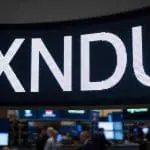
The capital markets reopened to quantum issuers in early 2026. On 26 March, Xanadu Quantum Technologies completed its merger with Crane Harbor Acquisition Corporation, and on 27 March began trading on both Nasdaq and the Toronto Stock Exchange under the ticker XNDU. The pro forma enterprise value was approximately $3.1 billion, with an initial market capitalisation of around $3.6 billion. Gross proceeds came in at approximately $302 million, including the $275 million PIPE with AMD and BMO Global Asset Management as strategic anchors. The Canadian and Ontario governments separately committed up to CAD $390 million through Project OPTIMISM, the federal-provincial photonic-manufacturing initiative announced in 2024.
Xanadu became the first publicly traded pure-play photonic quantum computing company. The dual-listing structure was unusual and reflected both the company’s Canadian heritage and the realities of Canadian institutional liquidity, where pension fund mandates often require domestic listings for sovereign-tier investments. The XNDU listing was also conducted in a market environment quite different from the SPAC mergers of 2021 and 2022. The redemption rate at the Crane Harbor closing vote was reportedly low, and the deal as priced would have been impossible to clear in the trough of 2023.
The deal that has the potential to reshape the sector, however, came into view a month earlier. On 22 April 2026, Honeywell disclosed that Quantinuum had confidentially submitted a draft Form S-1 registration statement to the Securities and Exchange Commission on 17 February 2026. The filing was the first formal step toward an initial public offering. Honeywell, which retains majority ownership, had publicly signalled the intent to take Quantinuum public over the previous twelve months, and the September 2025 capital raise at $10 billion pre-money was widely understood to be the last round before a listing. The number of shares to be offered and the indicative price range were not disclosed in the registration statement. Market participants by April 2026 were modelling a target market capitalisation in the $15-20 billion range, which, if achieved, would make Quantinuum the most valuable publicly traded quantum computing company in the world by a considerable margin and would serve as a structural validation of the trapped-ion architecture as a fault-tolerant platform.
The Quantinuum listing, when it comes, will be a conventional IPO rather than a SPAC merger. The structural difference matters. Where the 2021 and 2022 listings sold five-year revenue projections to public investors who lacked any way to test them, a conventional IPO requires audited financial statements, three years of historical results and underwriter due diligence. The pricing will be set by an underwriting syndicate and the institutional book, not by the residual interest of a SPAC sponsor. This is, in capital-markets terms, the moment at which the sector grows up.
The Acquisition Wave
In parallel with the listing activity, the public pure-plays themselves became acquirers. The pattern in 2025 and early 2026 was clear: the well-funded companies bought the technical specialists. IonQ, which had built up the strongest balance sheet in the public group through a sequence of equity raises in 2025 (a $372.6 million ATM offering closed in March, followed by a $1.0 billion equity offering led by Heights Capital Management priced in July, and a further $2 billion offering in October), acquired Oxford Ionics in June 2025 for $1.075 billion in stock and cash, picking up the British company’s industry-leading 99.99 per cent two-qubit gate fidelities and its electronic-control approach to ion trapping. Earlier in May 2025 IonQ had also acquired Lightsynq, a quantum networking company spun out of Harvard, in an all-stock deal. In January 2026 IonQ announced a much larger move, agreeing to acquire the US semiconductor foundry SkyWater Technology for approximately $1.8 billion in cash and stock, the first time a pure-play quantum company had bought a chipmaker outright. By the close of the SkyWater deal in mid-2026, IonQ will have spent over $3 billion on M&A in roughly twelve months.
D-Wave announced its own deal in January 2026: a $550 million acquisition of Quantum Circuits, the gate-based superconducting startup founded by Yale‘s Robert Schoelkopf and Michel Devoret (the same Devoret who, a few months earlier, had shared the 2025 Nobel Prize in Physics for the underlying experimental work). The agreement, announced on 7 January 2026, consisted of $300 million in D-Wave stock and $250 million in cash. The transaction repositioned D-Wave from a pure-play annealer into a dual-platform vendor with a credible gate-based roadmap, and was, by April 2026, considered one of the more strategically significant deals the sector had seen. Quantinuum acquired several smaller companies through the same period, and Rigetti made tuck-in acquisitions on the software and control-electronics side. The cumulative effect was a noticeable consolidation. The number of independent quantum hardware companies had been declining for two years, and the trend was accelerating.
The rationale for the consolidation was straightforward. Quantum computing has too many competing architectural approaches and not enough customer revenue. The companies with strong public balance sheets, even those whose share prices were depressed relative to their early-2025 highs, could buy private competitors at multiples that would have been unthinkable in 2023. The companies being acquired were, in many cases, technically excellent businesses whose path to independent profitability was not credible inside a five-year planning horizon. The match was efficient. It was also the moment at which the public quantum companies began to look, structurally, like operating businesses rather than vehicles for public-market speculation.
What the Prices Are Saying (April 2026)
By late April 2026, the publicly traded quantum sector has settled into a more recognisable shape. IONQ trades around $30 with a market capitalisation of approximately $9 billion. QBTS is around $14 with a market capitalisation of $4 billion. RGTI is around $11 with a market capitalisation of $3 billion. XNDU is around $7 with a market capitalisation of $3.6 billion. QUBT, which never quite escaped its pre-rally micro-cap origins, is around $4 with a market capitalisation under $1 billion. The Defiance Quantum ETF (QTUM) is at all-time highs, having compounded steadily since its January 2025 dip.
The aggregate market capitalisation of the publicly traded quantum sector is approximately $20 billion. Combined trailing-twelve-month revenues across the public names are approximately $300 million, giving a sector-level enterprise-value-to-revenue multiple in the high fifties. By comparison, the broader semiconductor sector trades at approximately seven times revenue, and the broader software sector trades at approximately nine. Nvidia, which is the highest-multiple large-cap technology stock in the United States, trades at approximately twenty times revenue. The public quantum companies are, by every standard measure, expensive. They are also, by every standard measure, growing.
The interpretation that makes sense of the multiples is that the public quantum stocks are pricing in optionality on a fault-tolerant breakthrough rather than valuing current revenue. The market is treating them as long-duration call options on a technology that, if it works at scale, will be worth multiples of the current valuations. If it does not work at scale, or works only on the longest of timelines, the current prices will look like late-stage bubble pricing rather than reasonable investments in a developing industry. The Quantinuum IPO, when it lands, will provide the first proper anchor point. Its pricing will tell the rest of the public sector what mature institutional investors actually think the technology is worth.
Looking Ahead
Three threads will determine what the public quantum sector looks like by the end of 2027. The first is the Quantinuum listing itself. The second is the question of whether the public pure-plays can demonstrate revenue growth at the rates their valuations imply, with several of them needing to reach $100 million in annual revenue within eighteen months to hold their current multiples. The third is the broader macroeconomic environment, which has been favourable to long-duration technology assets through 2024, 2025 and the early months of 2026 but cannot be assumed to remain so indefinitely.
Beyond those, several developments are worth watching. PsiQuantum, valued at $7 billion after its September 2025 Series E and the most well-funded private quantum company in the world, will eventually need a listing, and the timing and venue of that decision will shape the photonic segment of the public sector. Atom Computing and Pasqal, both well-capitalised neutral-atom specialists, are similarly running on private capital that will at some point need a public-market exit. Pure-play subsectors that are barely represented in the public markets today, such as quantum cybersecurity and post-quantum cryptography (where SandboxAQ remains private), quantum networking (consolidating around IonQ following its 2025 acquisitions of Lightsynq and a controlling stake in ID Quantique) and quantum sensing, may emerge as new public categories during this window. None of these is yet a public-market story in its own right, but two years from now several of them may be.
What the period from 2021 through 2026 has demonstrated is that the capital markets are fully capable of pricing quantum computing aggressively, of repricing it brutally, and of rallying it back again on relatively thin information flow. The asset class is real. The pricing is unstable. The strategic money is now arriving in size. Whether the public stocks become operating businesses with defensible revenue, or remain volatile vehicles for speculation on a long-dated technology bet, will be the central question of the next two years.
At a Glance: The Quantum Capital Markets Timeline
| Year | Event | Approximate value or impact |
|---|---|---|
| 1999 | D-Wave Quantum Inc. founded in Burnaby, British Columbia | Private |
| 2011 | D-Wave delivers first commercial machine to Lockheed Martin | First quantum sale |
| 2015 | IonQ founded out of Maryland and Duke | Private |
| 2016 | PsiQuantum founded in Palo Alto by Australian academic team | Private |
| 2018 (Jul) | Innovative Beverage shell renames to Quantum Computing Inc, OTC ticker QUBT | Micro-cap, no meaningful operating business |
| 2018 (Sep) | Defiance Quantum ETF launches under ticker QTUM | First indexed exposure |
| 2021 (Sep) | Arqit Quantum lists on Nasdaq via SPAC (ARQQ) | First quantum-encryption pure-play |
| 2021 (Oct) | IonQ becomes first quantum-computing-hardware pure-play on a major exchange (NYSE: IONQ) | $2 billion valuation, $636M gross proceeds |
| 2022 (Mar) | Rigetti completes SPAC merger (Nasdaq: RGTI) | $1.5 billion valuation |
| 2022 (Aug) | D-Wave completes SPAC merger (NYSE: QBTS) | $1.6 billion valuation |
| 2022-2023 | Quantum stocks draw down 70-90 per cent | Sector mispricing corrects |
| 2024 (Dec) | Google Willow announcement triggers retail rally | Public quantum sector rallies |
| 2024 (Nov) – 2025 (Jan) | Trump-rally surge: RGTI +1,449%, QBTS +854%, IONQ +200% | Sector market cap exceeds $25 billion |
| 2025 (Jan 7-8) | Jensen Huang CES comments wipe ~$8 billion in single session | Comments Tuesday, stocks crash Wednesday by 36-45% |
| 2025 (Mar) | Nvidia GTC “Quantum Day”; Rigetti CEO admits products “not good enough yet for practical use” | Stocks fall again on bearish admissions |
| 2025 (Sep) | Quantinuum raises $600 million at $10 billion pre-money, Nvidia NVentures joins | Private market validates sector |
| 2025 (Jun) | IonQ acquires Oxford Ionics | $1.075 billion stock and cash |
| 2025 (Jul) | IonQ prices $1.0 billion equity offering led by Heights Capital | Largest single quantum equity raise to date |
| 2026 (Jan 7) | D-Wave announces acquisition of Quantum Circuits Inc. | $550 million stock and cash |
| 2026 (Jan 26) | IonQ announces acquisition of SkyWater Technology | $1.8 billion, first quantum-foundry deal |
| 2026 (Feb 17) | Quantinuum confidentially files Form S-1 with SEC | First conventional quantum IPO filing |
| 2026 (Mar 27) | Xanadu lists on Nasdaq and TSX as XNDU | $3.6 billion market cap, first photonic IPO |
| 2026 (Apr) | Honeywell publicly discloses Quantinuum S-1 filing | Quantinuum listing expected within twelve months |
Frequently Asked Questions
Which company was the first publicly traded pure-play quantum computer maker?
IonQ. It listed on the New York Stock Exchange under the ticker IONQ on 1 October 2021 after a SPAC merger with dMY Technology Group III at an implied $2 billion valuation. The deal raised approximately $636 million in gross proceeds, including a $350 million PIPE with Fidelity, Silver Lake, Hyundai, Kia and Bill Gates's Breakthrough Energy Ventures. Redemptions were just 2.5 per cent, unusually low for a 2021-vintage SPAC and a strong signal of investor commitment.
Which three quantum companies went public via SPAC, and at what valuations?
IonQ (October 2021, $2 billion via dMY Technology Group III), Rigetti Computing (March 2022, $1.5 billion via Supernova Partners Acquisition Company II) and D-Wave Quantum Inc. (August 2022, $1.6 billion via DPCM Capital). The three deals raised over $1 billion in combined gross proceeds. Redemption rates varied dramatically, IonQ at 2.5 per cent versus D-Wave above 90 per cent, and all three saw heavy selling through 2022 and 2023 before recovering in late 2024.
What did Jensen Huang say at CES 2025 that crashed quantum stocks?
At a Tuesday financial-analyst Q&A on 7 January 2025 during the Consumer Electronics Show, Nvidia CEO Jensen Huang said “useful” quantum computers were 15 to 30 years away and that Nvidia was “not worried” about quantum computing. The next day, RGTI fell ~45 per cent, IONQ ~39 per cent, QBTS ~36 per cent and QUBT ~43 per cent. Aggregate market-cap losses across the four names exceeded $8 billion in a single session.
How much did Rigetti's stock rise during the 2024 Trump–Willow rally?
Approximately 1,449 per cent from early November 2024 to early January 2025. The rally was triggered by Donald Trump's election on 5 November 2024 and Google's announcement of the 105-qubit Willow chip on 9 December 2024. Over the same window, QBTS rose ~854 per cent, IONQ tripled, and QUBT rose more than tenfold. Trading volumes, options-implied volatility and message-board chatter all displayed classic meme-stock characteristics.
When did Xanadu go public, and at what valuation?
Xanadu Quantum Technologies listed on Nasdaq and the Toronto Stock Exchange under the ticker XNDU on 27 March 2026, becoming the first publicly traded pure-play photonic quantum company. The listing followed a SPAC merger with Crane Harbor Acquisition Corporation at a pro forma enterprise value of ~$3.1 billion and initial market cap around $3.6 billion. Gross proceeds were ~$302 million, including a $275 million PIPE anchored by AMD and BMO Global Asset Management.
What is the Defiance Quantum ETF (QTUM) and how has it performed?
QTUM is a thematic ETF launched on the NYSE in September 2018, the first index product specifically targeting quantum computing and machine-learning companies. Top holdings blend large-cap tech (Nvidia, Alphabet, IBM, AMD, Microsoft) with smaller pure-plays. That construction has produced markedly better-than-pure-play returns: as of April 2026, QTUM sits at all-time highs and ranks among the best-performing thematic ETFs of the 2020s. It's the cleanest single-ticker exposure for the sector without single-name volatility.
How low did the quantum pure-plays trade during the 2022–2023 drawdown?
IONQ bottomed near $3.04 (down >70 per cent from peak). RGTI hit roughly $0.40 (>90 per cent drawdown). QBTS reached $0.35 (also >90 per cent). Survival came via continual at-the-market equity offerings and bridge financing, Rigetti closed a $100 million ATM in November 2024 and a $350 million ATM in June 2025; D-Wave secured a $50 million four-year structured note. None of the three has yet reported a calendar quarter of operating profit.
Why are Nvidia, Microsoft, BlackRock and AMD investing directly in private quantum companies?
Through 2024 and 2025, strategic capital concentrated in private quantum names: Nvidia's NVentures backed PsiQuantum and Quantinuum, AMD anchored the $275 million Xanadu PIPE, JPMorgan Chase led a Quantinuum round, Microsoft remained a commercial partner with Atom Computing and historic M12 backer of PsiQuantum, and BlackRock led PsiQuantum's largest round to date. These allocations consistently priced private companies higher than the listed pure-plays, signalling that long-horizon investors view the sector as investable at multi-billion-dollar valuations even when public valuations sag.
What are the three biggest risks of holding publicly traded quantum stocks?
First, the technology may not scale on the implied timeline. Fault-tolerant quantum computing remains an unsolved engineering problem; the most advanced public companies are demonstrating dozens of logical qubits, against the thousands needed for most practical applications. Second, value may not accrue to the pure-plays. Large incumbents (IBM, Microsoft, Alphabet, Nvidia) have larger budgets, deeper distribution and adjacent revenue streams. Third, current multiples imply revenue the companies have not delivered. Most pure-plays generate <$50 million in annual revenue against multi-billion-dollar market caps.
Which three milestones will move quantum stocks most over the next 18 months?
1. The Quantinuum listing. When it lands, it becomes the first traditional-IPO institutional anchor for sector valuations. 2. Revenue growth at the listed pure-plays. Several names need to reach roughly $100 million in annual revenue within eighteen months to defend current multiples. 3. Strategic-investor activity. Further primary investments or consolidation M&A from Nvidia, Microsoft, Alphabet or AMD would signal whether quantum is being treated as a strategic technology bet or as a passing thematic trade.
For the scientific timeline that runs alongside this capital-markets arc, see our long-form history of quantum computing.
Disclaimer. This article is for informational purposes only and does not constitute investment, financial or professional advice. The quantum technology industry evolves rapidly and information may become outdated. Always conduct your own research and consult qualified advisers before making investment decisions. Investing in quantum computing companies involves significant risk, including the potential loss of your entire investment, and past performance is not indicative of future results.


See today’s quantum computing news on Quantum Zeitgeist for the latest breakthroughs in qubits, hardware, algorithms, and industry deals.