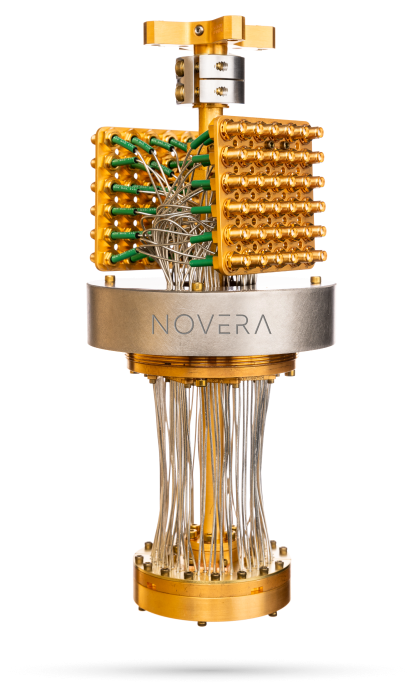
The race to unlock the potential of quantum computing is heating up, and Rigetti Computing – a leader in the field – is offering investors a key glimpse into its progress. The Berkeley-based company announced today it will release its third quarter 2025 financial results on November 10th, followed by a conference call to discuss performance and business updates. This report is particularly significant as Rigetti continues to advance its full-stack quantum computing platform – including cloud services and on-premises systems – and navigate a rapidly evolving technological landscape, offering insight into whether the company is successfully scaling its innovative approach to practical quantum applications.
Financial Release and Conference Call Details
Investors interested in participating in Rigetti Computing’s third quarter 2025 financial discussion have several options for access. The company will release its results after market close on November 10th, followed by a conference call on November 11th at 8:30 am Eastern Time – or 5:30 am Pacific Time. Those wishing to listen can utilize the live audio webcast available through a dedicated link – https://edge.media-server.com/mmc/p/8so362do/ – or via the “Events & Presentations” section of Rigetti’s Investor Relations website (https://investors.rigetti.com/).
Beyond simply reporting quarterly financials, Rigetti Computing’s November 10th release and subsequent call offer a crucial window into the evolving landscape of quantum-classical hybrid computing. As a pioneer operating quantum computers via the cloud since 2017, and now offering on-premises systems ranging from 24 to 84 qubits, Rigetti’s performance reflects broader industry progress. Investors will likely scrutinize updates on the Rigetti Quantum Cloud Services platform, assessing client adoption and revenue generation. Notably, the company’s development of the industry’s first multi-chip quantum processor and in-house manufacturing at Fab-1 – a dedicated quantum device facility – signals a commitment to scalable and vertically integrated quantum solutions. The call provides an opportunity to understand how these advancements translate into practical applications and address challenges in building a robust quantum-classical infrastructure, potentially impacting future growth and market positioning.
The integration of quantum processing units with classical high-performance computing architectures is foundational to near-term quantum utility. In a hybrid model, classical processors manage the workflow, routing data and executing resource-intensive control logic, while the quantum unit tackles specific computational kernels, such as solving optimization problems or simulating molecular interactions. This tight coupling ensures that the quantum device is utilized only where its exponential advantage is mathematically required, making the entire system manageable and scalable.
A persistent technical hurdle in the quantum domain remains qubit stability, primarily due to environmental noise leading to decoherence. Current efforts are heavily focused on Quantum Error Correction (QEC), which employs complex encoding schemes to identify and correct computational errors without losing the quantum state. Advancements in error mitigation and developing fault-tolerant architectures are critical for scaling systems beyond simple proof-of-concept demonstrations into commercially reliable computational tools.
Rigetti’s focus on multi-chip quantum processors is an architectural response to the limitations of single-chip physical bonding. As quantum registers grow, connectivity and crosstalk become major obstacles. By segmenting complex computations across multiple specialized chips, the overall system can manage a larger addressable qubit count and improve the reliability of entanglement pathways. This modular approach mirrors the scaling strategies seen in advanced classical semiconductor manufacturing.
Beyond general computation, the quantum advantage is expected to materialize most strongly in specific scientific and industrial simulations. Key use cases include advanced materials science, simulating chemical reactions to discover novel drugs, and executing sophisticated logistics optimization algorithms. Monitoring the company’s progress in generating specialized quantum circuits for these applications provides a concrete measure of the technology’s imminent market readiness.




See today’s quantum computing news on Quantum Zeitgeist for the latest breakthroughs in qubits, hardware, algorithms, and industry deals.