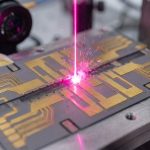
A collaboration led by Miloš Popović, an NSF-supported associate professor, has successfully integrated a quantum system utilizing light, a photonic system, directly into a traditional electronic chip. This was previously difficult due to the size of quantum infrastructure. This development signals an engineering advance that could lead to faster and more compact quantum computers. The research received funding from three NSF Directorates: Engineering, Computer and Information Science and Engineering, and Mathematical and Physical Sciences, demonstrating the agency’s focus on this project. This work builds upon existing NSF-funded research into quantum computing and AI-powered labs, suggesting a growing connection between these technologies.
Photonic Quantum Systems Integrated into Electronic Chips
Miloš Popović, an NSF-supported associate professor, spearheaded the collaborative effort, demonstrating a reduction in the physical footprint typically required for such systems. This integration allows for potentially faster processing speeds and greater computational power than current technologies, opening new avenues for quantum information science and engineering. The multi-directorate approach underscores the interdisciplinary nature of the work, combining expertise from diverse fields to overcome complex engineering challenges. Further details on this advancement are available through the NSF Discovery Files podcast, accessible wherever podcasts are downloaded.
NSF Funding Supports Quantum Information Science & Engineering
Many quantum systems currently require bulky infrastructure separate from conventional electronics; however, recent work is challenging this. The convergence of these technologies suggests potential benefits, accelerating discovery across multiple fields. Popović notes that this work promises computers with increased speed and capabilities, highlighting the long-term implications of this research. The NSF’s support extends beyond this specific chip project, encompassing broader initiatives to bolster domestic critical mineral supplies and explore the future of quantum computing, indicating a comprehensive approach to advancing this complex field.
The future of quantum information science and engineering promises computers with unprecedented speed and capabilities.
See today’s quantum computing news on Quantum Zeitgeist for the latest breakthroughs in qubits, hardware, algorithms, and industry deals.