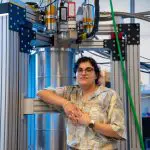
The final protons of the Large Hadron Collider’s third data-taking period circulated through the accelerator at 05:52 a.m. on 27 June, concluding Run 3 and initiating a multi-year transformation of both the LHC and the ATLAS experiment. This transition prepares ATLAS for the High-Luminosity LHC, an upgrade designed to dramatically increase the collider’s intensity, with around 200 proton-proton collisions expected each time the beams cross and creating a dense environment for data recording. To meet this challenge, researchers are upgrading the ATLAS tracker with 178 square metres of silicon detectors and 5 billion readout channels, aiming to reconstruct particle trajectories with micrometric precision. “The HL-LHC will shape particle physics for decades to come, and preparing for it is among the most ambitious scientific undertakings our collaboration has ever engaged in,” says ATLAS Spokesperson Stéphane Willocq.
HL-LHC Transition: Ending Run 3 and Future Goals
Approximately 200 proton-proton collisions are expected each time the beams cross within the upgraded High-Luminosity Large Hadron Collider, a density demanding a complete reimagining of how data is captured and processed. The conclusion of Run 3 on June 27th, marked by protons circulating at 05:52 a.m., is not an ending for the ATLAS Collaboration, but rather a pivotal transition toward this ambitious future. The scale of this undertaking is immense; the upgrade necessitates a complete reinvention of ATLAS’s core systems. This advanced tracker will reconstruct particle trajectories with micrometric precision, crucial for disentangling the complexity of the increased collision rate. Complementing this is a High-Granularity Timing Detector, utilizing Low-Gain Avalanche Detectors to resolve overlapping collisions with a resolution of 30 to 50 picoseconds.
The selected data, filtered from an initial rate of 1 MHz, will then be processed by a GPU-accelerated computing farm, ultimately yielding a detailed output stream of 10 kHz for in-depth analysis. Nearly every aspect of the experiment is undergoing transformation, requiring meticulous coordination of teams globally. Martin Aleksa, ATLAS Technical Coordinator, explains that every phase of this engineering effort must be timed to perfection, highlighting the complexity of dismantling and rebuilding the detector within the confines of the underground cavern. Alongside this physical transformation, the collaboration is preparing to analyze 332 fb⁻¹ of data collected during Run 3, adding to the existing 505 fb⁻¹ lifetime total, which promises a period of increased scientific productivity.
Inner Tracker (ITk) and High-Granularity Timing Detector (HGTD) Implementation
The dismantling of the ATLAS experiment is well underway, transitioning from data collection to a complex overhaul preparing it for the High-Luminosity LHC. Central to this transformation is the installation of a completely new Inner Tracker, known as the ITk, and a High-Granularity Timing Detector, or HGTD, both designed to cope with the anticipated increase in collision frequency. Around 200 proton-proton collisions are expected every time the beams cross, necessitating a substantial leap in detector capabilities. This timing precision is vital for distinguishing overlapping events in the dense collision environment. Beyond simply recording more data, the upgraded event-selection system is designed to intelligently filter the incoming stream. Initially registering at a rate of 1 MHz, the system will employ GPU-accelerated computing to isolate rare, scientifically significant events, reducing the final output to a manageable 10 kHz stream for detailed analysis. The installation process itself is a considerable challenge, requiring careful dismantling of existing components and piece-by-piece assembly of the new detectors within the underground cavern.
Data Analysis of 505 fb⁻¹ from LHC Run 3
Following the conclusion of Run 3 at 05:52 a.m. on 27 June, the ATLAS Collaboration is now focused on analyzing an unprecedented dataset of 505 fb⁻¹ of proton-proton collision data, accumulated over the Large Hadron Collider’s operational lifetime, with 332 fb⁻¹ originating from Run 3 itself. This substantial accumulation represents a significant leap in statistical power, enabling physicists to probe the Standard Model of particle physics with greater precision than ever before. Eric Torrence, Run Coordinator, emphasized the efficiency of data collection throughout Run 3, noting that the ATLAS operations teams maintained high data-taking efficiency across proton-proton, heavy-ion and specialised low-energy runs. This success, coupled with improvements made during the previous shutdown, facilitated the collection of the largest dataset in the experiment’s history. The sheer volume of data necessitates a sophisticated analysis pipeline, moving beyond simple event recording to detailed reconstruction and interpretation.
This process allows for precision measurements of known particles, like the Higgs boson, and the search for new phenomena beyond the established theoretical framework. Kerstin Tackmann, ATLAS Physics Coordinator, explains the potential impact, stating that combining this new data with previously collected datasets from LHC Runs 1 and 2 will more than double the statistical power available to the collaboration. “When combined with data collected during LHC Run 1 and Run 2, we will more than double our statistical power,” Tackmann added. This enhanced capability will allow for rigorous testing of the Standard Model, potentially revealing subtle discrepancies that hint at new physics and guiding the direction of future research at the upgraded High-Luminosity LHC. The coming years promise to be scientifically productive as the ATLAS team unlocks the secrets hidden within this massive collection of collision data.
HL-LHC Upgrade: Complex Engineering and Cooling System Overhaul
The sheer scale of the High-Luminosity LHC (HL-LHC) upgrade demands a complete reimagining of the ATLAS experiment’s infrastructure, extending far beyond detector replacements to encompass fundamental systems like cooling. Around 200 proton-proton collisions are expected every time the beams cross, creating a dense environment and delivering immense statistical power. The increased luminosity necessitates a move away from traditional cooling methods. Engineers are currently implementing an upgraded carbon-dioxide cooling system, a more environmentally friendly alternative designed to manage the heat generated by the dense collision environment. This transition is not simply swapping components; it involves extensive rerouting and installation of kilometres of cabling alongside the new infrastructure. Installation presents a unique logistical challenge, reminiscent of building a ship in a bottle. Detector components must be carefully lowered through narrow shafts and assembled within the underground cavern, requiring meticulous planning and coordination. This multifaceted undertaking is not solely focused on future data acquisition; the ATLAS collaboration is simultaneously analyzing the largest dataset in its history, collected during Run 3.
See today’s quantum computing news on Quantum Zeitgeist for the latest breakthroughs in qubits, hardware, algorithms, and industry deals.