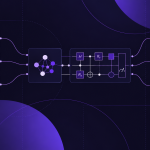
Argonne National Laboratory researchers are developing an artificial intelligence agent to automate the design of quantum circuits for nuclear physics calculations. The system will evaluate workflows based on performance metrics including gate count, circuit depth, and expected accuracy, optimizing performance beyond simply achieving a running circuit. This AI will explore encoding schemes, algorithms, and hardware configurations using reinforcement learning to identify efficient quantum solutions tailored to complex nuclear problems. The project directly addresses a challenge area within the DOE Genesis Mission, focused on discovering quantum algorithms with AI for nuclear and hadronic systems, and will initially target nuclear structure and scattering problems during its first phase of development. The long-term goal is a tool that accelerates quantum computing adoption in nuclear physics, enabling solutions to problems inaccessible to classical computation or manual design.
The pursuit of quantum simulations for nuclear systems faces a critical bottleneck: designing efficient quantum workflows. Translating complex physics into executable circuits demands expertise across encoding methods, algorithms, and hardware, a process currently performed manually and prone to suboptimal outcomes. An Argonne-led team is tackling this challenge with an artificial intelligence agent designed to automate workflow creation and optimize circuits by learning to explore the design space. Researchers report that the system will learn to design quantum workflows by exploring encoding schemes, algorithmic strategies, and hardware configurations. Phase I efforts will concentrate on nuclear structure and scattering problems, demonstrating the AI’s ability to generate competitive circuits; ultimately, the team envisions a broadly applicable tool that will accelerate quantum computing adoption within nuclear physics, allowing researchers to address problems currently intractable for both classical computers and manual quantum-circuit design.
This focus indicates a shift from simply applying quantum computing to actively discovering the most effective quantum solutions.




See today’s quantum computing news on Quantum Zeitgeist for the latest breakthroughs in qubits, hardware, algorithms, and industry deals.