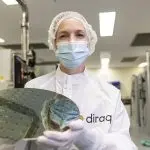
The U.S. Department of Commerce finalized an award of up to $38 million to Diraq Holdings Inc. under the CHIPS and Science Act on November 24, 2026, funding research and development focused on scalable Quantum Logic Units. This investment aims to overcome key challenges in building silicon spin quantum computers, specifically addressing bottlenecks in qubit development and control. The funded work will support novel qubit arrays and technologies critical for achieving fault tolerance. It supports the development of scalable quantum computing technologies, a vital component of advanced semiconductor manufacturing.
CHIPS Act Funds Diraq’s Silicon Spin Qubit Development
Development of scalable Quantum Logic Units, or QLUs, is a primary focus of the funding agreement between the Department of Commerce and Diraq Holdings Inc. These QLUs represent fundamental building blocks intended to enhance the power of future quantum computers by addressing a key bottleneck in achieving fault tolerance. The award also supports the creation of novel qubit arrays and technologies designed for global qubit control, essential for managing the complex interactions within a quantum processor. According to the Department of Commerce, the research will specifically tackle technology and manufacturing challenges that currently limit the scaling of silicon spin quantum computers, focusing on areas critical for practical application.



See today’s quantum computing news on Quantum Zeitgeist for the latest breakthroughs in qubits, hardware, algorithms, and industry deals.