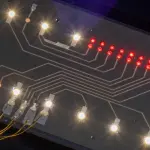
Google Quantum AI reports demonstrating contextuality, a quantum property theorized to enhance certain algorithms, on a processor using up to 105 qubits. The team’s qubits achieved a 98.3% success rate in a coordination game, exceeding the 88.9% limit possible with classical systems, Google says.
“What gives quantum computers their unique power? While entanglement usually gets the spotlight, theory suggests that a deeper quantum property called contextuality may power certain quantum algorithms,” the researchers explain in their paper published in Science. This experiment also introduces a new method for detecting hardware errors, potentially accelerating progress in fields like chemistry and materials science.
Contextuality Demonstrated at Scale on Google’s Quantum Processor
Contextuality implies that a quantum system’s properties are not predetermined, but emerge based on simultaneous measurements. The team’s work extends this demonstration to a scale where the quantum effects become more pronounced and potentially useful for complex calculations. This new error detection method relies on contextuality’s sensitivity to subtle disturbances within the quantum processor, offering a pathway to improve qubit stability and reliability. Identifying and mitigating these errors is important for building larger, more powerful quantum computers capable of tackling real-world problems. The research suggests contextuality is a potentially vital resource for future quantum technologies.




See today’s quantum computing news on Quantum Zeitgeist for the latest breakthroughs in qubits, hardware, algorithms, and industry deals.