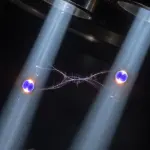
SAXON Q announced the Quantum Watchdog on November 17, 2026, a safety system designed to detect and mitigate failures in quantum computers as they move beyond research labs. The patented system monitors quantum processors using a separate classical processor, test calculations and physical sensors, placing the computer into safe mode if anomalies are detected. “A hardware failure is typically the result of an actual defect from manufacturing flaws, aging or tampering,” said Marius Grundmann, co-founder and CEO of SAXON Q, emphasizing the growing need for such safeguards as room-temperature machines enter industrial settings.
Quantum Watchdog Monitors Processors via Test Calculation Swaps
The Quantum Watchdog employs a unique method of hardware verification by intermittently substituting user calculations with pre-defined test problems possessing known solutions. This approach, detailed by SAXON Q, diverges from traditional error correction by focusing on the operational integrity of the quantum computer itself, rather than solely addressing errors within calculations. Instead of scrutinizing every output, the system periodically assesses the processor’s fundamental ability to produce correct results, offering a proactive layer of safety for emerging industrial applications, SAXON Q says.
The system’s architecture relies on a separate classical processor, independent clock, timers and sensors to monitor the quantum hardware. SAXON Q designed the Quantum Watchdog to address a critical gap in quantum computer safety protocols as the technology transitions to real-world deployments.
The watchdog’s ability to detect hardware failures stemming from manufacturing defects, aging, or even tampering is important for applications where malfunctions could have significant consequences, such as robotics, healthcare and defense systems. This is especially relevant for NV-center quantum computing, SAXON Q’s specialization, but the design is intended to be hardware-neutral and compatible with superconducting and trapped-ion processors.
The system’s redundancy features scale with the number of quantum processors in a unit, mirroring safety protocols found in aerospace and automotive engineering, according to SAXON Q. A dual-processor unit compares answers from both processors, initiating safe mode if discrepancies arise. For systems with three or more processors, the Quantum Watchdog implements a voting system, isolating and shutting down processors that deviate from the majority consensus, thereby maintaining operational capacity.
The level of monitoring is also customizable, with SAXON Q offering custom-built systems to meet specific client needs and safety parameters. “Quantum computers are already doing valuable work in data centers and labs today, and room-temperature systems like ours will take them places others can’t, from vehicles and robots to defense systems in the field,” the company stated. Beyond computational verification, the Quantum Watchdog continuously monitors physical operating conditions, including power consumption, temperature and magnetic field strength. Any deviation from pre-set limits triggers a failure response, adding another layer of protection against unforeseen hardware issues.
A failure has real consequences, and SAXON Q designed the Quantum Watchdog to make it possible to bring quantum computers into security and safety-related areas while minimizing the risk to people and property. The patented system represents a shift toward prioritizing hardware reliability alongside error correction, an important step as quantum computing expands beyond purely research environments.
Quantum computers are already doing valuable work in data centers and labs today, and room-temperature systems like ours will take them places others can’t, from vehicles and robots to defense systems in the field.
Bernd Burchard, co-founder and chief intellectual property officer of SAXON Q
SXQ128 and SXQ512 Models Offer Customizable Safety Protocols
SAXON Q will begin offering custom-built Quantum Watchdog systems in early 2027, tailoring the level of monitoring to specific client needs. The company’s approach allows users to dedicate up to half of a quantum computer’s processing time to test calculations for the highest safety levels, or to limit testing to startup and intermittent checks for less critical applications, the company says. This flexibility addresses the varying risk tolerances across industries like automotive, healthcare and defense, where the consequences of quantum computer failure can range from inconvenience to catastrophic events.
The company has secured patents for the Quantum Watchdog in Europe, the U.S. and China, and is now actively offering licenses to hardware manufacturers and system integrators. SAXON Q anticipates a tiered implementation timeline for the Quantum Watchdog, with a basic, non-certified version requiring approximately six months to implement.
A fully certified version, meeting the highest safety standards through independent audits and field testing, will be available within the next few years. This phased rollout reflects the rigorous requirements for deploying quantum computers in safety-critical applications, where independent verification is paramount. The company’s origins at the University of Leipzig, stemming from over three decades of research into nitrogen-vacancy centers in diamond, provide a strong foundation for this specialized safety system.
While the quantum industry is actively building toward error correction, there’s still the problem of making sure the hardware itself is working properly.
Marius Grundmann, co-founder and CEO of SAXON Q


See today’s quantum computing news on Quantum Zeitgeist for the latest breakthroughs in qubits, hardware, algorithms, and industry deals.