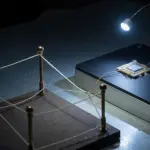
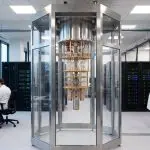
Poland’s Poznań Supercomputing and Networking Center has unveiled PIAST-Q, the nation’s first EuroHPC quantum computer, at Supercomputing ’26 in Chicago. The system features 20 physical qubits with all-to-all connectivity and operates uniquely at room temperature with air cooling, consuming less than 2 kW of electrical power. Delivered by Alpine Quantum Technologies, PIAST-Q is now accessible to European researchers via the EuroHPC JU Quantum Access Pilot Mode, supporting research in quantum optimization, materials science, and contributing to European technological sovereignty.
PIAST-Q: Poland’s First EuroHPC Quantum Computer Unveiled
The EuroQCS-Poland consortium implemented PIAST-Q, a digital, gate-based quantum computer now installed in Poznań and operational since 2026, representing a focused effort to bolster European hybrid quantum-classical computing capabilities. This system uses trapped-ion technology to achieve high-fidelity universal quantum gates and maintains all-to-all qubit connectivity, a feature that simplifies complex quantum circuit design. Long coherence times further enhance the system’s ability to perform extended quantum computations before information is lost, critical for tackling demanding problems.
This design choice allows for flexible integration into existing data center infrastructure, consuming less than 2 kW of electrical power. The system supports advanced research and benchmarking in areas such as quantum optimization, quantum chemistry, materials science and quantum machine learning, EuroHPC says. Applications to join the INFINITY Network are accepted via a dedicated registration form.
The unveiling of PIAST-Q at the Supercomputing Conference (SC26) in Chicago, alongside the presentation of the PIAST-AI Factory, planned to exceed 1,500 GPUs and the QEC4QEA European Quantum Center of Excellence, signals Poland’s growing prominence within the European high-performance computing landscape. PCSS is also involved in “Managed Services for the EOSC Platform – EOSC EU Node,” further solidifying its role in supporting European scientific infrastructure.
The PIONIER Consortium and PCSS are showing the PIAST-Q project at booth no. 1453, allowing attendees to explore the infrastructure firsthand and understand its potential to advance research in areas like quantum optimization and materials science, according to EuroHPC. This initiative directly contributes to European technological sovereignty by providing a locally accessible quantum computing resource for researchers and users across the continent. PCSS experts highlighted how these projects collectively address key challenges in supercomputing, artificial intelligence, and quantum technologies, positioning Poland as a growing force within the European technology landscape.
PIAST-Q Integrates with HPC for Hybrid Workflows
PCSS and the PIONIER Consortium are showing how this Polish-built quantum computer extends computational capabilities beyond traditional limits, allowing researchers to tackle problems previously intractable for either system alone. This approach moves beyond simply adding quantum power. It focuses on intelligently combining the strengths of both quantum and classical resources. At the SC26 exhibition, PCSS experts highlight how PIAST-Q is integrated with classical high-performance computing infrastructure to enable novel hybrid quantum-classical workflows.
INFINITY Project Organizes Cultural Heritage with Ethical AI
The INFINITY project will soon launch an open call offering €650,000 in funding to cultural institutions and creative industry entities, allowing them to test newly developed solutions for organizing digital collections. This initiative centers on explainable artificial intelligence and the Semantic Web, with a core focus on ethical and legal considerations surrounding cultural heritage data. PCSS is simultaneously showing Polish advancements in high-performance computing and artificial intelligence at the SC’26 conference in Chicago, alongside the PIONIER Consortium.
This exhibition features the PIAST-AI and GAIA artificial intelligence factories. The ECHOLOT Project, also presented, released its first newsletter dedicated to digital cultural heritage, further illustrating the breadth of ongoing initiatives. PCSS will also host an event on November 18, dedicated to the application of artificial intelligence in business, demonstrating a broader commitment to AI innovation beyond the cultural heritage sector.
PCSS Advances Open Science Through EOSC EU Node Membership
The Poznań Supercomputing and Networking Center’s membership in the Open Science Commons Consortium secured continued development of the EOSC EU Node platform following a recent European Commission tender, ensuring operational support for the European Open Science Cloud. This consortium win extends PCSS’s role beyond national infrastructure, establishing it as a key player in maintaining a pan-European platform for data sharing and collaboration, and directly supporting the goals of open science across the continent.
Beyond infrastructure support, PCSS is expanding access to its artificial intelligence capabilities, now offering API access to large language models not only to researchers but also to commercial customers. This move broadens the impact of PCSS’s AI development, allowing businesses to use advanced machine learning tools for a range of applications and supporting innovation outside of traditional academic settings.
The expansion of the European Cloud for Cultural Heritage (ECCCH) ecosystem through the ECHOES project further demonstrates PCSS’s commitment to collaborative research. Eight new sister projects have joined the initiative, tasked with verifying and testing technologies within real-world environments, and expanding the scope of digital preservation efforts.

See today’s quantum computing news on Quantum Zeitgeist for the latest breakthroughs in qubits, hardware, algorithms, and industry deals.