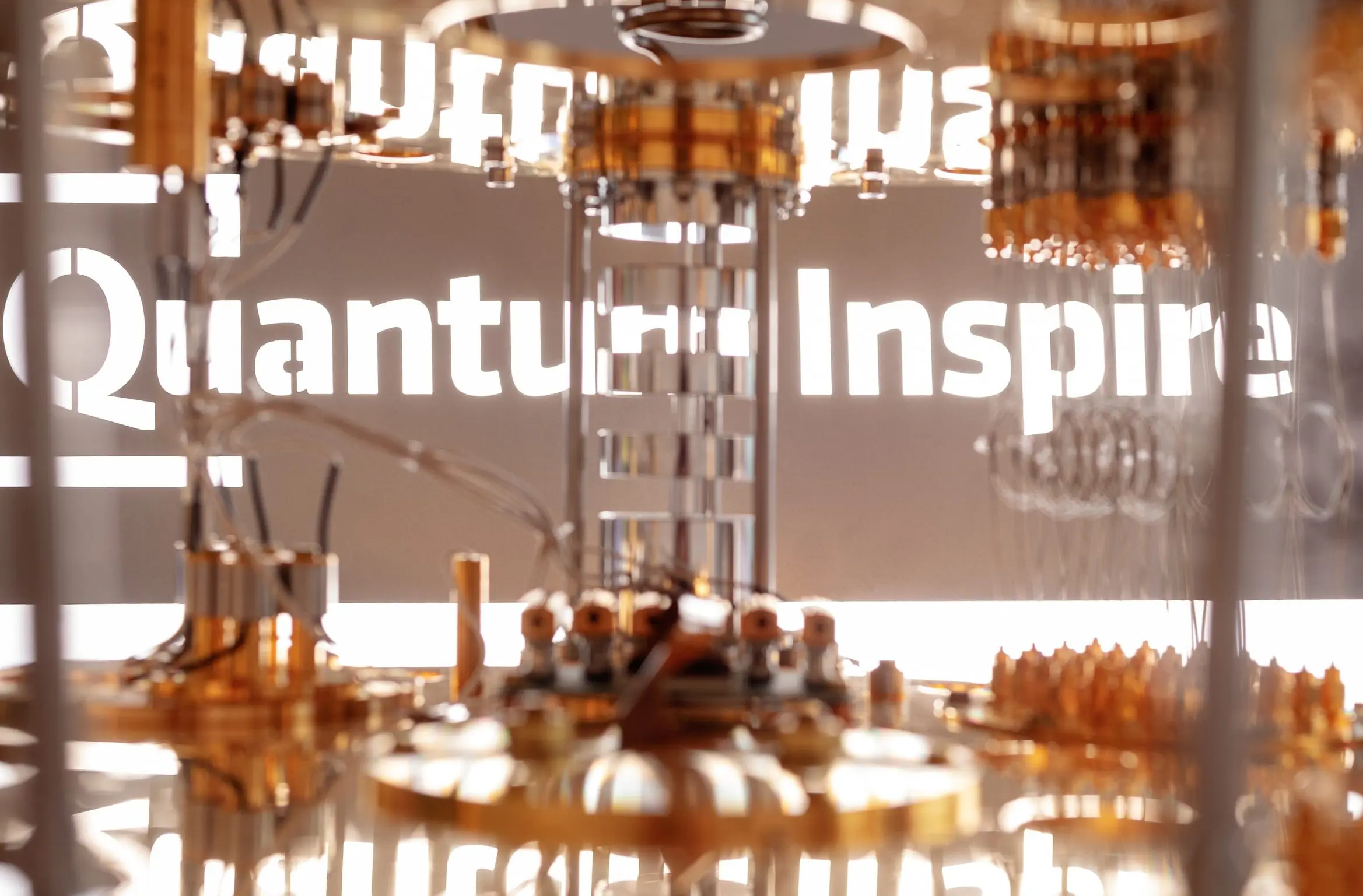
TU Delft researcher Zeynab Kaseb is the first to use a newly integrated workflow, linking Quantum Inspire to DelftBlue for a practical application: solving a power grid problem, the company says. Kaseb traced a calculation from classical preparation on DelftBlue, TU Delft’s high-performance computer, through QuTech’s Tuna-17 quantum processor via Quantum Inspire, and back for analysis.
The initial test focused on power flow in a network comprised of just two connected points, employing the Quantum Approximate Optimization Algorithm. Says Martin van Gijzen, scientific director of the Delft High-Performance Computing center, “In the past year we integrated Quantum Inspire with DelftBlue and now Kaseb is the first to obtain results on our integrated infrastructure.”.
DelftBlue and Quantum Inspire Enable Power Grid Calculation Workflow
The integration of DelftBlue and Quantum Inspire enabled the execution of a quantum circuit with 165 layers, a complexity achieved through a workflow linking classical and quantum computing resources. Researcher Zeynab Kaseb used this connection to explore power flow calculations, a critical aspect of electrical grid management, using the Quantum Approximate Optimization Algorithm (QAOA).
Two versions of the power flow calculation were performed on the 17-qubit Tuna-17 processor, employing circuits with four and six qubits, each run generating 1,024 measurements. The four-qubit circuit identified the best candidate solution in 215 of the measurements, representing approximately 21 percent of the total, while the six-qubit encoding, offering a more refined representation of voltage, achieved a lower residual of 0.003262 compared to the four-qubit run’s 0.01053.
A residual value indicates the accuracy of a candidate solution in satisfying the power flow equations. Lower values signify a better fit, with zero representing a perfect solution. The increased detail of the six-qubit encoding came at the cost of circuit depth, requiring 165 layers compared to the four-qubit circuit’s 30 layers. Although the best candidate from the six-qubit run appeared less frequently, at 16 instances or 1.56 percent of measurements, this frequency aligned with expectations for uniform sampling across the 64 possible bitstrings.
These results highlight the potential for quantum algorithms to identify improved solutions, while also revealing the impact of circuit complexity and measurement frequency on the outcome. Kaseb’s work establishes a full pathway for translating classical calculations performed on DelftBlue into circuit execution on Tuna-17 via Quantum Inspire, and subsequently analyzing the resulting measurements.
The decoded measurements were then compared against the original power flow equations, allowing for validation and assessment of the quantum approach. This workflow provides a valuable platform for testing quantum algorithms on real quantum hardware, using classical computing for both preparation and result analysis, and ultimately advancing the development of quantum solutions for complex engineering problems.
Source: https://qutech.nl/2026/11/13/a-power-grid-problem-tests-quantum-inspires-connection-to-delftblue/

See today’s quantum computing news on Quantum Zeitgeist for the latest breakthroughs in qubits, hardware, algorithms, and industry deals.