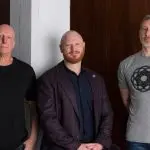
Politecnico di Milano joins an international effort to redefine core tenets of quantum physics with a $4,108,509 grant from the John Templeton Foundation. The “Open Quantum Systems and Causal Structure of Reality” project, led by Professor Giovanni Valente alongside Professor Karim Thébault of the University of Bristol, challenges the long-held assumption that quantum systems are isolated and operate within a fixed causal framework.
Researchers will integrate mathematical physics, philosophy and experimental research to explore how to describe quantum systems interacting with their environment, and how causality functions when cause and effect are not clearly defined. The collaboration includes researchers from institutions in Europe and the United States, aiming to develop a new theoretical framework for understanding physical reality.
Politecnico di Milano’s Role in “Open Quantum Systems” Project
Valente’s co-principal investigator role positions Politecnico di Milano as a central hub for the $4,108,509 research effort funded by the John Templeton Foundation, bringing together institutions from Europe and the United States. The project’s scope extends beyond Politecnico di Milano, encompassing the universities of Bristol, Munich, Groningen, Lancaster, Vienna, Madrid and Chapman, as well as the institution’s Department of Mathematics. The research team at Politecnico di Milano includes Professors Michele Correggi and Vojkan Jaksic, each leading distinct subprojects within the larger initiative, alongside Professors Fabrizio Colombo, Franco Fagnola, Davide Fermi and Irene Sabadini.
The project will be hosted by the Department’s FoQuS – Foundations of Quantum Systems laboratory, which brings together expertise in the mathematical and conceptual dimensions of quantum physics. The project will use the expertise of META, Social Sciences and Humanities for Science and Technology at Politecnico di Milano, of which Valente is a member, to support interdisciplinary dialogue.
The project documentation states that the research centers on key questions concerning the foundations of contemporary physics, outlining objectives including the study of quantum causality and the analysis of the origin of the arrow of time. This integrated approach seeks to bridge the gap between physics, mathematics and philosophical inquiry, offering new insights into the fundamental nature of physical reality.


See today’s quantum computing news on Quantum Zeitgeist for the latest breakthroughs in qubits, hardware, algorithms, and industry deals.