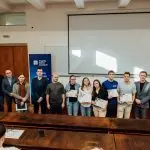
Munich Quantum Valley’s David Reichmuth joined a panel at the Falling Walls Science Summit in Berlin on November 7, 2026 to discuss how Germany can translate its quantum research into economic growth. Alongside Rolf-Dieter Jungk, Regev Yativ, Paolo Bianco and Henning Hahn, the group explored the critical role of ecosystems in commercialising quantum computing.
A central theme for MQV was establishing integrated technological and innovation ecosystems, where partners can jointly develop and commercialise quantum technologies, aligning with Germany’s Hightech Agenda. MQV emphasized that essential suppliers and component makers often need partners for co-development and de-risking, highlighting the need for collaborative support.
Munich Quantum Valley Advocates Ecosystems for German Quantum Commercialization
The approach aligns with Germany’s Hightech Agenda Deutschland, which uses consortia projects within its Quantum Computing Competition to support innovation. Open source communities establish standards that benefit hardware providers and users by providing a common foundation for software developers, as illustrated by the active engagement of companies like Classiq, supported by MQV. This convergence around standards is seen as valuable for the field’s progress. To facilitate these collaborations, the newly established MQV gGmbH will function as a system enabler for start-ups, industry and research institutions.
The organization will coordinate joint initiatives, provide access to quantum computers and co-develop projects with partners, actively identifying and resolving obstacles to commercialization. “Capitalising on Germany’s Quantum Research Excellence” was the theme of the panel, reflecting the nation’s position as a leader in quantum research and the need to translate that strength into tangible economic benefits. MQV expressed gratitude to Quantum Valley Lower Saxony and the Falling Walls Foundation for organizing the event and bringing together key stakeholders for this important conversation.


See today’s quantum computing news on Quantum Zeitgeist for the latest breakthroughs in qubits, hardware, algorithms, and industry deals.