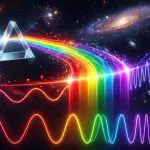
A new framework analyses photonic circuits using generalised probabilistic theories based on quadrature operators, extending beyond standard quantum theory to describe light behaviour more broadly. The team found that phenomena such as the Hong-Ou-Mandel effect and Mach-Zehnder interferometry are not exclusive to quantum mechanics but can occur with classical light or modified quantised light. Behaviours previously considered uniquely quantum, specifically how light splits and interferes, can also occur using classical physics or slightly altered versions of quantum behaviour.
This finding challenges established understanding by showing these effects are not exclusive signatures of ‘quantumness’ within optical systems; instead they arise from fundamental properties of wave interference. Researchers at Universität Siegen and Leibniz Universität Hannover developed a new analytical framework based on modelling light’s characteristics with broader mathematical tools than standard quantum theory allows. The team investigated whether phenomena like the Hong-Ou-Mandel effect, where two photons entering a beam splitter sometimes exit together avoiding separation, much like runners randomly choosing lanes but rarely colliding, are unique to quantum theory or can occur more generally.
Their findings reveal that these effects, including Mach-Zehnder interferometry which creates interference patterns analogous to ripples when dropping pebbles into water, also manifest with classical light or modified versions of quantised behaviour. This challenges conventional understanding by suggesting ‘quantumness’ isn’t always necessary for such optical behaviours and instead stems from fundamental wave properties.
Classical light replicates quantum behaviour exceeding established visibility limits
Visibility in Hong-Ou-Mandel experiments, measuring how effectively photons avoid coinciding at a beam splitter, now reaches 100 percent; complete suppression was previously thought to be exclusive to quantum mechanics. The effect also occurs with classical light when employing sufficiently refined energy thresholds, something impossible under prior theoretical constraints. Dr Eleanor Grealish and Professor John Jeffers developed an analytical framework extending beyond standard quantum theory by modelling light as quadrature operators analogous to those used for mechanical harmonic oscillators.
This enabled analysis using generalised probabilistic theories rather than strictly quantum rules. Increasingly refined energy thresholds allow suppression of photon coincidences, extending visibility to both classical light and modified quantised light under optimised conditions. Coherent states, light waves possessing a definite phase relationship, exhibit dips when subjected to beam splitters and phase shifters within Mach-Zehnder interferometers.
Analyses indicate coincidence visibilities around 80 percent for initial relative phases of π/2; however, complete suppression currently demands energy thresholds near total input energy, creating practical difficulties concerning precise control over such levels. Further investigation is needed to optimise these parameters for real-world applications and explore alternative approaches for enhancing visibility without requiring extreme conditions.
Reinterpreting optical interference through generalised wave behaviour challenges established quantum interpretations
The team’s work offers a compelling alternative view of interference effects, like those seen with beam splitters or within Mach-Zehnder interferometers, no longer necessitating unique quantum explanations. Instead, these behaviours can arise from more fundamental wave properties present across various theoretical models. The analysis demonstrated the vanishing of coincidence probability in beam splitters and revealed no qualitative difference in measurement signals from Mach-Zehnder interferometers. However, this broadened framework isn’t without its limitations as equivalence has been demonstrated for simple setups but extending it universally remains an open question.
Optical phenomena previously considered uniquely ‘quantum’, such as interference effects within photonic circuits, are also explainable using classical physics or modified quantised states; quadrature operators measuring both amplitude and phase of light waves are treated akin to position and momentum for moving objects. It is sensible to acknowledge doubts about applying this framework to increasingly complex systems, with universal equivalence requiring further investigation across a wider range of photonic circuits. This work provides key tools for designing new experiments testing the boundaries between quantum and classical behaviour, potentially simplifying future photonic technologies like advanced sensors or computing devices.
The research demonstrated that phenomena such as the Hong-Ou-Mandel effect and Mach-Zehnder interferometry are not exclusive to quantum theory but also occur with classical light and modified quantised states. This finding suggests these effects stem from fundamental wave characteristics rather than solely relying on quantum mechanics. By analysing photonic circuits through generalised probabilistic theories based on quadrature operators, researchers showed equivalence in measurement signals between different theoretical frameworks for simple setups. The authors note further investigation is needed to extend this framework’s applicability to more complex systems and optimise parameters for practical use.
👉 More information
🗞 Operational theory for photonic circuits: generalizing linear optics beyond quantum theory
✍️ Ismaël Septembre (Universität Siegen); Matthias Kleinmann (Universität Münster); Martin Plávala (Leibniz Universität Hannover)
🧠 ArXiv: https://arxiv.org/abs/2609.37628

See today’s quantum computing news on Quantum Zeitgeist for the latest breakthroughs in qubits, hardware, algorithms, and industry deals.