Researchers have achieved control over more than 1,024 spatial modes with fully programmable polarization, representing a leap in manipulating the properties of light. The work demonstrates spatial degree-of-polarization modulation, enabling a new degree of freedom for optical computing and encryption. Color images are directly encoded into a single-wavelength laser by mapping the red-green-blue space to the volume of the Poincaré sphere, and a high-dimensional photonic neural network performs fully parallel classification of these images. These approaches highlight the opportunities enabled by DOP modulation in photonics, cryptography and computing.
Spatial Light Modulation Enables High-Dimensional Computing
A system capable of controlling over 1,024 distinct spatial modes of light with programmable polarization and degree of polarization (DOP) has been demonstrated. This breakthrough moves beyond traditional methods of manipulating light by incorporating the statistical properties of polarization, opening avenues for high-dimensional data encoding. The core of this new approach lies in the ability to tailor the probability distribution of polarization states across a wavefront.
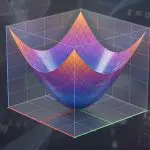
By imposing stochastic SOP variations with a spatial light modulator, the team generated light with a controlled DOP, mapping it to a point within the unit Poincaré sphere. The resulting spatial DOP modulator allows for information encoding through the volume of this sphere, a concept the researchers describe as accessing space. This technique differs from previous attempts to tune DOP, which often relied on static metasurfaces lacking pixel-by-pixel programmability or time-switching liquid crystals limited by operating frequency.
The team directly encoded color images into a single-wavelength laser beam. This was accomplished through a one-to-one mapping between the red-green-blue color space and the volume of the Poincaré sphere, decoupling color information from optical frequency. This innovative encoding scheme was then utilized in a high-dimensional photonic neural network, enabling fully parallel photonic classification of the color images.
To achieve complete programmability of the SOP and the DOP in every macromode, the concept was implemented by replacing the waveplates with an extra spatial light modulator that operates as a spatially tunable retarder. The platform’s accessibility and scalability are further enhanced by its reliance on mature spatial light modulator technology, supporting millions of active pixels across a broad spectral range.
Degree-of-Polarization Modulation Controls Light’s Statistical Properties
This achievement moves beyond simply altering the direction or intensity of a beam, instead focusing on the statistical properties of its polarization at a microscopic level. Researchers accomplished this by engineering polarization statistics at the micrometre scale using a phase-only spatial light modulator, opening avenues for encoding information in a high-dimensional space previously inaccessible. This new technique centers on controlling the degree of polarization (DOP), a fundamental property reflecting the variation of a light wave’s state of polarization.
Unlike previous methods that tuned DOP for homogeneous laser beams, this approach allows for modulation within the wavefront itself. The team overcame limitations of static metasurfaces and slow liquid crystals by implementing a statistical method; they imposed stochastic state-of-polarization variations at the micrometre scale and tailored their probability distribution function.
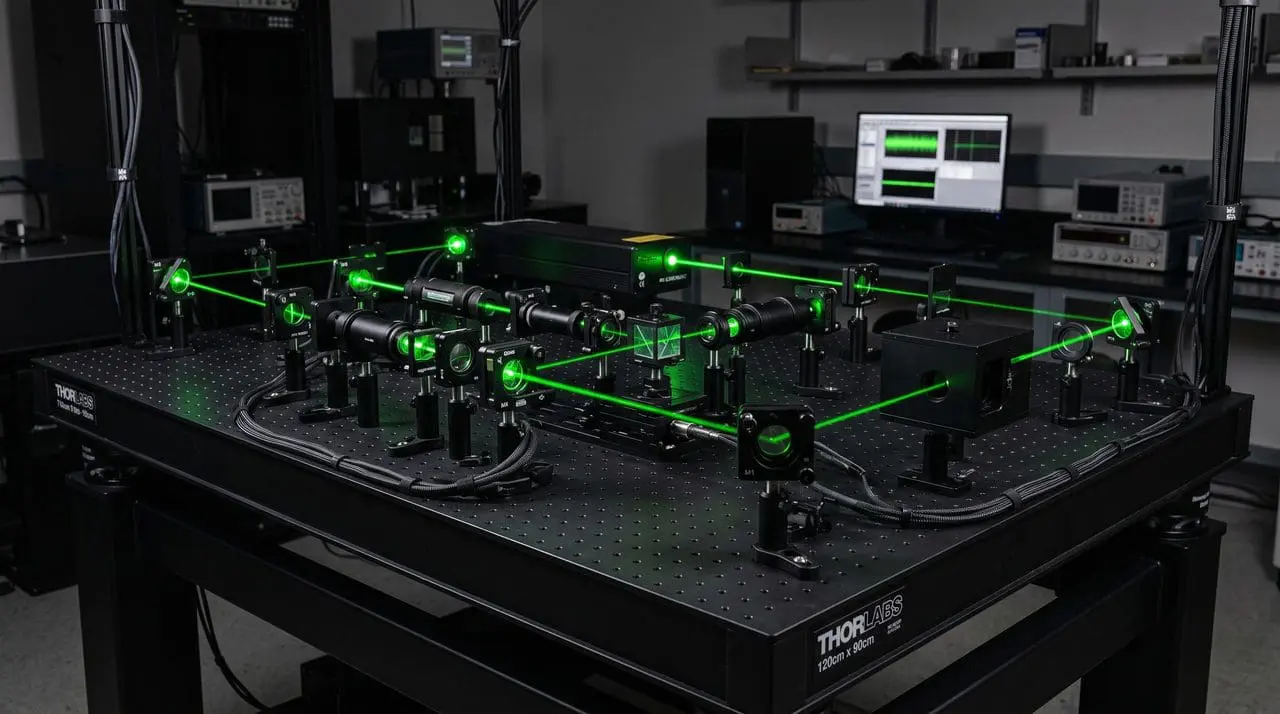
This precise control is achieved through a spatial light modulator that divides a laser beam into numerous “macromodes,” each composed of microscopic regions with randomized phases. By carefully adjusting the distribution of these phases, the researchers can dictate the DOP and state of polarization at specific points in the resulting beam. This decoupling of color from optical frequency introduces a novel scheme for optical neural networks, processing RGB images through high-dimensional channels. This approach differs from previous photonic processors by integrating a statistical quantity, the DOP, alongside deterministic properties of the light.
Encoding Color Images via Poincaré Sphere Mapping
Researchers have achieved a significant advance in optical data encoding, demonstrating the ability to sculpt light’s polarization to represent full-color images within a single laser beam. The team, led by Dr. Ebtissam Alyafei, bypassed traditional methods of color representation by leveraging the degree of polarization (DOP) and its relationship to the Poincaré sphere, a geometrical tool used to visualize polarization states. This innovative approach allows for the encoding of red-green-blue (RGB) information without altering the laser’s wavelength, a departure from conventional techniques.
This allows for the creation of structured light with arbitrary polarization shapes, effectively expanding the dimensionality of optical information encoding. Alyafei highlighted the core achievement of the work.
These phases are then manipulated to control the DOP and SOP at specific points in the far-field, effectively creating a spatially modulated polarization landscape. The researchers demonstrated control of both DOP and SOP by tuning the phase probability distribution function.
SLM-Based System Tailors Polarization at Micrometric Scale
Researchers achieved this precision by leveraging spatial light modulators (SLMs) to engineer the statistical properties of light at the micrometre scale, opening avenues for advanced optical computing and encryption. Unlike previous methods reliant on time-switching liquid crystals or static metasurfaces, this system offers dynamic, pixel-by-pixel control over both the degree of polarization (DOP) and state of polarization (SOP) within a single material.
The core of the innovation lies in a statistical approach to DOP modulation. This allows for the encoding of information not just through the direction of light’s oscillation, but also through the consistency or randomness of that oscillation, effectively adding another dimension to optical data transmission.
The team believes these approaches will lead to more efficient and secure optical technologies.
RGB Encoding Integrates DOP with Optical Neural Networks
Controlling the properties of light has long focused on its wavelength and intensity, but a new approach leverages a previously untapped dimension: the degree of polarization. This precise control isn’t merely about finesse; it unlocks a pathway for encoding information in a fundamentally new way, moving beyond traditional methods reliant on deterministic properties of light.
This allowed them to realize more than 1,024 spatial modes, each with a programmable state of polarization and degree of polarization, effectively creating a high-dimensional space for information storage. This method contrasts sharply with conventional optical processing, which typically relies on manipulating the phase or amplitude of light.
By introducing a statistical element, the DOP, alongside deterministic properties, the researchers have opened new avenues for optical computing. The researchers found that the DOP is solely determined by the standard deviation of the phase distribution, establishing a general strategy for controlling this crucial property. The ability to encode information within the polarization state of a single-wavelength beam promises more efficient and secure optical technologies, potentially revolutionizing fields from data transmission to advanced imaging.
Limitations of Existing DOP Modulation Techniques
Achieving fully programmable control over 1,024 spatial modes, coupled with both state of polarization (SOP) and degree of polarization (DOP), represents a substantial advance in manipulating light; however, current methods for spatial DOP modulation face inherent limitations that constrain their widespread implementation. Existing techniques for tuning DOP, such as engineered metasurfaces and temporal or spatial integration methods, prove effective for homogeneous laser beams but struggle to modulate DOP within the wavefront itself.
Static metasurfaces, while capable of shaping polarization, lack the pixel-by-pixel programmability necessary for dynamic control, and previous attempts utilizing liquid crystals have been hampered by comparatively low operating frequencies. The core challenge lies in creating a photonic component capable of controlling local SOP fluctuations; until now, no technology has offered the ability to arbitrarily modulate both DOP and SOP across space simultaneously.
While researchers have successfully tuned DOP by engineering the temporal or spatial integration performed by detectors, these approaches are not suited to applications requiring wavefront-level control. This method, however, relies on careful calibration of the probability distribution to achieve precise DOP control, adding complexity to the system.
Implementing this fully programmable configuration, while feasible, adds to the system’s complexity and cost, and maintaining crosstalk between adjacent “macromodes,” the discrete regions of modulated polarization, requires precise engineering of the optical setup, either through free-space propagation over carefully defined distances or through the use of Fourier-plane modulation with microlens arrays.
Despite the accessibility and scalability afforded by utilizing mature SLM technology, the current implementation necessitates a trade-off between resolution and field of view. Increasing the number of micromodes within each macromode to enhance spatial resolution inevitably reduces the overall field of view, limiting the size of encoded information. While this work demonstrates a significant step forward in spatial DOP modulation, continued refinement is necessary to overcome these limitations and unlock the full potential of high-dimensional optical computing and encryption.
See today’s quantum computing news on Quantum Zeitgeist for the latest breakthroughs in qubits, hardware, algorithms, and industry deals.