
Welcome to this week’s quantum technology digest! We’ve curated the ten most impactful stories shaping the rapidly evolving quantum landscape, bringing you the latest breakthroughs, commercial advancements, and growing international collaborations.
This week showcases a particularly dynamic period, marked by impressive progress on multiple fronts. We’re seeing tangible steps toward fault-tolerant quantum computing with advancements in error correction from NVIDIA and record-breaking fidelity results from IonQ. Alongside these hardware milestones, commercialization efforts are gaining serious momentum – evidenced by IonQ’s dramatic revenue increase – and partnerships are forming to bridge the gap between research and real-world application, from KIST & IBM’s startup initiative to Terra Quantum’s first operational QKD link.
From teleporting qubits on a chip to expanding access through platforms like qBraid Lab, and a growing European quantum presence highlighted by D-Wave, this week demonstrates the breadth and accelerating pace of innovation within the quantum realm. It’s a testament to the dedication of researchers and businesses alike pushing the boundaries of what’s possible.
1. NVIDIA AI Achieves Sub-Microsecond Quantum Error Correction Breakthrough

Scientists at the NVIDIA Corporation have developed a new AI-powered pre-decoder for the surface code that drastically reduces quantum error correction time to approximately 1 microsecond per round. This scalable, block-wise parallel system proactively removes the majority of physical errors before they impact calculations, resulting in demonstrably lower logical error rates – even surpassing existing methods at code distances up to 13. Notably, the system learns directly from experimental data, eliminating the need for precise, often unavailable, circuit-level noise models, marking a significant step towards practical, high-throughput quantum computation.
2. IonQ’s Revenue Soars 755%: A Quantum Leap Towards Commercialization
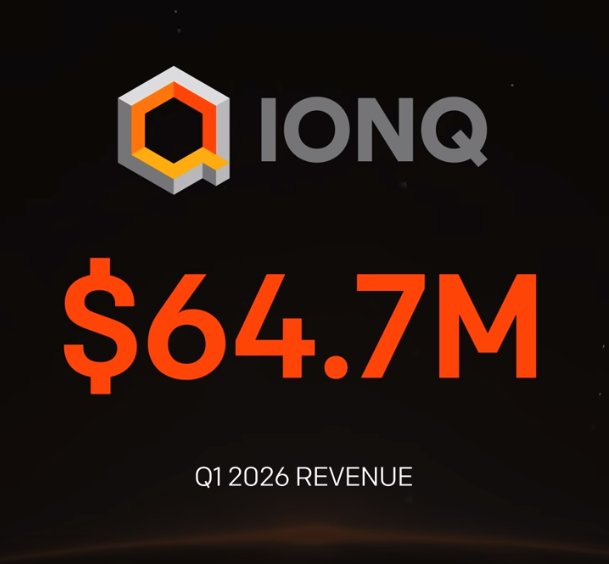
IonQ reported a first-quarter revenue of $64.7 million, a remarkable 755% increase year-over-year, demonstrating significant market traction and a maturing business model. This growth is driven by a surge in commercial customers now contributing 60% of revenue, moving beyond reliance on research funding. Notably, IonQ secured its first sale of a 256-qubit system alongside a strategic partnership for secure quantum networking and published a detailed blueprint for fault-tolerant quantum computing, signaling a move towards practical, scalable quantum solutions. These developments highlight IonQ’s position as a leader in translating quantum advancements into tangible commercial realities.
3. IBM Quantum: A Decade of Democratizing Access & Achieving Utility

IBM Quantum celebrates ten years of cloud-based quantum computing access, now serving 240,000 users and supported by a network of 300 partners. The company highlights that the biggest challenge wasn’t building quantum computers, but creating a reliably calibrated, multi-user system – a focus that drove innovations like daily calibration and the open-source Qiskit SDK. This commitment has resulted in over 5,900 research papers and a leading fleet of quantum processors, culminating in recent demonstrations of quantum utility and the development of scalable quantum systems like the Quantum System Two and loon QPU. IBM’s decade of “firsts” underscores its mission to make useful quantum computing a reality.
4. IonQ Achieves Landmark Fidelity, Signals Quantum Computing Maturity & Growth

IonQ has announced a breakthrough in quantum computing, achieving 99.99% two-qubit gate fidelity – a critical threshold for building practical, fault-tolerant computers. This milestone, building on foundational work from the 1990s, positions IonQ as a leading full-stack quantum platform and merchant supplier, evidenced by a 202% year-over-year revenue increase in 2025. Beyond computing, the company is uniquely invested in quantum networking and sensing, and is strengthening its manufacturing capabilities through the acquisition of SkyWater, signaling a broader commercial expansion beyond research institutions. This positions IonQ to drive advancements across multiple sectors including engineering, life sciences, and artificial intelligence.
5. IonQ’s New Benchmarks: Bridging Quantum Specs to Real-World Performance

Researchers at IonQ Inc., led by Willie Aboumrad, have unveiled a scalable framework for benchmarking quantum computers using 13 realistic application families, measuring solution quality, execution time, energy consumption, and critically, Time-to-Solution. This new methodology demonstrates up to a 50% reduction in Time-to-Solution across these benchmarks, including improvements in quantum chemistry, optimization, machine learning, and finance, significantly accelerating previously impractical computations. By shifting the focus from gate-level evaluations to application performance, this work establishes a crucial link between hardware capabilities and tangible user benefits, paving the way for industry-wide standards and informed system development.
6. KIST & IBM Bridge Quantum Startups to Global Commercialization
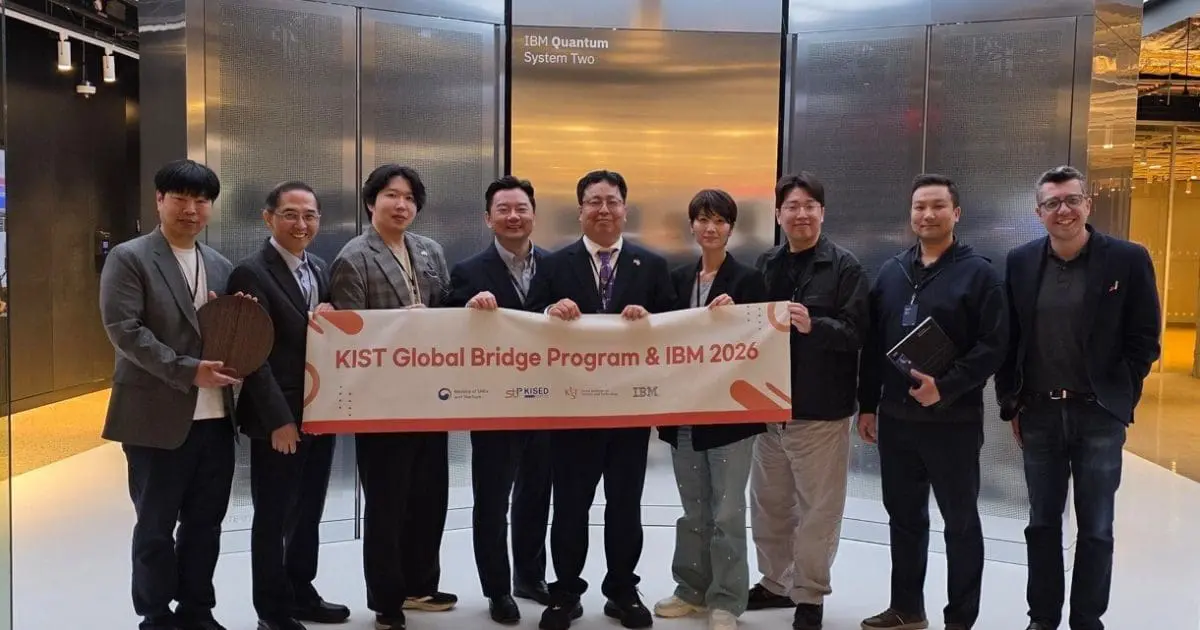
A team from the Korea Institute of Science and Technology (KIST), in partnership with IBM, recently facilitated a visit for five South Korean quantum startups to IBM’s Watson Research Center in New York. Funded by the Ministry of SMEs and Startups, the “Global Bridge Program” aimed to accelerate the commercialization of these startups by fostering direct technical exchange with IBM researchers focusing on the Quantum System Two architecture. The delegation, comprised of companies specializing in areas like single-photon detectors, LiDAR, and hybrid quantum-classical algorithms, explored joint research opportunities and pathways to bring their technologies to market. This initiative represents a sustained effort to transition quantum technology from the lab to practical, global applications.
7. Terra Quantum Deploys First Operational QKD Link Securing Melita’s Data Centers

Terra Quantum, in collaboration with Melita Business and Merqury Cybersecurity, has successfully established a quantum key distribution (QKD) link between two of Melita’s data centers in Malta, marking a significant step toward practical quantum cryptography deployment. This installation uniquely operates QKD technology on existing fiber infrastructure – utilizing Dense Wavelength Division Multiplexing (DWDM) – avoiding the need for costly and disruptive fiber replacement. Demonstrating operational stability with tens of thousands of key requests processed, the system incorporates a Quantum Random Number Generator (QRNG) and Optical Time-Domain Reflectometry (OTDR) for robust security, addressing the growing threat of quantum computers to current encryption methods and contributing to a quantum-secure European network.
8. Moving Qubits: QuTech Achieves Teleportation with Electron Spin on a Chip
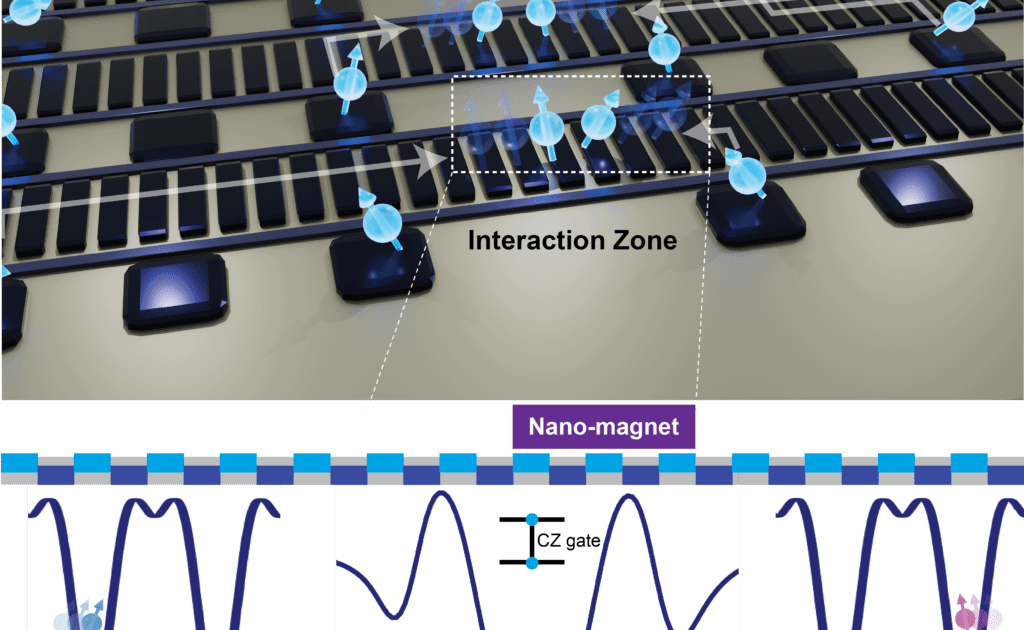
Researchers at QuTech, part of TU Delft, have successfully entangled and teleported quantum states between moving electron-spin qubits on a semiconductor chip. The team engineered a “conveyor belt” system using traveling potential minima to physically transport qubits and perform operations while in motion, a feat previously demonstrated with neutral atoms and trapped ions. This dynamic control, leveraging distance and timing, simplifies qubit interconnection and offers a path towards scalable architectures by reducing the need for complex, fixed-pair coupling, and crucially, allows for stable qubit readout via fixed measurement stations. This advancement brings semiconductor-based quantum computing closer to realizing the scalable fabrication techniques of classical chip design.
9. D-Wave Amplifies European Quantum Push with “Qubits Europe” Conference

D-Wave Quantum is hosting “Qubits Europe: Quantum Realized” in London on June 18th to highlight the growing impact of real-world quantum computing applications and expand its presence in the European market. The conference will showcase how organizations are currently utilizing D-Wave’s unique dual-platform (annealing and gate-model) quantum systems to solve complex problems across various sectors, coinciding with increased governmental support – notably recognition from King Charles III – and private investment in European quantum initiatives. With a reported 99.9% uptime for its cloud service, D-Wave is signaling a shift towards delivering practical quantum value and establishing itself as a key player in the region’s burgeoning quantum landscape.
10. qBraid Lab Triples Qubit Access with Rigetti’s 108-Qubit Cepheus-1
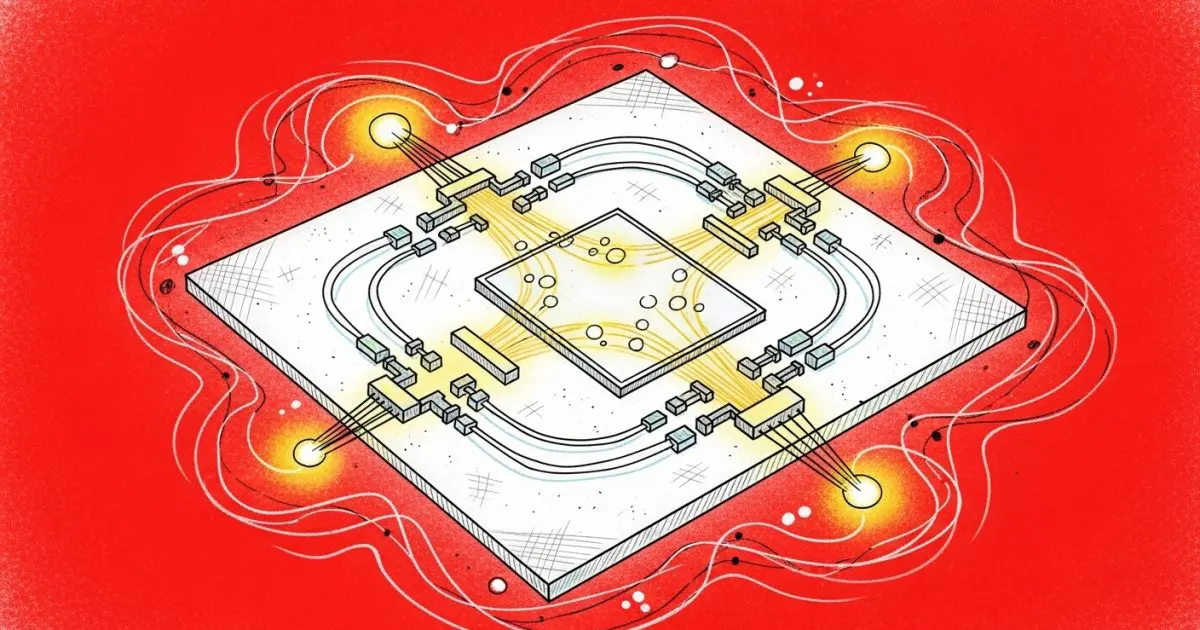
A team from qBraid Lab has announced the addition of Rigetti’s Cepheus-1-108Q processor to its platform, tripling the available qubit count and significantly expanding computational capabilities for its 27,000+ user base. This 108-qubit system, built from interconnected chiplets, boasts high fidelities of 99.9% for single-qubit gates and 99.1% for two-qubit gates, enabling more complex experiments in quantum error correction, chemistry, and materials science. The launch also marks the retirement of Rigetti’s Ankaa-3 processor, with qBraid ensuring a smooth migration path for existing users and emphasizing the continued refinement of the Cepheus-1-108Q’s performance throughout 2026.



See today’s quantum computing news on Quantum Zeitgeist for the latest breakthroughs in qubits, hardware, algorithms, and industry deals.