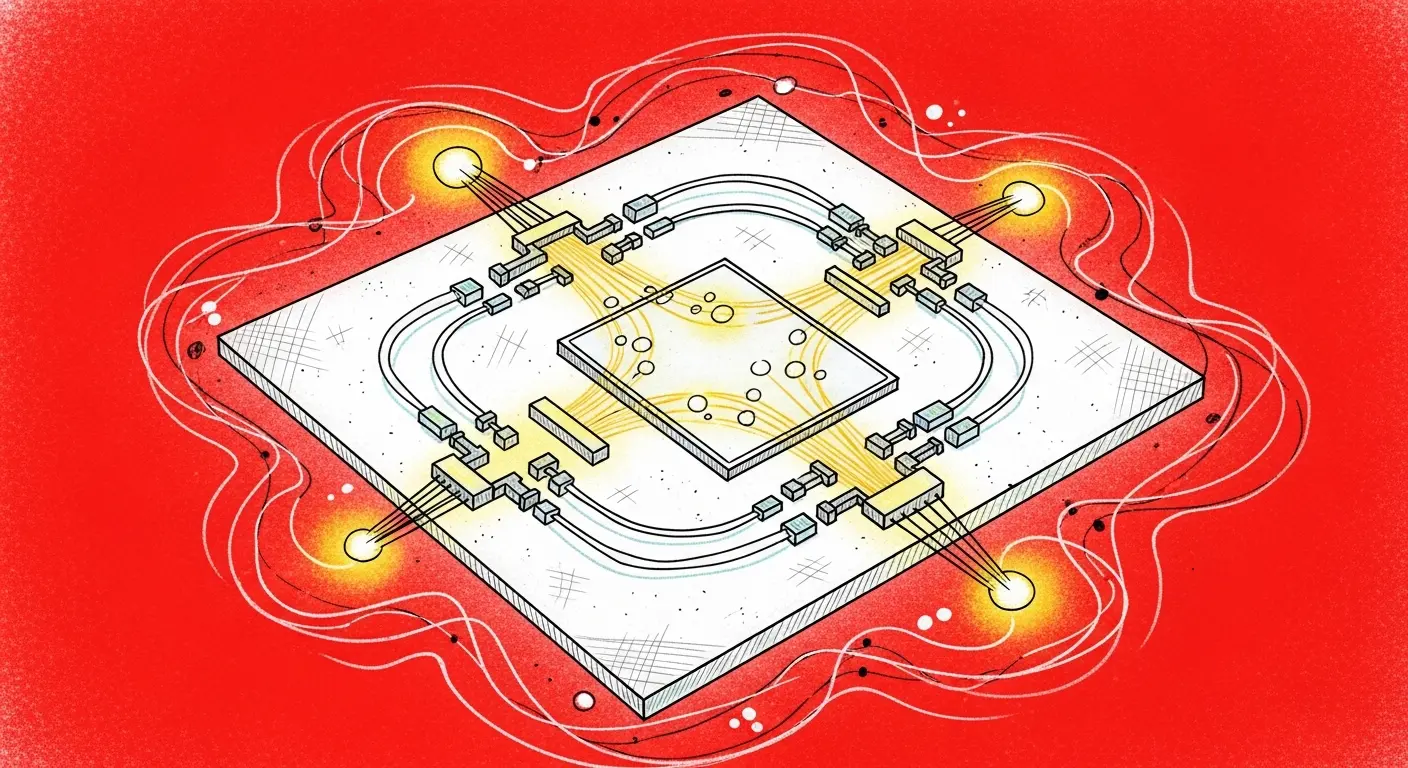
qBraid Lab now offers access to Rigetti’s Cepheus-1-108Q, a quantum system with 108 qubits, tripling the previous qubit count available to its users. This increase in accessible quantum processing power enables experiments and problem sizes previously limited by hardware, including deeper quantum error correction and more complex simulations for chemistry and materials science. The system achieves 99.1% median two-qubit gate fidelity and 99.9% median single-qubit gate fidelity, demonstrating performance gains. “This is one of the biggest jumps in accessible qubit count we’ve ever shipped to the qBraid community,” says qBraid, and with the launch of Cepheus-1-108Q, Rigetti’s Ankaa-3 processor is being retired from the platform after powering numerous research projects and educational assignments.
Rigetti Cepheus-1-108Q: 108-Qubit Modular Architecture Details
Rigetti’s Cepheus-1-108Q system offers qBraid Lab users a 108-qubit processor, effectively tripling the qubit count compared to the previous Cepheus-1-36Q system. This increase, achieved by interconnecting twelve 9-qubit chiplets, unlocks experimental possibilities previously constrained by hardware limitations; researchers can now tackle quantum error correction experiments requiring more physical qubits to encode logical qubits, and explore deeper variational circuits for applications in chemistry, materials science, and optimization. Rigetti reports a median two-qubit gate fidelity of 99.1% and a median single-qubit gate fidelity of 99.9%, along with a gate speed of approximately 60 nanoseconds and native CZ gates designed to streamline error correction circuit construction. Rigetti intends to continue refining both fidelity and performance throughout the remainder of the year, suggesting further improvements to the Cepheus-1-108Q are anticipated.
This expanded capacity allows for larger-scale benchmarking and noise characterization across modular architectures, and supports algorithm research that extends beyond the capabilities of smaller, 30 to 50 qubit devices. Integration with qBraid Lab is designed for seamless operation; users can submit jobs directly from within the platform using the existing qbraid SDK workflow, eliminating the need for new accounts or cloud configurations. The arrival of Cepheus-1-108Q also signals the retirement of Rigetti’s Ankaa-3 processor from qBraid Lab, a device that has been instrumental in powering a diverse range of projects, from undergraduate assignments to advanced research within the platform’s 27,000-plus developer community.
Migration from Ankaa-3 is expected to be straightforward due to the shared Rigetti QCS backend and gate set, but users are advised to review qubit routing and mapping for circuits previously optimized for Ankaa-3’s specific topology, and the qBraid team is available to assist with the transition. According to qBraid, “The data, papers, and student projects that came out of it are exactly why we keep pushing to bring more hardware to the community.”
99.9% Single-Qubit Fidelity & 60ns Gate Speed Performance
The release of Rigetti’s Cepheus-1-108Q system, now integrated into the qBraid Lab platform, recently boosted the pursuit of scalable quantum computing. While many systems offer access to quantum hardware, the Cepheus-1-108Q distinguishes itself through a combination of qubit count and performance metrics. These figures represent a substantial step toward more reliable quantum computations, minimizing the error rates that plague current quantum systems and hinder complex calculations. This speed, combined with the implementation of CZ native gates, is designed to facilitate efficient error correction circuits, a vital component in building fault-tolerant quantum computers. Rigetti has indicated they’ll continue tuning fidelity and performance throughout 2026, suggesting further optimization is anticipated.
Ankaa-3 Retirement & Cepheus-1-108Q Migration Guidance
The arrival of Rigetti’s Cepheus-1-108Q processor marks a significant shift in access for qBraid Lab users, expanding computational possibilities and necessitating the retirement of the Ankaa-3 system. While Ankaa-3 proved popular, powering undergraduate assignments and research projects for over 27,000 developers, the new modular architecture offers a substantial increase in qubit count and performance. Cepheus-1-108Q interconnects twelve 9-qubit chiplets, creating a 108-qubit processor and opening avenues for experiments previously limited by hardware constraints. This transition validates Rigetti’s chiplet architecture as a viable path toward fault-tolerant quantum computing. Users migrating from Ankaa-3 will find the process largely seamless, as Cepheus-1-108Q utilizes the same Rigetti QCS backend and gate set, minimizing required code alterations. However, qBraid advises attention to transpilation, noting that the new system’s 108 qubits and altered connectivity graph may require revisiting qubit routing strategies for circuits previously optimized for Ankaa-3’s topology.
It set a high bar for what an accessible superconducting device should feel like to use.
qBraid


See today’s quantum computing news on Quantum Zeitgeist for the latest breakthroughs in qubits, hardware, algorithms, and industry deals.