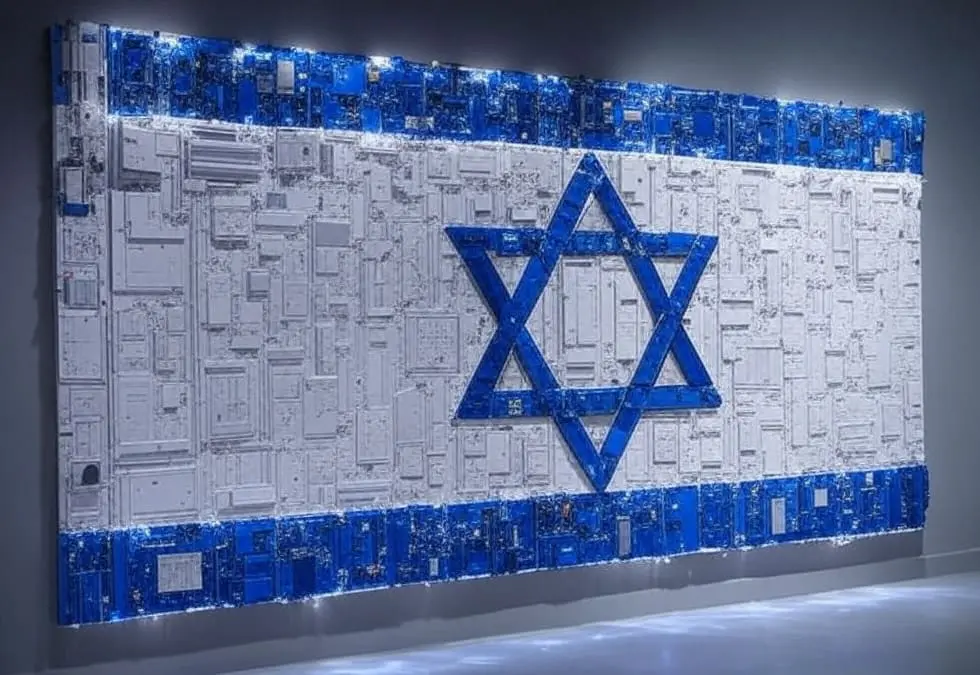
Israel has emerged as one of the significant players in the quantum and cryptography industry, leveraging its unique strengths in cybersecurity. Israel is now applying this prowess to quantum. With the country’s startup companies being at the forefront of this revolution, translating cutting-edge research into practical applications. From developing scalable quantum processors to building innovative software solutions, these companies are addressing the pressing challenges of the quantum era.
This article will explore the landscape of Israel’s quantum startup companies, providing a comprehensive overview of their notable contributions and examining their potential for future advancements.
What has Israel’s Quantum Industry been like?
The country has been developing quantum-resistant algorithms and protocols to safeguard data against future quantum threats. Its world-class academic and research institutions, including the Weizmann Institute of Science and the Hebrew University of Jerusalem, are driving cutting-edge quantum research and fostering collaborations that bridge academia and industry.
Furthermore, Israel’s military, such as the elite intelligence units like Unit 8200, has also become for quantum innovation, with many startups founded by veterans equipped with deep cryptographic expertise. Israel’s government support has also been instrumental, from strategic investments to collaborative research projects and strengthening partnerships with other global tech leaders. These collaborative strengths position Israel as a pivotal player in the global quantum landscape.
Quantum Machines
Established in 2018 by renowned experts in quantum electronics, Dr. Itamar Sivan, Dr. Yonatan Cohen, and Dr. Nissim Ofek, Quantum Machines focuses on creating advanced hardware and software solutions for managing and operating quantum systems. Their technologies aim to streamline quantum research and drive future advancements in the field. Among their notable innovations is QUA, a standardized universal programming language for quantum computers. QUA enables scientists and researchers to develop programs compatible with various quantum computing architectures using a unified coding framework, enhancing accessibility and efficiency in quantum experimentation.
Furthermore, the company has introduced one of the groundbreaking facilities, The Israeli Quantum Computing Center (IQCC). It combines various types of quantum computers with traditional supercomputers using the NVIDIA DGX Quantum system, enabling high-speed communication. This center offers high-powered quantum computers and a state-of-the-art testbed for developing new quantum technologies, which researchers and industry professionals can access.
Officially launched on June 24 at Tel Aviv University, the center aims to advance quantum computing development by offering a cutting-edge facility. Designed to support seamless integration, adaptability, and collaboration, it connects quantum systems with high-performance computing and cloud platforms to empower developers and researchers.
“We’re telling manufacturers of quantum chips, bring your chips, test them here, no need for you to build an infrastructure.”
Yoel Knoll, VP of marketing at Quantum Machines
Classiq Technologies
Established in 2020, Classiq offers a platform that automates quantum algorithm design, allowing for the developing of sophisticated quantum circuits. Their technology bridges the gap between quantum hardware and software, facilitating optimization, finance, and drug discovery applications.
Classiq is known to make quantum computing accessible to developers of all skill levels by providing them with software that empowers users to leverage the quantum revolution fully. Its low-code development platform simplifies quantum programming, allowing professionals with expertise in AI, machine learning, and linear algebra to utilize quantum computing without needing in-depth knowledge of the underlying hardware.
One of the major breakthroughs of the company is the launch of the Quantum Computing for Life Sciences & Healthcare Center. Created in partnership with NVIDIA and the Tel Aviv Sourasky Medical Center, this initiative aims to drive the development and application of quantum algorithms, unlocking their transformative impact on life sciences and healthcare.
“The opportunities for quantum computing and especially the software that drives it are growing very quickly. The new Quantum Computing for Life Sciences & Healthcare Center aspires to bridge the gap between quantum theory and practice with tangible benefits in life sciences, healthcare and beyond.”
Nir Minerbi (CEO), Classiq
Quantum Source Labs
Quantum Source is a start-up company that leverages single atoms confined on a photonic chip to produce individual photons and execute quantum gates that entangle atoms with photons. This process enables the creation of intricate 3D cluster states, essential for implementing error correction codes in quantum computing. The deterministic operation of these gates significantly reduces the reliance on expensive and complex feed-forward mechanisms and switching operations commonly required in alternative quantum computing methods.
Photonic quantum computing is a specialized approach that uses photons to represent qubits. Quantum Source claims to have developed an innovative technique for generating photons and implementing quantum gates, achieving efficiency levels that are 100,000 times greater than current state-of-the-art methods.
This approach has not only been attracting attention in the industry but has also attracted major government funding, signifying a strong potential capacity in the industry. And just recently, Quantum Source secured $50 million in a Series A funding round for practical photonic quantum computers. A year before that, the company was also heavily backed by Dell Technologies Capital (DTC), which granted the company seed funding amounting to approximately $27 million.
“We focus on the photonic approach, which offers a unique way to build quantum computers at significantly lower costs. Our goal is to build a large-scale quantum computer based on our technology before the end of the decade”
Oded Melamed (CEO)
Quantum Art
Quantum Art is a start-up company that designs highly parallelized, reconfigurable multi-core quantum computers tailored to leading industry, government, and academia organizations. Each core incorporates multi-qubit gates and leverages all-to-all connectivity alongside extensive entanglement distribution across all cores. This approach facilitates the execution of larger quantum algorithms more efficiently, reducing the time and number of gate operations required. Their innovative approach lays the foundation for scalable commercial quantum computing.
Quantum Art Ltd., in collaboration with BlueQubit Inc., has secured a $2.2 million grant from the Israel-U.S. Binational Industrial Research and Development (BIRD) Foundation, marking a significant step forward for quantum computing innovation. Over the next two years, the project will focus on advancing quantum processor configuration techniques and developing machine learning algorithms tailored for quantum systems. These efforts, led by Quantum Art, aim to unlock transformative applications across sectors such as finance, pharmaceuticals, image processing, and cybersecurity.
Qedma
Qedma, one of Tel-Aviv, Israel’s promising quantum technological companies, focuses on delivering a robust, cutting-edge, cross-platform middleware that would provide the best error-reduction software solution worldwide.
QEDma has developed QESEM, a leading-edge software solution for Quantum Error Suppression and Error Mitigation, specifically designed for current quantum processing units (QPUs). QESEM allows users to achieve highly accurate results from quantum algorithms, even when executed on today’s noisy quantum hardware. This software enables the scaling of quantum algorithms, delivering precise outcomes from significantly larger quantum circuits than what can be achieved without error mitigation or with alternative error suppression methods. QESEM has already demonstrated its capability to produce accurate, unbiased results at the largest circuit volumes achieved to date.
Doing so brings users closer to realizing practical quantum advantages for solving complex computational problems. As quantum hardware continues to improve shortly, the combination of advanced hardware and QESEM is expected to enable the execution of quantum circuits that surpass the capabilities of classical algorithms and hardware simulations.
Rafael Advanced Defense Systems
Rafael Advanced Defense Systems is an Israeli company considered one of the best in designing, developing, manufacturing, and supplying air, land, sea, and space defense systems. They are Israel’s second-largest defense company and the largest employer in Northern Israel. The company has recently engaged in the quantum technology industry race. Although the company cannot publicly disclose many of its operational priorities, it has confirmed its interest in quantum sensors for navigation in environments where GPS is unavailable and for use as the fundamental component in Inertial Measurement Units, which are applied across various industries.
The company is also part of a consortium with four other Israeli high-technological companies that will promote two quantum processor technologies – trapped ions and superconductors – among the most advanced and mature technologies. Furthermore, the consortium will focus on the key technological developments: quantum processors, system-building blocks, coherent control tools, noise characterization, and reduction software, and a fully automated software environment from the application level to physical implementation.
Israel’s Quantum Computing Future Roadmap
Israel’s progressive developments in the quantum computing industry highlight its broader approach of harnessing its dynamic tech ecosystem to address some of the world’s most pressing challenges. With its commitment to innovation and fostering global collaborations, Israeli startups are positioned to impact the quantum landscape significantly. Their advancements have the potential to transform industries and push the boundaries of technology, reinforcing Israel’s reputation as a global leader in cutting-edge solutions.
As Israeli companies increase their investments in quantum technologies and broaden international partnerships, the country is expected to advance quantum hardware, software, and applications significantly. These developments will strengthen Israel’s position in the global tech ecosystem and fuel economic growth and innovation across diverse sectors such as AI, cryptography, and more.




See today’s quantum computing news on Quantum Zeitgeist for the latest breakthroughs in qubits, hardware, algorithms, and industry deals.