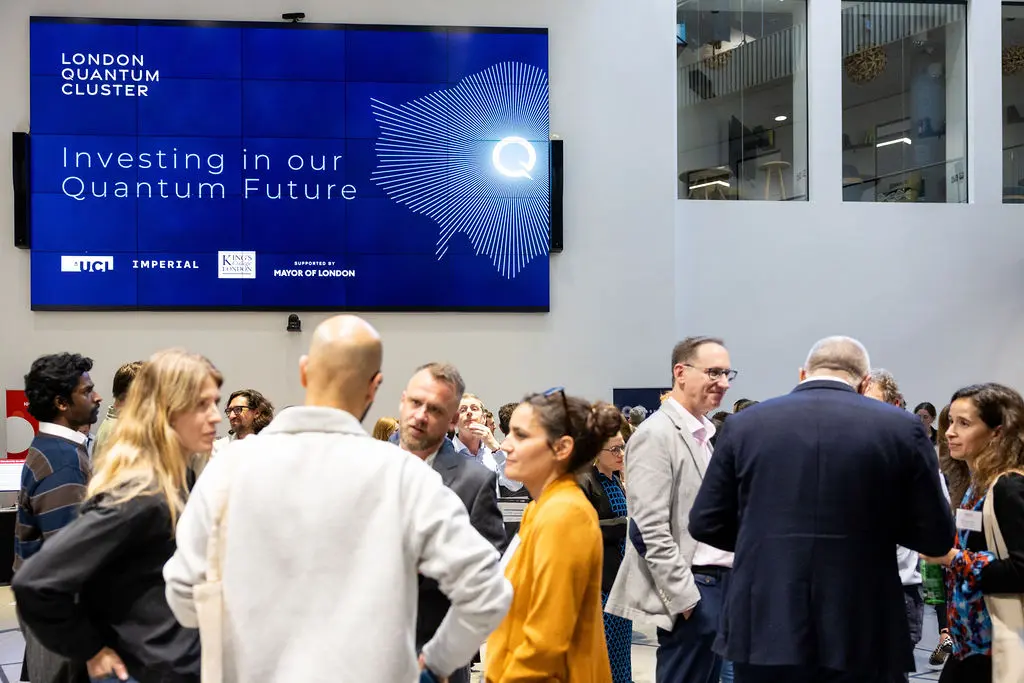
University College London, Imperial College London, and King’s College London will jointly lead a new quantum business cluster funded by £60 million as part of a wider £500 million UK Research and Innovation program. The initiative aims to directly create 200-250 jobs and support 400-500 businesses in London, establishing a globally recognized center for quantum commercialization. Professor Geraint Rees, UCL Vice-Provost Research, Innovation and Global Engagement, explains the need to build a thriving ecosystem around them.
£60 Million Investment Launches London Quantum Business Cluster
The Mayor of London’s office is contributing £22 million to three innovative projects through the Local Innovation Partnerships Fund, a component of a larger £500 million UK Research and Innovation (UKRI) program designed to support growth in high-potential innovation clusters throughout the United Kingdom. This investment is intended to unlock nearly £100 million in matching funds, accelerating innovation and job creation within London’s life sciences sector.
Sadiq Khan, the Mayor of London, stated, “For centuries, our city has been a beacon of bold ideas and brilliant discoveries. From the discovery of penicillin to research on the structure of DNA, London has helped change the course of modern medicine and saved millions of lives in the process.” The funding aims to position London as a global leader in life sciences, surpassing its current status as a European hub.
The London Quantum Cluster, which launched with seed funding in May 2025, involves partners across industry, civil society and academia. The collaborative effort will focus on providing essential resources, including laboratory space, access to specialized equipment and business development expertise, alongside training programs designed to attract investment in the field.
Multinational companies like Nvidia, as well as national assets such as the are already involved as partners. Professor Geraint Rees, Vice-Provost Research, Innovation and Global Engagement, said, “The next challenge is turning discovery into businesses, jobs and investment. We need to make sure that successful quantum companies, who may already have raised millions in investment have the support they need to continue to grow.” The cluster will specifically address the need to support established quantum firms, ensuring they have the infrastructure and expertise to scale their operations.
This focus on growth builds upon existing strengths in quantum research already present within the city’s academic institutions. This emphasis on economic impact is aligned with the London Growth Plan published in February 2025, which outlines a vision to grow London’s economy by £107 billion by 2035 and create 150,000 high-value jobs by 2028, with quantum technology identified as a key driver of productivity and innovation.
The cluster’s location uses existing innovation hubs, including the London Centre for Nanotechnology (LCN), a joint venture between the three leading universities, and established districts like the Knowledge Quarter, QEOP Innovation District and White City Innovation District.
Professor Alan Thompson, Pro-Provost for London, highlighted the importance of accessibility and inclusivity, stating, “Quantum technologies can often feel distant or unattainable. By building an inclusive cluster rooted in our communities in London, we can inspire the next generation of scientists, innovators and entrepreneurs and make sure the benefits of scientific progress are felt widely across society.” The Strategic Innovation Partnerships team will manage the Local Innovation Partnership Fund program on behalf of the consortium, ensuring coordinated implementation and maximizing the impact of the investment. The cluster’s launch signifies a concerted effort to translate quantum research into tangible economic benefits for London and beyond.
London already excels in quantum research. The next challenge is turning discovery into businesses, jobs and investment.
Professor Geraint Rees, UCL Vice-Provost Research, Innovation and Global Engagement


See today’s quantum computing news on Quantum Zeitgeist for the latest breakthroughs in qubits, hardware, algorithms, and industry deals.