Researchers have achieved a groundbreaking 120km quantum key distribution, demonstrating secure communication over unprecedented distances. Their work, published in Phys. Rev. Lett., enables simultaneous transmission of quantum-encrypted data and classical signals. The breakthrough advances practical quantum networks, overcoming key challenges in long-distance secure communication.
Advancements in Continuous-Variable Quantum Key Distribution
Researchers continue to refine continuous-variable quantum key distribution (CVQKD) as a viable method for secure communication. According to a recent study by Adnan A. Hajomer, Ivan Derkach, Vladyslav C. Andersen, and Tobias Gehring, scientists have now demonstrated CVQKD across 120 kilometres of optical fibre. This achievement represents a significant step forward, pushing the distance limit for this quantum communication technique.
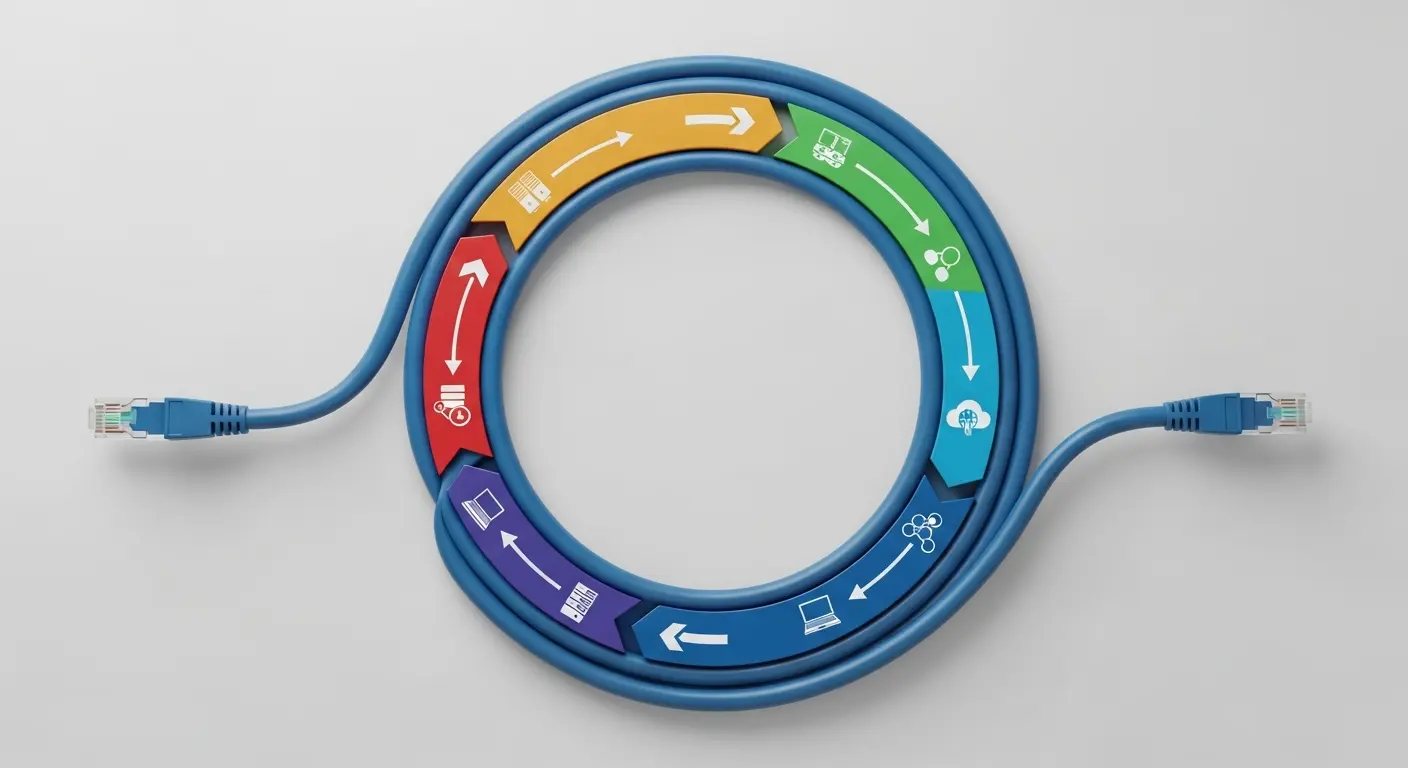
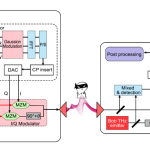
Building on this success, the team suppressed interactions between quantum-secured data and classical data travelling through the same fibre network. Unlike previous experiments requiring additional optical filters or network modifications, this breakthrough utilised a built-in filter inherent to the CVQKD setup itself. The researchers then optimised the transmission of the quantum-secured data, enabling the 120km transmission even while the fibre was fully loaded with classical data traffic.
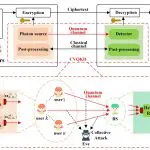
This demonstration by Hajomer, Derkach, Andersen, and Gehring has essential implications for integrating quantum security into existing infrastructure. CVQKD encodes random numbers in the amplitude and phase of light waves, alerting parties to potential eavesdropping. Successfully combining this with standard data transmission over long distances moves CVQKD closer to practical, large-scale deployment within current fibre-optic networks.
Overcoming Distance Limitations in Quantum Communication
Building on this achievement, researchers at Palacký University Olomouc and Denmark demonstrated a key improvement in coexisting quantum and classical data transmission. They successfully transmitted quantum-secured data alongside standard data traffic across 120 kilometres of optical fibre, a significant leap beyond previous limitations of a few tens of kilometres. This breakthrough hinged on suppressing interactions between quantum and classical signals, enabling greater distances without compromising security.
The team achieved this suppression not through complex filtering systems, but by cleverly exploiting a built-in filter already present within the continuous-variable quantum key distribution (CVQKD) setup itself. According to Vladyslav C. Andersen, optimizing the transmission of quantum-secured data within this existing framework proved crucial. This approach avoids the need for costly or disruptive upgrades to existing fibre networks, making wider implementation more feasible.
This extended range has significant implications for practical quantum communication networks. The ability to securely transmit data over longer distances without specialised infrastructure lowers the barrier to entry for organisations seeking to protect sensitive information. Adnan A. Hajomer notes that this advancement brings the prospect of a fully integrated quantum internet, alongside current classical networks, one step closer to reality.
This 120km demonstration by researchers at Palacký University Olomouc and in Denmark represents a significant step towards practical, long-distance quantum communication. The implications extend beyond securing data, potentially enabling the integration of quantum key distribution with existing fibre-optic networks. For industries reliant on secure data transmission, like finance and government, this development could enable more robust defences against future quantum-based cyber threats.
Building on continuous-variable quantum key distribution, this achievement overcomes a critical distance limitation, paving the way for wider deployment and real-world applications of quantum-secured communication infrastructure.
The theoretical underpinnings of CVQKD rely on modulating and measuring the conjugate quadrature variables of the quantum state, specifically the amplitude and phase quadratures of the continuous light field. These variables are encoded into a coherent state of light, allowing the secret key generation process to be rooted in the fundamental quantum uncertainty principle. Measurement involves heterodyne or homodyne detection techniques, which measure the quadratures relative to a strong local oscillator beam. This methodology provides a high key rate and high security, provided the noise floor and detector efficiency remain stable across the entire transmission link.
A primary hurdle in extending quantum signals alongside high-power classical data is managing nonlinear interference and crosstalk. Classical channels, especially those carrying high bits rates, can induce noise or trigger spontaneous parametric down-conversion effects that corrupt the delicate quantum signal. Careful signal isolation and sophisticated optical equalization are required to mitigate these interferences. The ability of the current setup to operate in a loaded fiber suggests a substantial advance in managing the signal-to-noise ratio degradation in real-world, multiplexed optical environments.
Engineering the detectors and sources for 120km transmission requires specialized components far beyond standard telecommunications gear. Photonic sources must maintain extraordinary spectral purity and stability, while the single-photon detectors must exhibit extremely low dark count rates and high quantum efficiency over extended periods. For long-haul networks, quantum repeaters remain the eventual goal, but current success hinges on optimizing the detection and measurement apparatus to maintain maximum key rates over terrestrial distances limited only by fiber attenuation.
While CVQKD offers inherent advantages in key rate stability and compatibility with existing fiber, researchers continue to benchmark it against Discrete Variable QKD (DVQKD). DVQKD, which transmits single photons in distinct polarization or time bins, is highly secure but often suffers from lower key rates and is typically more susceptible to channel imperfections over great distances. The continued optimization of CVQKD’s resilience against realistic environmental noise positions it as a highly promising, scalable candidate for future integrated quantum communication protocols.
See today’s quantum computing news on Quantum Zeitgeist for the latest breakthroughs in qubits, hardware, algorithms, and industry deals.