
Welcome to this week’s quantum technology digest! We’ve curated the ten most impactful stories shaping the rapidly evolving landscape of quantum computing and related fields. From foundational textbooks to hardware advancements and burgeoning commercial activity, this week showcases the breadth of innovation currently underway.
This week’s headlines demonstrate a clear push toward practicality and scalability. We’re seeing increased focus on error correction – a crucial hurdle for viable quantum computers – with breakthroughs from QuEra, MIT/IBM, and advancements in optimization techniques from IonQ & Q-CTRL. Alongside these technical leaps, significant commercial news emerges with Quantinuum’s IPO filing and Pasqal’s ambitious roadmap, signaling growing confidence in the near-term potential of quantum technologies. DARPA’s investment in qubit diversity further highlights the search for optimal pathways to build fault-tolerant and powerful quantum systems.
Notably, this week also includes a challenge to assumptions about quantum advantage with IBM’s advancements in classical circuit simulation, reminding us that the journey to quantum supremacy is complex and requires continuous reassessment. Overall, it’s been a week of significant progress on multiple fronts, solidifying quantum technology’s position as a field to watch closely.
1. Herbert’s “Quantum Computing: Foundations and Practice” – A New Canon?
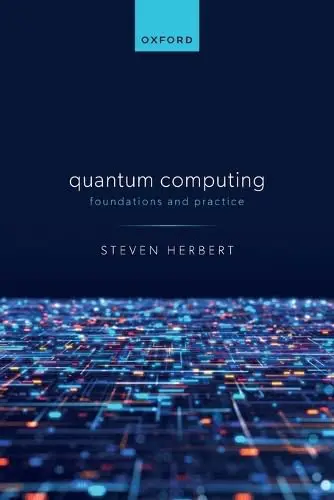
Steven Herbert from Quantinuum and affiliated with Cambridge University has authored a new quantum computing textbook praised for its balanced approach and practical focus. The book distinguishes itself by integrating complexity theory throughout, providing thorough coverage of algorithms like Grover’s, Shor’s, and adiabatic optimization, a crucial area often overlooked, and maintaining vendor neutrality despite the author’s affiliation with a quantum computing company. Described as compact yet comprehensive, the text caters to a broad range of learners from undergraduates to PhD students and is positioned as a potential new standard reference in the field alongside Nielsen and Chuang’s “Quantum Computation and Quantum Information.”
2. MIT & IBM Advance Quantum Error Correction with Learned Dynamical Decoupling

Researchers at Massachusetts Institute of Technology, in collaboration with IBM Thomas J. Watson Research Centre and IBM Quantum, have demonstrated a three-fold reduction in dynamic circuit error rates by employing a new learning framework to optimize dynamical decoupling sequences. This empirically-optimized approach, superior to theoretically designed sequences, effectively mitigates errors introduced by mid-circuit measurements and feedforward, a significant hurdle in measurement-based quantum algorithms. The team validated their findings on a 20-qubit implementation of the quantum Fourier transform, achieving nontrivial process fidelity and paving the way for more reliable and scalable quantum computations.
3. openQSE: Unifying Quantum Software for Seamless HPC Integration

Researchers from Lawrence Berkeley National Laboratory, Oak Ridge National Laboratory, and collaborating institutions have proposed the open quantum-HPC software ecosystem (openQSE) reference architecture to address the current fragmentation of quantum high-performance computing (QHPC) software. Their analysis of nine production QHPC stacks – including those from AWS, IonQ, and Quantinuum – revealed consistent requirements for runtime abstraction, resource management, and interoperability. openQSE aims to unify these stacks by defining clear layer boundaries, enabling developers to write portable code applicable to diverse quantum hardware without altering application interfaces, and supporting both NISQ and fault-tolerant systems. While acknowledging limitations in current fair-share queuing features, this architecture represents a significant step towards seamless integration of quantum resources with existing high-performance computing infrastructure.
4. Quantinuum IPO: Honeywell Backs Public Offering of Quantum Computing Firm

Honeywell has announced that its majority-owned quantum computing subsidiary, Quantinuum, has confidentially submitted a draft registration statement (Form S-1) to the U.S. Securities and Exchange Commission for an initial public offering (IPO). This move signals strong confidence in the future of quantum technology and aims to broaden investment in the sector through public shareholders. The filing indicates Quantinuum is actively pursuing a public listing, going beyond preliminary exploration, and Honeywell anticipates the IPO will accelerate the adoption of quantum computing across various industries leveraging its Accelerator and Forge platforms. While details like share numbers and pricing are yet to be determined, the submission suggests a well-prepared and confident approach to entering the stock market.
5. IonQ & Q-CTRL Partnership Simplifies Quantum Optimization with Native Software Integration
A team from Q-CTRL and IonQ have announced the native integration of Q-CTRL’s Fire Opal optimization solver directly onto IonQ’s Forte and Forte-Enterprise quantum computers. This partnership eliminates the need for extensive manual tuning previously required to achieve reliable results, significantly simplifying access to powerful optimization tools for users of all skill levels. Demonstrated with a telecommunications case study successfully navigating 68 billion possibilities, this integration aims to accelerate the delivery of tangible value from quantum computing by broadening accessibility and streamlining workflows. Fire Opal also remains accessible via Amazon Braket, providing multiple access points for users.
6. IBM’s System Two & National Quantum Algorithm Center Launch in Chicago
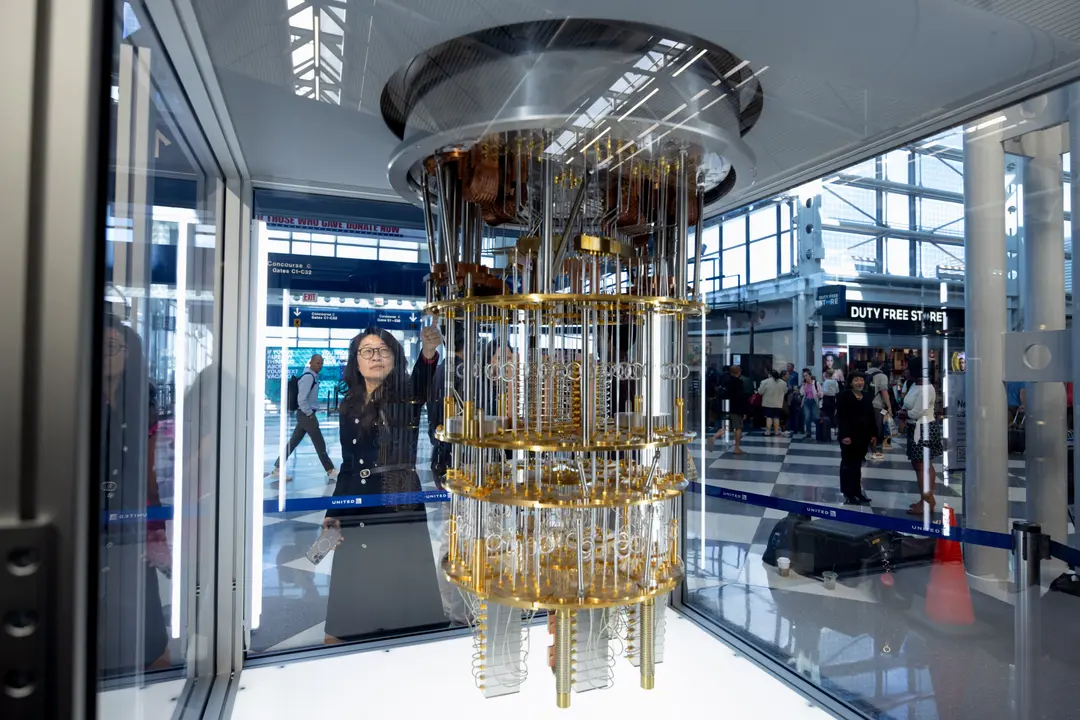
IBM has deployed its Quantum System Two to Chicago this September, spearheaded by researcher Hanhee Paik, whose foundational work on transmon qubit coherence enabled superconducting quantum computers. This deployment coincides with the launch of a National Quantum Algorithm Center (NQAC), a collaboration with the University of Illinois Urbana-Champaign and the University of Chicago, designed to bridge the gap between quantum theory and practical application by integrating quantum processing with existing supercomputing resources. The initiative, already demonstrated through successful calculations on iron-sulfur molecules, emphasizes algorithm development and efficient workflow integration between quantum and high-performance computers, aiming to unlock tangible results and broader accessibility through tools like Qiskit. Paik’s career evolution from hardware to algorithms underscores IBM’s long-term vision for a quantum-centric future.
7. DARPA Bets on Qubit Diversity: A New Path to Quantum Scalability

DARPA is funding 19 teams through its new Heterogeneous Architectures for Quantum (HARQ) program to explore integrating diverse qubit technologies – a departure from the traditional “one-qubit-to-rule-them-all” approach. This initiative, mirroring the success of classical computing’s CPU/GPU combinations, focuses on two key workstreams: MOSAIC, developing software to optimize algorithms across different qubit types, and QSB, building high-fidelity interconnects between these platforms. The program aims to create modular, adaptable quantum systems capable of tackling complex problems in fields like materials science and national security by leveraging the unique strengths of each qubit modality.
8. IBM Cracks Quantum Circuit Simulation: Challenging Quantum Advantage Claims

Researchers at IBM T.J. Watson Research Centre have successfully demonstrated an efficient classical simulation of complex ‘peaked’ quantum circuits – previously believed to be beyond the capabilities of conventional computers. By leveraging the circuits’ mirrored structure and a technique called ‘unswapping’ to reduce complexity to a Matrix Product Operator, they achieved near-exact sampling of a 56-qubit circuit with 1,917 gates in just one hour on a single GPU. This breakthrough challenges claims of quantum speed-up for these specific circuits and underscores the importance of circuit structure in determining the feasibility of classical simulation. The method highlights that cleverly designed classical algorithms can still outperform quantum hardware for certain types of quantum computations.
9. QuEra Achieves Breakthrough in Quantum Error Correction with Neutral Atoms
A team from QuEra Computing, Harvard University, and MIT has demonstrated a significant advancement in quantum error correction, achieving an error rate of one error per trillion steps in a quantum memory result. They successfully created one reliable logical qubit using just over two physical qubits – a substantial improvement over the hundreds or thousands typically needed – by adapting the Kasai (2026) code family to neutral atom platforms. This co-design approach, leveraging the reconfigurable nature of neutral atoms and Acousto-Optic Deflectors, brings the Teraquop regime and practical, scalable quantum computing significantly closer by minimizing hardware requirements. This result showcases a quantum memory achievement, and while further work is needed for full fault-tolerance, represents a leap forward in quantum computer design.
10. Pasqal Accelerates to 1000 Qubits, Bridging Quantum Theory & Practical Application
Pasqal announced an accelerated roadmap to achieve 1000 qubits, alongside the successful demonstration of stable logical qubits expected in 2025, at their “Pasqal Thoughts” event in Paris. This signals a significant shift towards deploying neutral-atom quantum computing for real-world applications, attracting substantial international investment and partnerships with organizations like Crédit Agricole CIB, Thales, and EDF. The event highlighted the integration of Pasqal’s processors with existing HPC infrastructure, spearheaded by collaborations with GENCI and CINECA, to create hybrid quantum-classical workflows and a “quantum-centric supercomputing environment”. This momentum indicates faster-than-anticipated progress towards fault-tolerant and commercially viable quantum systems.



See today’s quantum computing news on Quantum Zeitgeist for the latest breakthroughs in qubits, hardware, algorithms, and industry deals.