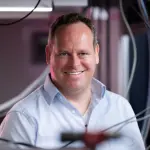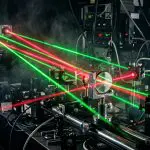
A substantial gift from Andy Florance ’86 and Heather Florance will accelerate research within Princeton University’s Princeton Quantum Initiative, launched in 2019. The specific amount of the donation remains undisclosed, but the investment signals strong philanthropic confidence in the program’s early momentum and the rapidly expanding field of quantum science. “Andy and Heather Florance understand the potential of quantum science to generate discoveries and catalyze innovation,” said President Christopher L. Eisgruber. Andrew Houck ’00, dean of the School of Engineering and Applied Science and a Princeton alumnus, believes the gift will support a future for quantum science filled with possibility as Princeton continues to achieve breakthroughs in areas like superconducting qubits and quantum materials.
The scale of philanthropic support for quantum research is becoming increasingly apparent, though the amount of the recent gift to Princeton University remains undisclosed. Research spans both theoretical and experimental work, ranging from materials science to computational studies aimed at understanding the fundamental principles governing quantum systems. Recent breakthroughs from Princeton’s quantum research teams, including advancements in superconducting qubits and novel methods for studying quantum materials, demonstrate early progress. “Princeton’s leadership in quantum information and quantum matter has the potential to transform computing, the design of new materials and secure technologies, and our fundamental understanding of the universe,” said Andy Florance, underscoring the far-reaching implications of this research. The initiative’s commitment extends to education, with a quantum science and engineering Ph.D. program launched in 2024 and its first two cohorts of graduate students fully engaged. Ali Yazdani, a co-director of the initiative, added, “This is a new era for quantum science and engineering at Princeton; this support of our work is transformative at a critical juncture.”
While the precise amount remains undisclosed, the contribution is intended to significantly bolster the Princeton Quantum Initiative and accelerate research at a time of rapid advancement. Andy Florance’s involvement with the Department of Energy’s Co-design Center for Quantum Advantage (C2QA) suggests a personal commitment extending beyond his administrative position. Princeton’s recent quantum breakthroughs, including advancements in superconducting qubits and quantum materials research utilizing lab-grown diamonds, demonstrate early success that likely informed the Florances’ decision. The gift aligns with Princeton’s broader goals; a quantum science and engineering Ph.D. program, initiated in 2024, is already integrating its first two cohorts into the research community.
Quantum science has the potential to solve currently ‘impossible’ problems,’ and has major implications for Princeton’s research enterprise as well as our nation’s security and competitiveness.
Andrew Houck ’00, dean of the School of Engineering and Applied Science and the Anthony H.P. Lee ’79 P11 P14 Professor of Electrical and Computer Engineering
This philanthropic commitment arrives as the program enters a phase of rapid expansion, indicating confidence in Princeton’s early achievements in a competitive field. Houck, who also serves as chief scientist for the Co-design Center for Quantum Advantage (C2QA), noted the program’s first two cohorts of graduate students are fully engaged. Florance, founder of CoStar Group, expressed his belief in the transformative potential of the research.
We’re proud to partner with the University to support the game-changing scientific innovation of the Princeton Quantum Initiative.
Andy Florance
Source: https://www.princeton.edu/news/2026/04/14/major-gift-promises-accelerate-princeton-universitys-leadership-quantum-science




See today’s quantum computing news on Quantum Zeitgeist for the latest breakthroughs in qubits, hardware, algorithms, and industry deals.