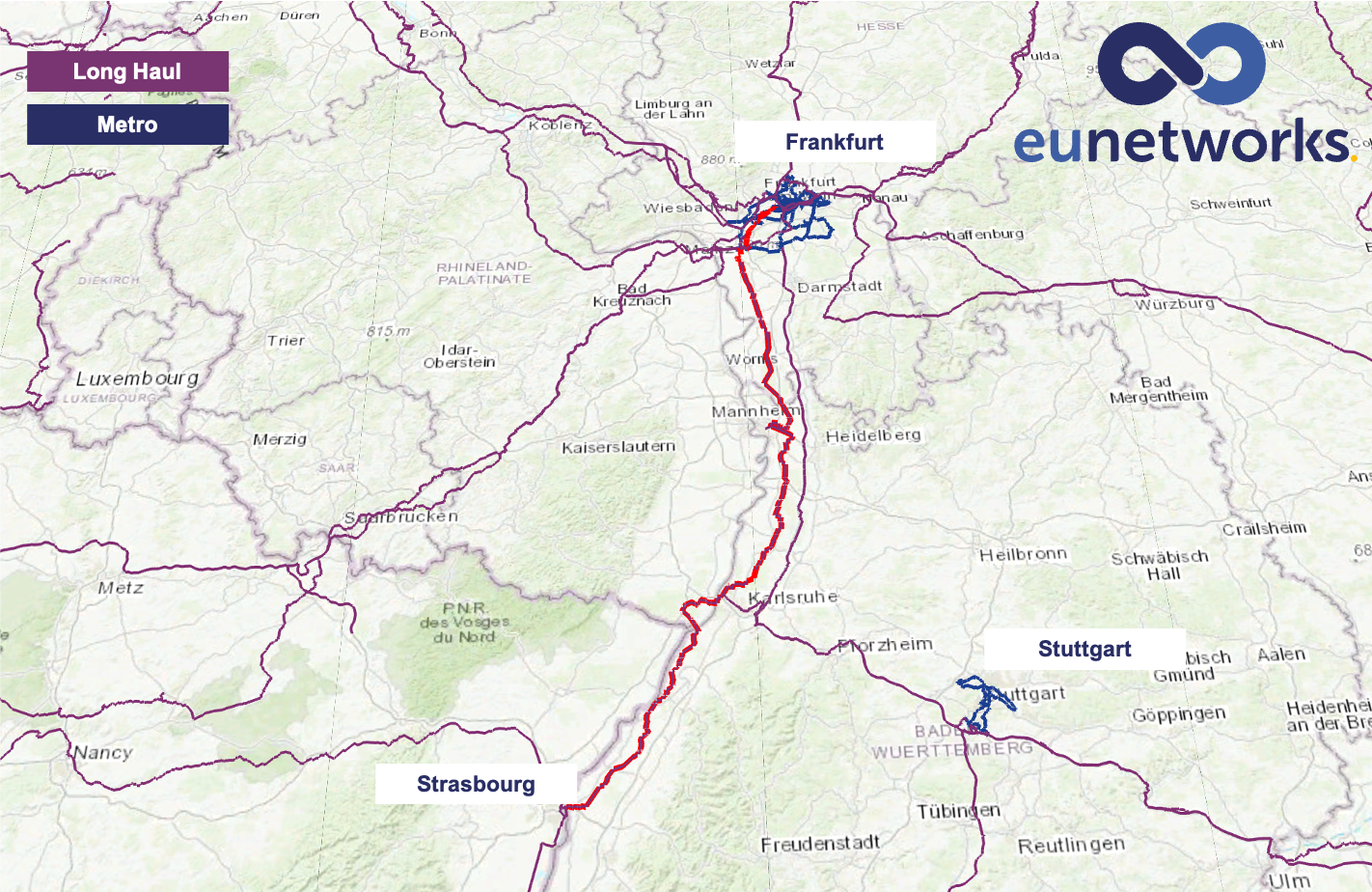
euNetworks has completed a 247 kilometer fiber route between Frankfurt and Strasbourg, directly connecting over 76 data centers in Frankfurt and alleviating congestion within the FLAP-D region, Europe’s largest data center markets. The new link is part of the company’s Super Highway network, designed to meet escalating demand for AI and cloud-ready infrastructure, and represents the sixth such route now available for service. Built with high-capacity fiber, the system offers increased resilience and diversity by bypassing existing high-traffic areas. Marisa Trisolino, CEO of euNetworks, said, “euNetworks is relentless in our pursuit to address Europe’s accelerating demand for bandwidth, and we will continue to develop our networks where our customers need it the most.” Two of the three Intermediate Line Amplifier sites along the route utilize highly efficient air conditioning to reduce the system’s carbon impact.
FLAP-D Region Drives Super Highway Expansion
This new link adds capacity and addresses a growing bottleneck between two key interconnection points; Frankfurt hosts the world’s most interconnected metropolitan network, and Strasbourg serves as a vital hub for long-haul routes. The infrastructure directly connects over 76 data centers within euNetworks’ Frankfurt network, offering businesses granular access to increased bandwidth and reduced latency. This focus on efficiency extends to the fiber itself, with new types delivering low attenuation, improving line system performance and lowering the cost per bit transmitted. The completion of this route marks the sixth Super Highway available for service, and the company emphasizes its network is the only modern fiber system currently live that directly connects key data centers throughout the FLAP-D region. This targeted investment in infrastructure reflects a broader trend of prioritizing bandwidth capacity to support the growth of artificial intelligence and cloud computing applications, positioning euNetworks as a key enabler of digital transformation across Europe.
247km Frankfurt-Strasbourg Route Enhances Low-Latency Connectivity
The Frankfurt-Strasbourg corridor has become a critical artery for data transmission, necessitating infrastructure upgrades to accommodate escalating bandwidth demands within the FLAP-D region, Frankfurt, London, Amsterdam, Paris, and Dublin, Europe’s most significant data center markets. euNetworks responded to increasing traffic along this route by constructing a 247 kilometer fiber optic link designed to bypass congested areas and enhance network resilience, directly addressing a known bottleneck for data transfer between these key hubs. This new infrastructure adds capacity and provides a diverse path for data, crucial for maintaining consistent performance and minimizing latency for applications ranging from financial trading to cloud computing. The impact of this investment is immediately visible within Frankfurt, where the new route now directly connects over 76 data centers, significantly expanding euNetworks’ metropolitan network reach.
Beyond Frankfurt, the system integrates seamlessly with the company’s broader European footprint, providing access to over 600 connected data centers across the continent. This extensive connectivity is particularly relevant given the growing reliance on cloud services and artificial intelligence, both of which require robust, low-latency infrastructure to function effectively. This focus on efficiency demonstrates a commitment to minimizing environmental impact alongside maximizing network capabilities, a crucial balance for modern infrastructure development.
euNetworks is relentless in our pursuit to address Europe’s accelerating demand for bandwidth, and we will continue to develop our state-of-the-art networks where our customers need it the most.
Marisa Trisolino, CEO of euNetworks
Sustainable Infrastructure Reduces Carbon Impact of Fibre Network
This expansion increases capacity and is a strategic response to congestion and a commitment to providing diverse, low-latency connectivity critical for emerging technologies like artificial intelligence and cloud computing. This deliberate choice reflects a broader effort to reduce the system’s overall carbon footprint, going beyond generalized environmental claims to demonstrate tangible action within the network build. The implementation of new fiber types also delivers low attenuation, improving line system and transponder performance to deliver lower cost per bit, further enhancing efficiency.
Source: https://eunetworks.com/




See today’s quantum computing news on Quantum Zeitgeist for the latest breakthroughs in qubits, hardware, algorithms, and industry deals.