Scientists at MIT, led by Min Soe, have developed a qubit lattice algorithm to model the transient scattering of electromagnetic waves by dielectric structures. This innovative approach simulates wave propagation and scattering, offering insights that extend beyond the limitations of traditional frequency-domain studies. Implemented on a supercomputer, the algorithm reveals complex reflection patterns when a wave packet interacts with an elliptical dielectric, highlighting trapped wave fields not apparent in steady-state Mie scattering analysis. Contrasting this with scattering from an elliptical vacuum bubble embedded in a dielectric medium demonstrates a sharp difference in internal reflections, explained through a Kirchhoff tangent plane approximation, and offers the potential for detailed analysis of electromagnetic phenomena.
Maxwell equation recovery details transient scattering from dielectric and vacuum structures
Simulations utilising the qubit lattice algorithm achieved a second-order recovery of the Maxwell equations on a lattice grid, representing a key improvement over previous methods limited to first-order accuracy. The Maxwell equations are fundamental to electromagnetism, describing how electric and magnetic fields are generated and altered by each other and by charges and currents. Achieving second-order recovery signifies that the algorithm’s approximation of these equations introduces errors that scale with the square of the lattice spacing, providing a significantly more accurate representation of wave behaviour than first-order methods, where errors scale linearly. This precision unlocks the ability to model electromagnetic wave propagation with unprecedented fidelity, exceeding the limitations of earlier computational techniques that often relied on simplifying assumptions or coarser discretisations.
Implemented on a supercomputer, the algorithm enabled detailed analysis of transient scattering, examining how waves behave immediately after interacting with a material, rather than relying on steady-state descriptions such as Mie scattering. Mie scattering, while effective for describing scattering from particles much smaller than the wavelength of light, provides only a time-averaged picture and fails to capture the initial, dynamic response of the electromagnetic field.
Investigations revealed that an elliptical dielectric traps wave fields, generating multiple internal reflections. This trapping occurs because the curved surface of the ellipse causes the incident wave to undergo repeated internal reflections, creating a complex interference pattern within the dielectric material. Conversely, an elliptical vacuum bubble exhibits a single, weaker reflection, a contrast explained by a Kirchhoff tangent plane approximation. The Kirchhoff approximation simplifies the analysis of wave diffraction by assuming that the field at any point on a surface can be determined by integrating the field over the surface, treating it as a collection of secondary wave sources. In the case of the vacuum bubble, the abrupt change in refractive index between the dielectric and vacuum leads to a single strong reflection at the interface, with minimal internal propagation.
When struck by a spatially localised wave packet, the elliptical dielectric generates multiple internal reflections, whereas the elliptical vacuum bubble within a dielectric produces only a single, weaker reflection. These distinct scattering patterns were revealed by simulations, offering insights beyond those achievable with traditional frequency-domain studies. Currently, these simulations lack validation against analytical forms or experimental data, limiting their immediate application to real-world scenarios; future work will focus on addressing this gap and exploring the algorithm’s potential for modelling more complex systems.
Simulating dynamic light scattering with improved precision and temporal resolution
For a long time, modelling how light interacts with matter has been a key goal in physics and materials science, moving beyond simple descriptions of steady-state behaviour to capture the full dynamic nature of wave scattering. Traditional methods often focus on the frequency domain, analysing the response of a material to waves of different frequencies, but this approach loses information about the temporal evolution of the scattered field.
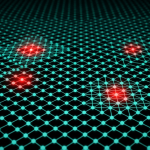
The new computational method offers a step towards this goal, simulating electromagnetic wave propagation with a precision exceeding earlier methods. The qubit lattice algorithm represents a departure from traditional finite-difference time-domain (FDTD) methods, which discretise both space and time, by leveraging the principles of quantum computation to represent and manipulate electromagnetic fields. The algorithm constructs qubit amplitudes representing the electric and magnetic fields, and applies a series of unitary streaming and entanglement operators to simulate wave propagation and scattering.
However, the accuracy diminishes when examining phenomena at very fine resolutions, as it currently only recovers Maxwell’s equations to second order; this limitation raises questions about its reliability when modelling increasingly complex materials and will be addressed in future iterations. Increasing the order of accuracy requires more complex qubit operations and potentially a larger number of qubits, posing significant computational challenges.
The qubit lattice algorithm’s representation of wave behaviour allowed observation of distinct reflection patterns from elliptical dielectrics and vacuum bubbles. This approach captures the temporal evolution of scattering, showing how wave fields become trapped within dielectric materials, generating multiple reflections, and allowing observation of transient effects otherwise missed. The ability to resolve these transient effects is crucial for understanding phenomena such as plasmon resonances, where the collective oscillation of electrons in a material leads to enhanced scattering at specific frequencies.
Understanding these dynamics is vital for designing new optical devices and materials, such as metamaterials with tailored electromagnetic properties, and the method’s ability to move beyond steady-state analyses provides a significant advantage. Potential applications include the development of improved sensors, high-efficiency solar cells, and novel imaging techniques. Further research will focus on extending the algorithm to three dimensions and incorporating more realistic material properties, paving the way for a more comprehensive understanding of light–matter interactions.
👉 More information
🗞 Quantum Computing Framework for Transient Scattering of Electromagnetic Waves by Dielectric Structures
🧠 ArXiv: https://arxiv.org/abs/2604.21128



See today’s quantum computing news on Quantum Zeitgeist for the latest breakthroughs in qubits, hardware, algorithms, and industry deals.