
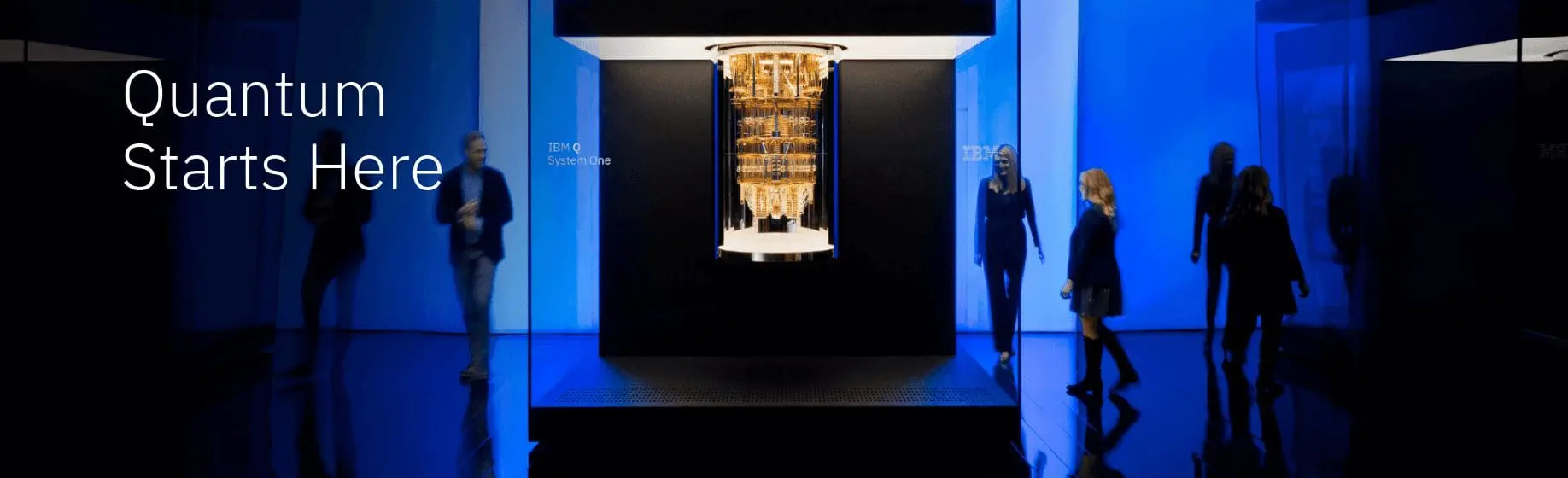
In a move reminiscent of the computer processor industry and Moore’s law, IBM has announced that it has doubled the performance of its quantum systems from 32 to 64. The measure is Quantum Volume, which doesn’t just take into account the number of qubits but the fidelity of connected nature of those qubits. IBM achieved a quantum volume of 64 on a system with 27 qubits.
The more power the quantum computer has, the more that quantum computers can achieve and the more efficiently algorithms can be run. There is a world wide race to increase the power of quantum computers and find more uses and applications of quantum computing. A variety of technology companies are exploring and developing quantum computers.
The news comes hot on the heels of the announcement of Honeywell claiming it had created the most powerful Quantum Computer with its announcement that it it has also created a Quantum Computer with a Quantum Volume of 64 in its Ion Trapped machines, which differ from IBM’s semi conducting hardware.
“We are always finding new ways to push the limits of our systems so that we can run larger, more complex quantum circuits and more quickly achieve a Quantum Advantage”
Jay Gambetta, HEAD of IBM Quantum
What is Quantum Volume?
It is not just the number of qubits that go into the quantum volume metric. There are three main components: number of qubits, error rates, connectivity of qubits. Unlike the volume of a shape, Quantum Volume measures are not computed by simple algorithm, but require a complicated set of statistical tests.
IBM Q
IBM has pioneered the open access of its quantum systems since 2016, where it introduced its cloud based quantum systems that allow almost anyone to run quantum circuits on their hardware from just about anywhere. IBM has been one of our Quantum Companies of the day.
Read the announcement from IBM on achieving a Quantum Volume of 64. You can read the hardware innovation from the IBM team itself in terms of technical achievement. We have also written the business fortunes of IBM and whether “Big Blue” can re-invent itself for the Quantum Age.