The fourth annual Quantum Day 2026 unfolded at Brno University of Technology’s Prof. Brauner Auditorium, bringing together scientists, military representatives and IBM personnel to discuss the expanding applications of quantum technologies, the company says. Czech scientists are using access to IBM quantum computers, provided through a collaboration between the Czech Quantum Innovation Center, CTU and the University of Defence, to tackle challenges ranging from materials science to cybersecurity.
“Quantum technologies are among the fields with the potential to transform science, industry, and security over the coming decades,” stated Prof. Michal Pěchouček, Rector of CTU, emphasizing the nation’s commitment to encouraging domestic expertise in this rapidly evolving field.
Quantum Materials Research with IBM Processors
Martin Friák’s team of Materials (Czech Academy of Sciences) is attempting to model complex material behavior using IBM’s quantum processors, addressing limitations inherent in classical computational methods. The team’s work centers on using quantum computers, systems governed by the same principles as the materials they study, to simulate atomic and electronic interactions with greater accuracy than previously possible. Beyond materials science, researchers are also exploring quantum solutions to bolster cybersecurity.
The security of modern digital infrastructure relies on encryption, but the advent of powerful quantum computers poses a potential threat to current encryption standards. Ondřej Šimon from the University of Defence is investigating how quantum computers might improve signal processing, specifically in distinguishing between closely spaced signal sources using antenna arrays.
His team’s work focuses on offloading computationally intensive tasks to quantum hardware, potentially enabling more precise and efficient signal analysis. “The Czech Republic faces a tremendous opportunity to become a global leader in quantum technologies,” stated a representative at the conference, adding, “Our future economic standing, competitiveness, and prosperity are being determined right now.”
The Czech Republic faces a tremendous opportunity to become a global leader in quantum technologies. Our future economic standing, competitiveness, and prosperity are being determined right now.
Brigadier General Petr Šnajdárek of the Czech Armed Forces
Quantum Computing Addresses Encryption Vulnerabilities
The vulnerability of current encryption methods to future quantum computers is under active investigation by Michal Bureš of the University of Defence, who is assessing the real-world threat posed by IBM’s quantum hardware through laboratory testing. His work directly supports both state and private sector preparedness for a transition to encryption, a necessary shift as computational power increases. Bureš’s research focuses on determining the urgency with which organizations must adopt these new security protocols to safeguard sensitive data.
IBM’s integration of quantum computers with classical supercomputers is accelerating this assessment and also enabling collaborative efforts on complex computational tasks, according to the company. Beyond assessing threats, Czech scientists are also exploring how quantum computing can enhance artificial intelligence.
Ivo Petr Technology at CTU (Czech Technical University in Prague) is investigating the potential of quantum computers to assist with machine learning, the core technology driving modern AI applications. IBM’s role extends beyond hardware provision. The company supports over 175 countries with hybrid cloud, AI and enterprise services, offering clients flexible options in these rapidly evolving fields.
CTU and University of Defence Explore Quantum AI
Ondřej Šimon’s team is investigating whether quantum computers can accelerate the complex calculations required for this task, potentially offering a significant advantage over conventional methods. CTU organized the event in partnership with the University of Defence and IBM, with additional support from ITS and CzechInvest. This governmental and industrial backing signals a strategic focus on developing domestic expertise and reducing reliance on imported quantum solutions.
Beyond signal processing, researchers are also focused on the immediate security implications of quantum computing. The University of Defence hosted “Defence Quantum Day” following the main conference, specifically addressing how quantum capabilities impact national security.
This focus reflects a broader concern about vulnerabilities in current encryption methods and the need for a transition to post-quantum cryptography. The ongoing research at both CTU and the University of Defence aims to position the country as a leader in this rapidly evolving field, ensuring both technological independence and a skilled workforce.
Quantum technologies are among the fields with the potential to transform science, industry, and security over the coming decades. We want the Czech Republic not to rely solely on imported solutions, but to foster its own research and develop experts who possess a deep understanding of these technologies.
Prof. Michal Pěchouček, Rector of CTU
IBM’s Nighthawk Processor Achieves Quantum Advantage
IBM reports that its Nighthawk processor is now delivering substantial performance gains for users, with speedups of up to 19 times over previous generations of its quantum hardware. This advancement arrives as scientists are increasingly using the technology for practical applications, including the simulation of complex magnetic materials and the optimization of energy distribution networks. The company anticipates further improvements with plans to interconnect two processors, creating a system containing over 1,000 qubits by 2027.
The Nighthawk’s capabilities were recently demonstrated by solving a computationally intensive problem in just 19 seconds, a task that would require over 110 years for even the most powerful conventional supercomputers to complete. Beyond raw processing power, IBM is also integrating quantum computers with classical high-performance computing infrastructure. This hybrid approach allows both systems to collaborate on challenging problems, using the strengths of each architecture.
Thousands of entities rely on IBM’s hybrid cloud platform and Red Hat OpenShift for their digital transformation initiatives. IBM’s innovations in AI and quantum computing offer clients flexible options for advanced data analysis and problem-solving.
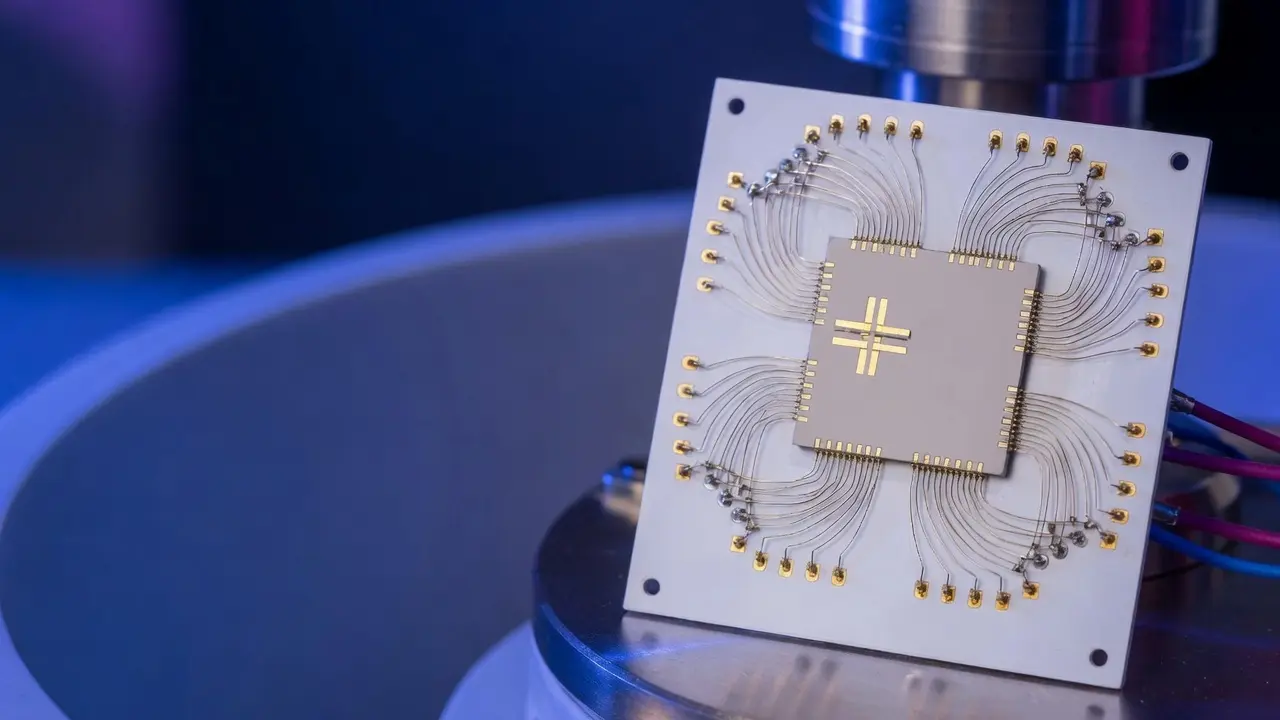
The IBM Quantum Nighthawk (r2) quantum processor has redefined the boundaries of computing. This 120-qubit chip solved a task-which would take today’s most powerful supercomputers over 110 years to complete-in just 19 seconds. At the same time, it achieved a record throughput of over 100,000 quantum circuits per second, effectively confirming the arrival of true quantum advantage.
Martin Švík, Ph




See today’s quantum computing news on Quantum Zeitgeist for the latest breakthroughs in qubits, hardware, algorithms, and industry deals.