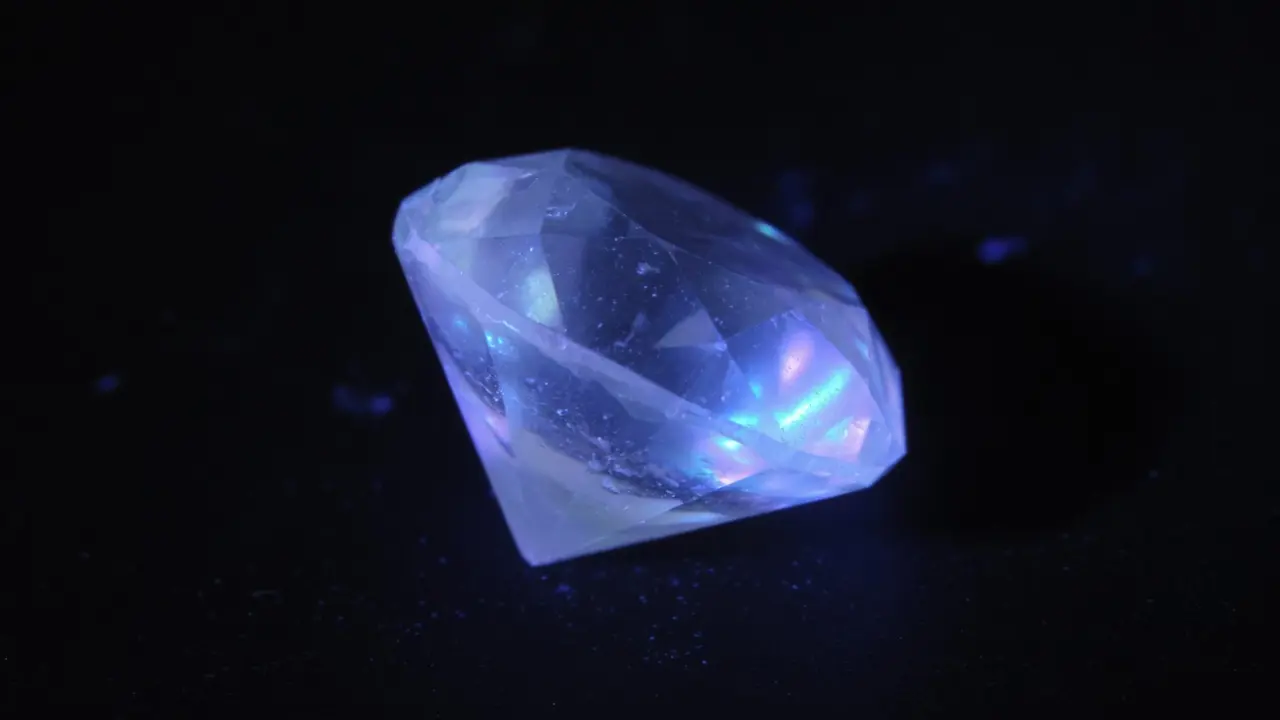
0.9999 was achieved in a new open quantum system model simulating electron, nuclear spin state transfer in diamond; this represents an improvement over previous methods which did not account for lattice vibrations. Until now, the impact of phonons on storage performance remained unclear; increasing spin-phonon coupling diminishes entanglement created during writing, reducing overall data integrity. Simulating how information is stored in diamond defects called nitrogen-vacancy centres reveals a subtle source of data degradation, vibrations within the diamond structure disrupt the connection between electron and nuclear spins used for reading out information.
Understanding such limitations allows optimisation of conditions like temperature to improve performance of this promising technology for future quantum computers. 0.9999 was achieved in simulating data storage within diamond defects known as nitrogen-vacancy centres; this represents an improvement over previous models that didn’t account for vibrations within the material itself.
These simulations reveal how subtle movements disrupt the connection between electron and nuclear spins used to read information, akin to gently shaking a swing, adding energy through coupling can be beneficial but too much disrupts its motion. The team developed a new model incorporating these lattice vibrations, or phonons, demonstrating increasing spin-phonon coupling diminishes entanglement during writing, reducing overall reliability.
Phonon Coupling Diminishes Quantum Data Storage Fidelity in Diamond Defects
increasing the spin-phonon coupling from 0 to 0.06MHz lowers the worst-case retrieval fidelity from 0.9994 to 0.9884, revealing previously unquantified degradation in diamond defect data storage; subtle lattice vibrations disrupt entanglement created during writing. This is a strong improvement over prior models unable to account for these effects. From the Indian Institute of Information Technology Kottayam and Cybersecurity, scientists accurately simulate electron-to-nuclear spin transfer within nitrogen-vacancy centres by incorporating phonons, natural atomic vibrations within crystal structures, and their impact on qubit coherence.
Mirroring expected behaviour and validating model accuracy across varying conditions, simulations showed that storage time is also affected by nuclear spin decoherence rates. The team developed an open-source simulation framework using QuTiP, enabling extension into more complex systems like multiple registers or error mitigation techniques. While representing major progress, current results do not yet account for interactions beyond single phonon modes; scaling this technology requires addressing how collective vibrations impact qubit stability in real devices.
The released code will allow others to build upon these foundations and incorporate more complex vibrational behaviour into quantum memory designs, accelerating development in the field. Researchers refined modelling of quantum data storage within diamond defects known as nitrogen-vacancy centres, explicitly accounting for lattice vibrations, phonons, which influence electron and nuclear spin interaction during information storage.
Considering only *one* effective vibration mode rather than a full spectrum present in real materials is a key limitation that highlights an area for future refinement. This simplification raises questions about how collective vibrational effects might sharply alter performance while still demonstrating convincingly high accuracy when modelling electron-to-nuclear spin transfer under specific conditions.
This research accurately simulated the transfer of information between electron and nuclear spins within nitrogen-vacancy centers in diamond by including the effect of atomic vibrations called phonons. The simulations demonstrate that these vibrations can subtly disrupt entanglement necessary for data storage, lowering retrieval fidelity from values above 0.9999 to approximately 0.9884 with increased coupling strength, or down to 0.9938 at higher temperatures like 300 K. The team made their simulation framework openly available using QuTiP, which will allow other researchers to explore more complex systems and refine models further by incorporating collective vibrational effects.
👉 More information
🗞 Phonon-Aware Electron-to-Nuclear Spin Quantum Memory in NV Centers
✍️ Manjith Baby Sarojam Chellam
🧠 ArXiv: https://arxiv.org/abs/2611.33936


See today’s quantum computing news on Quantum Zeitgeist for the latest breakthroughs in qubits, hardware, algorithms, and industry deals.