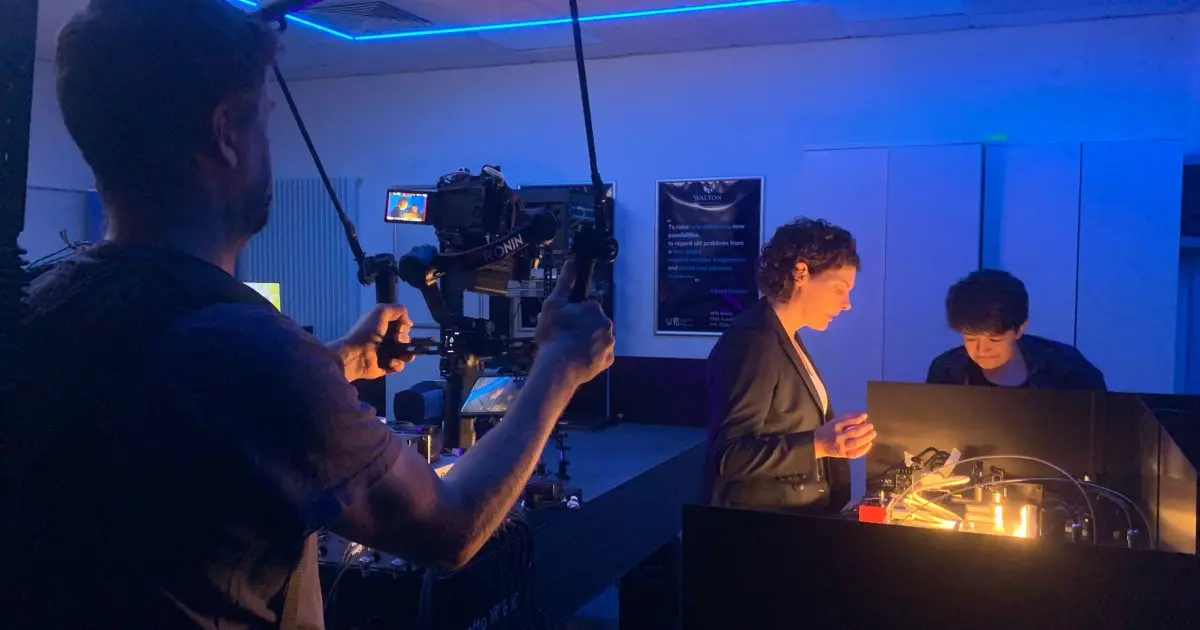
Researchers worked in a laboratory colder than outer space as part of a program showing Ireland’s advancements in quantum technology. The Walton Institute coordinated the €10 million IrelandQCI project, establishing a quantum communications infrastructure connecting Dublin, Waterford and Cork with secure data transmission. This work, and Ireland’s first quantum computer, will be featured on RTÉ One’s “10 Things to Know About… Quantum” this evening. “We are working with national and European partners to develop and test these technologies,” says Dr Deirdre Kilbane, Walton Institute’s Director of Research.
Walton Institute’s RTÉ Feature Explains Quantum Technology
The program airing on RTÉ One shows a laboratory maintained at temperatures lower than those found in outer space, a necessity for exploring the delicate states that underpin quantum technology. The infrastructure’s development involved collaboration with national and European partners, extending the reach of Ireland’s quantum capabilities beyond its borders. Walton Institute leads Ireland’s participation in TransEuroOGS, a €18 million European project focused on building a network of optical ground stations for secure satellite communications.
The institute’s involvement extends to Rinn Quantum, Ireland’s national quantum research centre, which received €39.6 million in funding from Research Ireland. The program’s feature on Ireland’s first quantum computer provides a rare glimpse into this emerging technology and its potential to revolutionize fields like medicine and climate science, while also addressing the risks quantum computing poses to current encryption standards.
Source: https://www.setu.ie/news/walton-institute-to-feature-on-rt%C3%A9s-10-things-to-know-about-quantum


See today’s quantum computing news on Quantum Zeitgeist for the latest breakthroughs in qubits, hardware, algorithms, and industry deals.