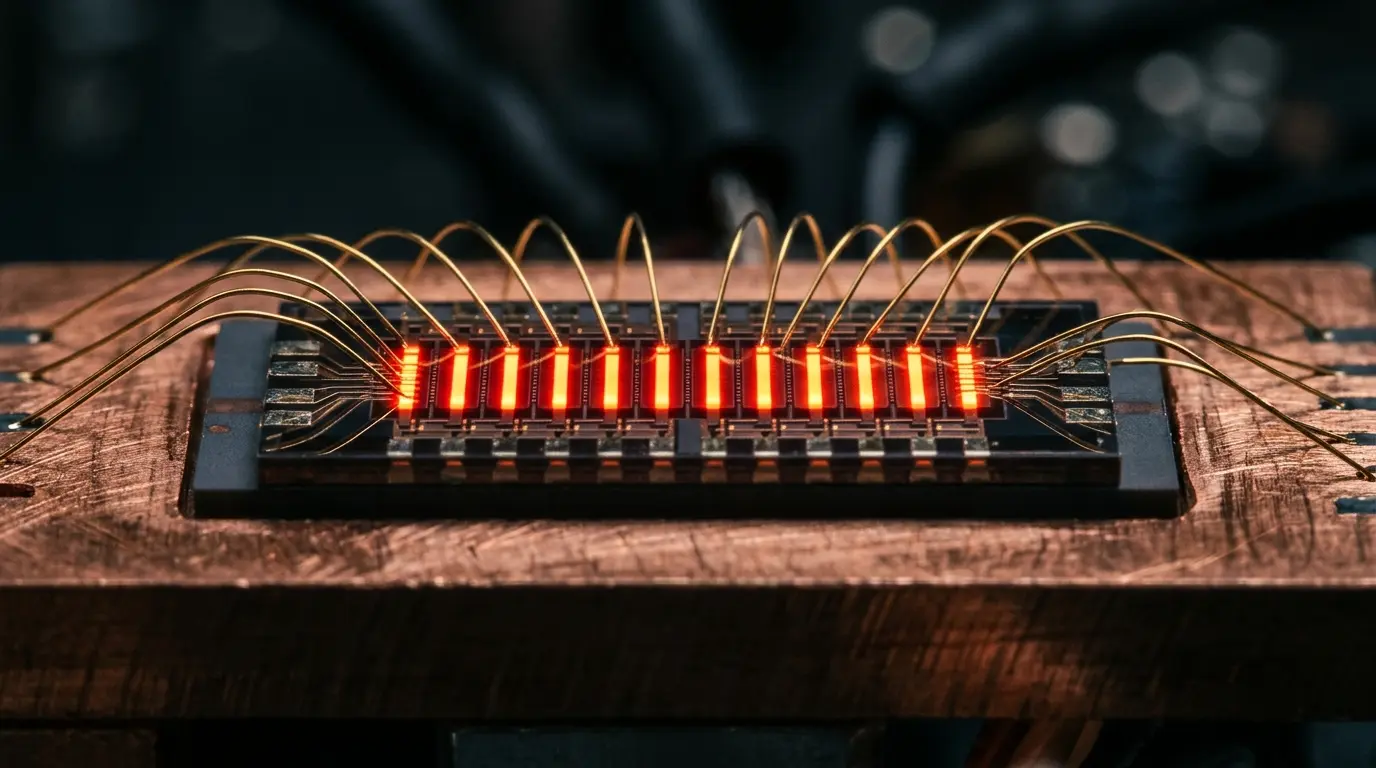
Mark L. Carroll and colleagues have developed QuASAR, a pipeline that transformed nine out of ten computations sourced from astrophysics literature into runnable quantum prototypes. The system uniquely identifies potential quantum applications and reconstructs existing algorithms or builds original mappings when necessary, automating a key step in quantum algorithm design. These prototypes span combinatorial optimization, stochastic simulation and Bayesian inference, demonstrating QuASAR’s breadth across scientific areas. The authors write that the experiment shows the pipeline can turn a published idea into a runnable prototype, offering the framework to the community for further development.
Pipeline Constructs and Benchmarks Quantum Prototypes from Astrophysics
The QuASAR pipeline identified potential quantum applications within astrophysics literature and reconstructed source algorithms where they existed, building original mappings where none did. Mark L. Carroll and colleagues detailed this approach in a recent paper, demonstrating that nine out of ten sourced computations progressed to a benchmarked quantum prototype. While none of these prototypes achieved quantum advantage at the tested scales, the researchers emphasize the system’s primary function is not immediate performance gains.
QuASAR’s design incorporates a two-agent system driven by large language models. One agent screens literature and proposes candidates, and a second verifies supporting citations. The framework is offered to the wider community for evaluation and further development, with the intention of broadening the accessibility of quantum computing for scientific research and potentially extending to computational improvements beyond quantum approaches. The team acknowledges the need for expert validation of the astrophysical framing within the case studies, which represents a clear direction for future work.
👉 More information
🗞 QuASAR: Toward an LLM-Assisted Framework for Screening, Prototyping, and Assessing Quantum-Advantage Opportunities in Scientific Computing
✍️ Mark L. Carroll, Jordan A. Caraballo-Vega, Brian P. Powell and John L. Schnase
🧠 ArXiv: https://arxiv.org/abs/2611.27778
See today’s quantum computing news on Quantum Zeitgeist for the latest breakthroughs in qubits, hardware, algorithms, and industry deals.