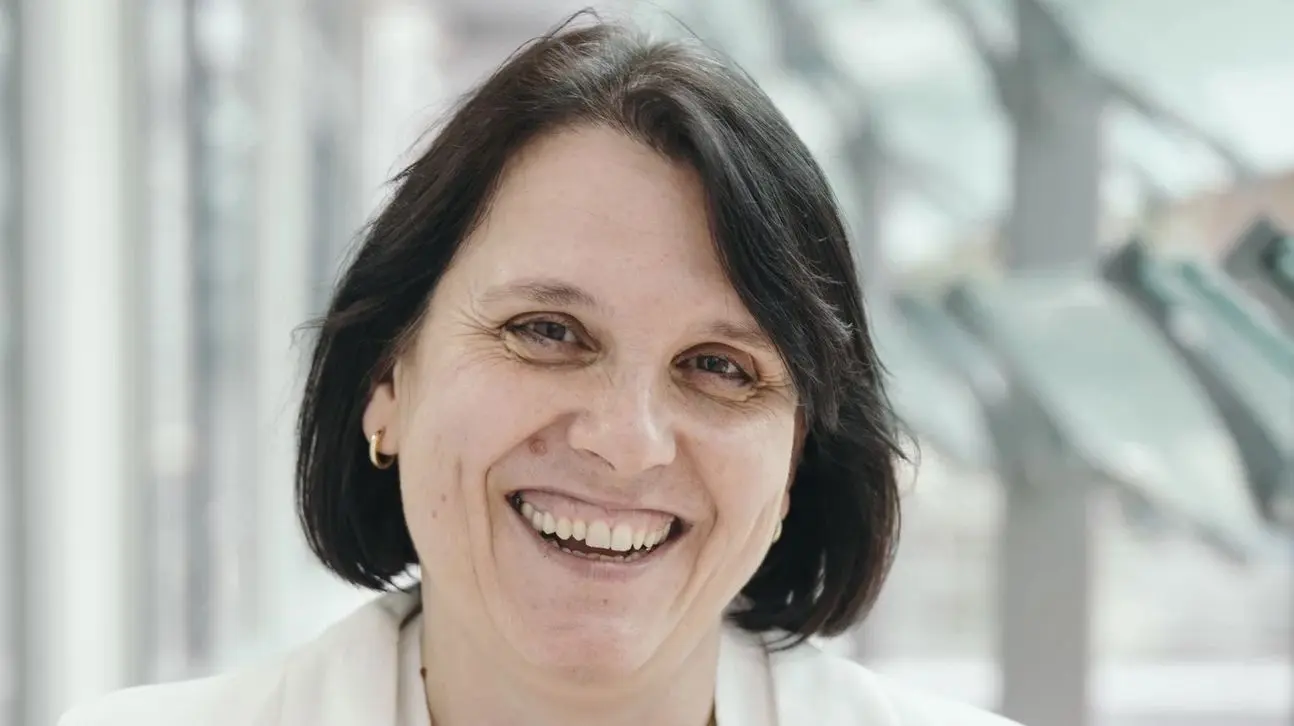
Professor Claudia Felser will receive the 2027 Stern-Gerlach Medal from the German Physical Society, recognizing her work in predicting and realizing new topological quantum materials. The director at the Max Planck Institute for Chemical Physics of Solids has transformed topology into a design principle for quantum matter, leading to the discovery of antiskyrmions through crystals grown in her laboratory.
These materials, including Heusler compounds and magnetic Weyl semimetals, have opened new avenues for spintronics, establishing topology as a key concept for future applications. The medal will be presented at the DPG conference in Regensburg in March 2027.
Topological Quantum Materials Earn Claudia Felser Stern-Gerlach Medal
Crystals cultivated within Claudia Felser’s laboratory enabled the first observation of antiskyrmions, unusual magnetic structures now accessible for study. Felser’s work fundamentally shifted how scientists approach quantum materials, moving beyond theoretical topology to a practical design principle. She predicted, designed, and then realized these novel materials, allowing for the study of Weyl and chiral fermions within solid-state systems. Demonstrations of the anomalous Hall effect in antiferromagnets also stem from materials developed in Felser’s research group, further solidifying her impact on condensed matter physics.
See today’s quantum computing news on Quantum Zeitgeist for the latest breakthroughs in qubits, hardware, algorithms, and industry deals.