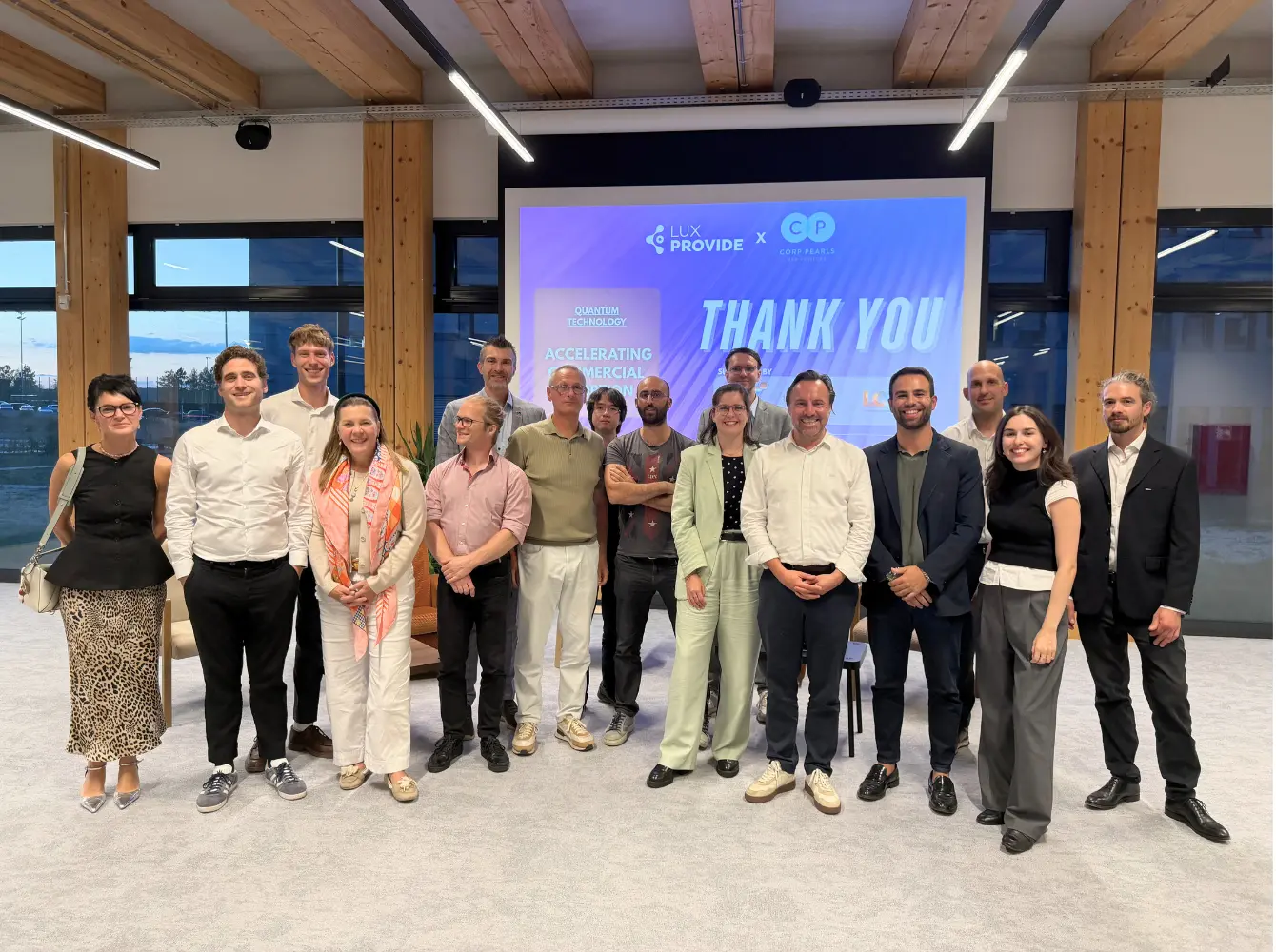
LuxProvide and CorpPearls hosted 52 quantum leaders from five countries at Technoport Bissen on September 16, 2026, for a conference called “Quantum Technology: Accelerating Commercial Adoption.” The event examined how collaboration between startups, researchers, and investors can translate scientific advances into practical applications, strengthening Europe’s quantum ecosystem. “The success of the quantum industry depends on bringing together technology providers, investors, established companies, public institutions and policymakers,” said Tobias Verlende, Founder and CEO of CorpPearls, emphasizing the need for cross-border cooperation as Luxembourg prepares for its next phase with MeluXina-Q.
QunaSys & MeluXina Accelerate Quantum Workflow with HPC Simulation
Karim Essafi of QunaSys detailed a collaborative project with MeluXina, Luxembourg’s EuroHPC supercomputer, focusing on the Quantum Selected Configuration Interaction (QSCI) workflow. QunaSys, a Tokyo-based quantum software company, used MeluXina’s high-performance computing infrastructure to simulate and refine complex quantum computing methods for chemistry and materials science challenges. This approach bypassed the need to wait for fully developed large-scale quantum hardware, instead accelerating development using existing classical HPC resources.
The project emphasised the complementary relationship between high-performance computing and quantum computing, demonstrating how MeluXina’s capabilities transformed a research concept into a scalable solution, the company says. According to QunaSys, the HPC infrastructure provided the necessary computational base to both develop and validate quantum workflows.
This collaboration illustrates a pathway for startups and deep-tech innovators to use current HPC resources as a powerful tool for quantum research and development. CorpPearls, a Berlin-based innovation and corporate advisory firm, facilitated a conversation on driving quantum adoption through collaborative efforts. The event, supported by the Business Club Luxembourg Deutschland, Technoport and the Luxembourg Quantum Alliance, aimed to encourage networking and knowledge sharing between stakeholders.
European Collaboration Drives Quantum Technology Commercial Adoption
Luxembourg’s efforts to encourage a pan-European quantum network extended to a focused event on September 16, 2026, bringing together key stakeholders at Technoport Bissen. The gathering, co-organized by LuxProvide and CorpPearls, highlighted a specific need voiced by investors: early engagement between quantum startups and established industry partners. Pepijn Rot, of Verve Ventures, emphasized that startups should prioritize building upon existing supply chains and identifying clear industrial applications to attract funding.
Beyond investment strategies, the event emphasised the potential for quantum technologies to reshape sectors like healthcare and life sciences. Silke R. Sperling, of Charité Berlin and Catalpa Ventures, noted the significant opportunities quantum innovation presents, but also stressed the necessity of continued governmental and institutional support to translate research into practical solutions. This sustained backing, she implied, is important for bridging the gap between laboratory breakthroughs and tangible real-world impact.
Representatives from the Luxembourg Quantum Alliance reinforced this point, acknowledging the varied stages of development among quantum startups and the need for tailored ecosystem support. Discussions consistently emphasized collaboration as the primary driver for accelerating commercial adoption. Participants agreed that advancements in computing infrastructure, investment strategies, public support, and cross-border partnerships are all essential components of a thriving quantum ecosystem.
LuxProvide and CorpPearls’ joint effort to convene these stakeholders reflects Luxembourg’s broader commitment to digital infrastructure and the anticipated arrival of MeluXina-Q. This event, therefore, is a foundational step in establishing a robust European quantum ecosystem capable of converting scientific innovation into economic growth.
Startups Showcase Diverse Applications Across Quantum Ecosystem
Entrepreneurs demonstrated a diverse range of quantum applications at the recent Luxembourg event, with ACKISION detailing measurement electronics designed for sectors including hydrogen technologies and food quality control. The Leibniz University Hannover spin-off’s technology supports advanced sensor and metrology applications, demonstrating the broadening reach of quantum-derived tools beyond traditional physics research.
Karim Essafi of QunaSys presented a case study illustrating how high-performance computing can accelerate quantum workflows, even before fully scalable quantum hardware becomes available. The gathering’s success, they believe, lies in connecting researchers, entrepreneurs, infrastructure providers and investors to facilitate the transition from academic innovation to market-ready quantum solutions.




See today’s quantum computing news on Quantum Zeitgeist for the latest breakthroughs in qubits, hardware, algorithms, and industry deals.