

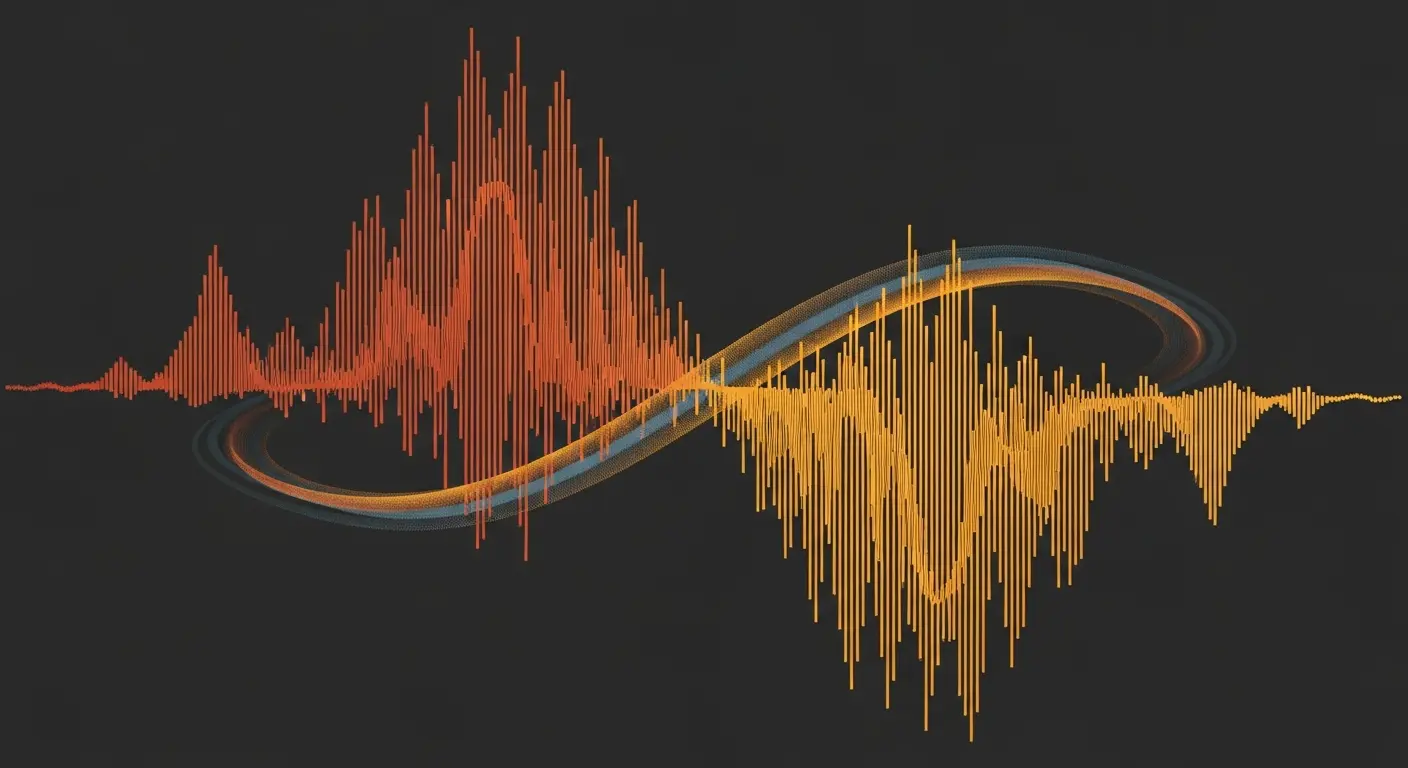
Eunsik Choi and colleagues at GEORGIA INSTITUTE OF TECHNOLOGY present a new Lindbladian homotopy analysis method (LHAM) designed to simulate complex nonunitary and nonlinear dynamics. The approach overcomes limitations of existing quantum methods, specifically the curse of dimensionality and convergence issues during linearization, by reformulating the problem into a series of linear equations and embedding the solution within density matrix simulations. Key to this is LHAM’s achievement of a logarithmic increase in Hilbert space dimension, offering a sharp advantage over methods exhibiting polynomial scaling and broadening the scope of solvable problems, as demonstrated through simulations of Burgers’ equation and magnetohydrodynamics equations.
Logarithmic scaling enables improved simulation of complex physical systems
A Hilbert space scaling of O(Dlog(1/ǫ)) has been achieved, representing a two-fold reduction compared to the O((1/ǫ)logD) scaling of Carleman linearization and the O((1/ǫ)2) scaling of the Koopman-von Neumann approach. Here, ‘D’ represents the dimensionality of the system being simulated, and ‘ǫ’ denotes the desired accuracy of the solution. This logarithmic scaling is crucial because the size of the Hilbert space, the computational space required to represent the quantum state, grows exponentially with system complexity in many quantum algorithms. Polynomial scaling, while better than exponential, still suffers from rapid growth, limiting the size of problems that can be tackled. Logarithmic scaling, however, offers a significantly more manageable increase in computational demand, potentially unlocking simulations of systems previously considered intractable. The implications for fields like materials’ science, fluid dynamics, and plasma physics are substantial, as these often involve complex, nonlinear partial differential equations (PDEs).
The significance of this logarithmic scaling lies in its ability to circumvent the ‘curse of dimensionality’, a common problem in scientific computing where the computational cost increases exponentially with the number of variables. Traditional methods for solving PDEs often require discretizing the problem domain into a grid, and the number of grid points grows exponentially with the number of dimensions. LHAM, by reformulating the problem and leveraging quantum dynamics, avoids this exponential growth, allowing for simulations with a far greater degree of detail and accuracy. This is particularly important for simulating turbulent flows, complex chemical reactions, or the behaviour of materials at the nanoscale, where a high degree of resolution is essential. The ability to simulate these systems with reduced computational resources could accelerate the design of new materials, improve weather forecasting, and enhance our understanding of fundamental physical processes.
The Lindbladian homotopy analysis method (LHAM) successfully simulated both Burgers’ equation and the magnetohydrodynamics equations, demonstrating its flexible application across different physical models. Burgers’ equation is a fundamental PDE used to model fluid flow and shock waves, serving as a benchmark for testing numerical methods. Magnetohydrodynamics (MHD) equations describe the interaction between electrically conducting fluids and magnetic fields, relevant to astrophysical plasmas and fusion energy research. LHAM achieved root-mean-square (RMS) errors of 10.77% and 9.08% for vorticity and magnetic potential respectively when simulating magnetohydrodynamics, a marked improvement over the 12.43% and 26.15% errors obtained using a traditional linear differential equation solution. Relative L2 norm errors were also reduced, falling to 13.05% and 12.67% for vorticity and magnetic potential with LHAM, compared to 15.07% and 36.48% using linear equations. Initial tests on Burgers’ equation revealed RMS and relative L2 norm errors of 1.015% and 1.475% at the fourth homotopy order, indicating convergence with classical finite difference methods. However, the current implementation relies on a limited number of Fourier basis functions, only nine were used, and scaling to larger, more complex simulations remains a significant challenge. The use of Fourier basis functions allows for efficient representation of periodic functions, but may not be optimal for all types of solutions.
Scalability limitations require further testing with complex physical systems
While this method offers a compelling path towards scalable quantum simulations, its current validation rests on relatively simple fluid and magnetic field equations. The successful demonstrations with Burgers’ equation and magnetohydrodynamics are acknowledged, but insight into how readily this approach translates to more complex, multi-physics problems or those with chaotic behaviours is limited. The behaviour of LHAM when applied to systems exhibiting strong nonlinearities, discontinuities, or multiple interacting phenomena remains largely unexplored. Does the logarithmic scaling of Hilbert space dimension hold true when tackling equations with significantly more intricate interactions and a wider range of parameters remains a vital question. Investigating the method’s performance on problems such as the Navier-Stokes equations (governing fluid flow), the Schrödinger equation (describing quantum mechanics), or coupled climate models would provide valuable insights into its broader applicability.
The logarithmic scaling of Hilbert space, the computational space needed for quantum calculations, is a significant advantage over existing methods experiencing exponential growth; this presents a valuable step forward in quantum computing techniques. This improved scaling could unlock the simulation of far more complex systems currently beyond reach, although immediate application to chaotic or multi-physics problems remains unproven. Further research is needed to determine the limits of this approach and its potential for tackling truly challenging simulations. Specifically, exploring the impact of noise and decoherence, inherent limitations in quantum systems, on the accuracy and stability of LHAM is crucial. Developing error mitigation strategies and robust quantum algorithms will be essential for realising the full potential of this method.
It efficiently solves nonlinear partial differential equations on quantum computers by converting them into a sequence of linear problems, avoiding the exponential growth in computational space seen in other techniques; this new approach offers a pathway to simulating complex physical systems previously limited by rapidly increasing computational demands. By embedding solutions within a ‘density matrix’, a representation of quantum state probabilities, and utilising quantum dynamics, logarithmic scaling of the Hilbert space is achieved, a key improvement over polynomial scaling methods. The density matrix formalism allows for the representation of mixed quantum states, which are more realistic than pure states, and provides a natural framework for incorporating noise and decoherence. This advancement promises to broaden the scope of quantum simulations and accelerate scientific discovery, potentially revolutionising fields reliant on accurate and efficient PDE solvers.
The researchers developed a Lindbladian homotopy analysis method (LHAM) to solve nonlinear partial differential equations on quantum computers. This new technique converts complex problems into a series of simpler, linear ones, crucially avoiding the exponential increase in computational space experienced by other methods. Instead, LHAM achieves logarithmic scaling of the Hilbert space, representing a significant efficiency gain. The method was demonstrated using Burgers’ equation and magnetohydrodynamics equations, and the authors suggest further work is needed to assess its limits and robustness against noise.
👉 More information
🗞 Lindbladian Homotopy Analysis Method to Solve Nonlinear Partial Differential Equations
🧠 ArXiv: https://arxiv.org/abs/2604.18924



See today’s quantum computing news on Quantum Zeitgeist for the latest breakthroughs in qubits, hardware, algorithms, and industry deals.



